

I have played hundreds of fighting games since the 1990s, with Street Fighter, Tekken and Mortal Kombat among my main series. Even with that experience, Street Fighter V never completely clicked with me.
Additional characters and content improved the package after launch, but its central systems still felt restrictive. Too many of the interesting things a fighter could do appeared tied to temporary mechanics rather than being part of that character’s permanent identity.
Street Fighter 6 immediately felt different.
Capcom built a fighting game in which the universal mechanics create more options without making the characters feel interchangeable. Every fighter still has a distinctive ability, strategy or resource that remains relevant throughout the match.
The result is a creative and flexible fighting system supported by one of the most substantial single-player modes I have encountered in the genre.
Quick Links:
Every Fighter Has a Clear Identity
Street Fighter 6 launched with 18 playable characters. The roster combined returning fighters such as Ryu, Chun-Li, Ken and Zangief with newcomers including Jamie, Kimberly, Manon, Marisa, Lily and JP.
The new fighters do not feel like substitutes for established characters. Each one brings a recognisable approach to controlling space, applying pressure or creating damage.
Jamie can increase his drink level during a fight, gradually unlocking more techniques. Manon builds Medal levels by landing command grabs, and those levels remain with her between rounds. Kimberly uses speed, movement options and spray cans to create unpredictable offensive sequences.
JP approaches combat through long-range Psycho Power attacks and traps. Marisa relies on armoured strikes and enormous damage, while Lily uses Windclad Stocks to strengthen selected special moves.
These mechanics remain available throughout the match. They give each fighter an individual problem to solve rather than placing every character beneath the same temporary comeback system.
I found this structure much more creative than the systems in Street Fighter V. The Drive System gave the entire roster a shared foundation, but character-specific tools still determined how I used that foundation.
The cast also has an enormous amount of personality. Characters are ridiculous, confident and unapologetically over-the-top.
Marisa celebrates her own strength with complete sincerity. Manon blends martial arts with model-like movement. Jamie staggers through attacks inspired by drunken boxing, while JP fights with the composure of someone who considers direct physical effort beneath him.
Nothing feels embarrassed about being part of a colourful fighting game.
The Drive System Looked More Complicated Than It Was

The Drive System initially intimidated me because Capcom introduced several mechanics alongside a large amount of new terminology.
Drive Impact, Drive Parry, Drive Rush, Drive Reversal and Overdrive attacks all draw from the same six-bar Drive Gauge. Exhausting that gauge causes Burnout, temporarily removing access to Drive techniques and making defensive situations much more dangerous.
Seeing all those systems presented together made the game appear harder to learn than it actually was.
Once I separated the mechanics and practised them individually, each one became relatively straightforward.
Drive Impact is a heavily armoured strike that can absorb incoming attacks. It becomes particularly dangerous near the corner because a blocking opponent can still be knocked into the wall and left vulnerable.
Drive Parry protects against attacks while recovering some Drive Gauge. A precisely timed Perfect Parry creates a stronger defensive opportunity, although the resulting damage is scaled to prevent it from becoming an automatic round-winning response.
Drive Rush converts Drive Gauge into forward momentum. It can be performed from a parry or cancelled from certain normal attacks, allowing a fighter to extend pressure, improve frame advantage or reach combo routes that would otherwise be unavailable.
Drive Reversal provides a defensive counterattack while blocking. Overdrive Arts replace the EX special moves used in previous games and consume Drive Gauge rather than Super Art Gauge.
None of these mechanics is especially confusing in isolation. The difficulty came from remembering every option and recognising when each one was appropriate.
It took time for me to commit the complete system to memory. Once that happened, Drive decisions became second nature.
I stopped thinking solely about health and began watching both Drive Gauges. An opponent with little Drive remaining could be pushed towards Burnout, while careless spending could leave me without the resources needed to defend myself.
Burnout does not simply remove access to advanced moves. Blocking attacks causes chip damage, Drive Impact becomes much more threatening near the corner, and the absence of defensive Drive options can completely change the pace of a round.
The system rewards aggression without allowing me to attack thoughtlessly.
Tutorials Explain When Moves Matter
Street Fighter 6 provides several layers of instruction rather than placing every lesson inside one compulsory tutorial.
The general tutorials explain movement, attacks, throws, blocking and the Drive System. I appreciated being able to skip anything I already understood instead of repeating basic fighting-game concepts.
Character Guides were far more valuable to me.
A traditional move list tells the player which input performs an attack. A Character Guide explains what that attack is designed to accomplish.
The lessons cover subjects such as ideal range, anti-air options, pressure tools and basic strategies. Demonstrations show the move in context before allowing the player to practise it.
This distinction matters. Knowing how to perform an attack does not automatically explain when it should be used.
The guides helped me understand the intended logic behind unfamiliar fighters before I attempted longer combos or entered competitive matches.
Combo Trials provide the next step. They demonstrate routes of increasing complexity, but the Character Guides establish the practical foundation required to understand why those routes work.
Modern Controls Help Players Understand the System

Street Fighter 6 includes Classic, Modern and Dynamic control types.
Classic Controls retain the traditional six-button layout and directional special-move inputs. This remained the most familiar option for me.
Modern Controls reduce the number of attack buttons and allow special moves to be performed with simplified inputs. Assisted Combos also give players an immediate way to connect several attacks.
I did not rely on Modern Controls as my main way to play, but using them helped me understand the relationship between combos, Drive Impact, parries and resource management.
Removing difficult inputs from the immediate problem allowed me to concentrate on why a sequence worked. I could then consider the trade-offs involved in choosing a faster or simpler action.
Modern Controls are not merely an easier version of Classic Controls. Simplified special attacks can deal reduced damage, and the smaller button layout limits direct access to parts of a character’s move set.
Those compromises preserve a reason to learn Classic Controls without making Modern players feel as though they are using an incomplete tutorial mode.
Dynamic Controls simplify combat even further by selecting context-sensitive actions from basic button presses. I spent little time with this option, but I appreciated its inclusion for completely inexperienced players who wanted to enjoy local fights without first learning a complete move list.
The three control types give players different entry points into the same game. They do not demand that every player learn in the same way.
World Tour Was Far Bigger Than I Expected
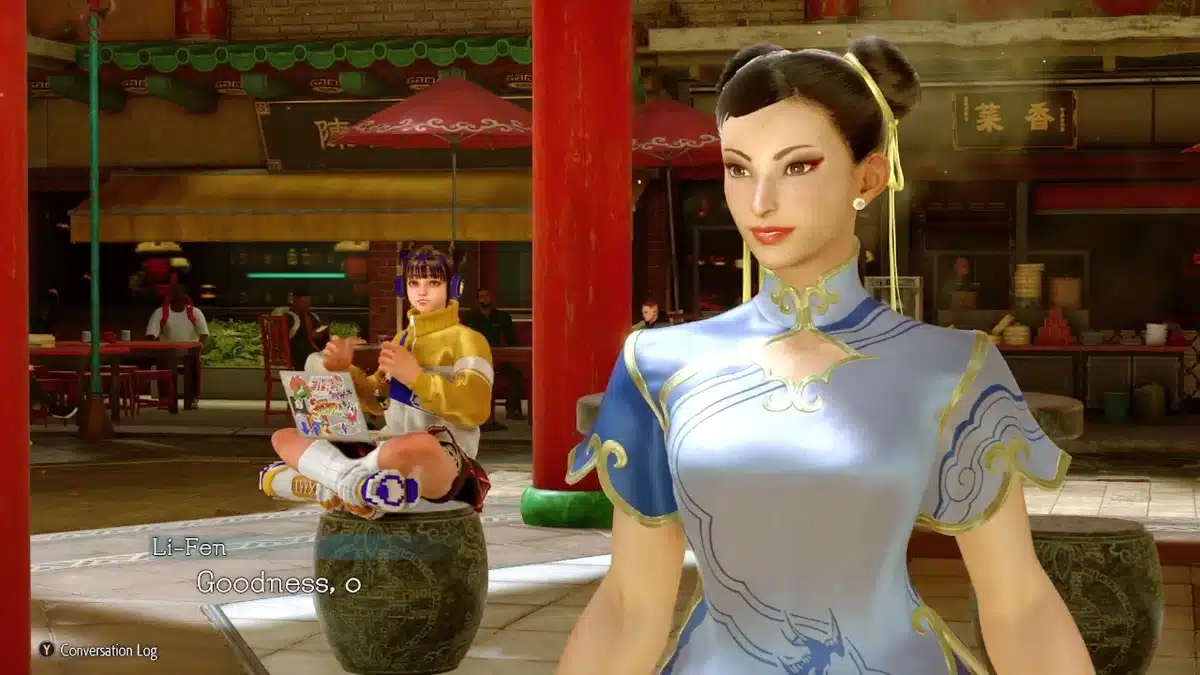
I entered World Tour expecting a brief diversion filled with a few enjoyable references.
I was completely wrong.
World Tour is a single-player role-playing mode built around a custom avatar. The journey begins in Metro City before expanding into additional locations connected to the main Street Fighter cast.
Almost every pedestrian can become an opponent. Each person has a level, fighting style and set of rewards, turning the surrounding population into a constant collection of optional challenges.
Equipment changes the avatar’s appearance and statistics. Skill points unlock permanent upgrades, while consumable items provide healing or temporary benefits. Side quests introduce additional fights, rewards and characters away from the main story.
The avatar does not select one permanent character class. Instead, established fighters become Masters who teach their individual styles.
A style determines the avatar’s normal attacks and general stance. Special moves learned from different Masters can then be combined, provided their inputs do not conflict.
My character could use one fighter’s basic style while borrowing techniques from several others. That flexibility made experimentation part of the progression rather than something restricted to a training menu.
Using a Master’s style increases its rank and unlocks more attacks. Building the personal relationship with that fighter opens further conversations, artwork and background information.
I was shocked by how much content Capcom placed into these relationships.
The main fighters are not simply quest markers who teach one move and disappear. World Tour presents them away from the tournament structure and gives them room to express their personalities.
These encounters made the cast feel like people occupying the same strange world rather than a collection of faces selected from a menu.
It took me around 19 hours to reach the credits. Even then, I still had unfinished quests, skills to unlock and opponents waiting to be challenged.
World Tour could have been sold as a standalone Street Fighter spin-off and I would have happily purchased it without any multiplayer.
At the time, I thought it might have been the best single-player mode I had ever experienced in a fighting game.
World Tour Recaptured What I Loved About Konquest

World Tour reminded me of Konquest mode from Mortal Kombat: Deception, which remains my favourite single-player mode in a fighting game.
The two modes are not identical. Konquest follows Shujinko through a more structured adventure across the realms of Mortal Kombat, while World Tour uses a custom avatar, open districts and role-playing progression.
The connection comes from what both modes attempt to achieve.
Each one turns a fighting-game universe into a place that can be explored. Characters who usually exist only before and after matches are given homes, routines and relationships.
World Tour also reaches into less familiar parts of Street Fighter history. Retsu, who appeared in the original Street Fighter, returns as an opponent and supporting character during the journey.
That willingness to use obscure characters and references gives long-term players something to discover without making prior knowledge a requirement.
World Tour does not always match the visual quality of conventional fights. Generic opponents use simpler character models, and the open environments can appear plain beside the detailed competitive stages.
The story is also more effective as a reason to explore than as a dramatic narrative. Its central mystery never became as important to me as meeting the Masters, improving my avatar and discovering new fights.
Those limitations did little to reduce my enthusiasm. The mode succeeded because its systems constantly gave me another reason to remain in the world.
Fighting Ground Preserves Traditional Street Fighter
Fighting Ground contains the modes most closely associated with the series.
Arcade Mode provides an individual story for each fighter. Practice includes Training, Tutorials, Character Guides and Combo Trials. Versus supports conventional matches, while Special Match introduces rule variations and environmental gimmicks.
Online play includes Ranked and Casual matches.
This separation works because players can reach traditional modes without moving through World Tour or the Battle Hub. Someone interested only in competitive combat can treat Fighting Ground as the main game.
At the same time, Arcade stories provide background for characters without requiring the much larger commitment demanded by World Tour.
The structure respects several different reasons for playing a fighting game.
The Battle Hub Recreates an Arcade Community
The Battle Hub uses the World Tour avatar inside a shared online space lined with arcade cabinets.
Sitting at a cabinet allows another player to take the opposite side and begin a match. Other people can gather around the cabinet or join the queue, recreating some of the social structure of a physical arcade.
This presentation gives online matches a stronger sense of place than selecting an opponent from a conventional menu.
Players can also use their avatars in dedicated battles. Custom abilities and statistics make these encounters far less controlled than standard competitive play, but that imbalance is part of their appeal.
The Battle Hub includes rotating selections of older Capcom games through the Game Centre. During my original review period, titles such as Street Fighter II, Final Fight and Super Puzzle Fighter II Turbo were available.
These games were not required to make the package feel complete, but they reinforced the sense that the Battle Hub was designed as a celebration of Capcom’s arcade history.
The online infrastructure proved equally important. Rollback netcode and cross-platform matchmaking gave Street Fighter 6 a far stronger foundation for competitive play than its predecessor had at launch.
No online system can guarantee a flawless match against every connection, but my experience was consistently dependable enough to concentrate on the opponent rather than the network.
Street Fighter 6 Looks Powerful Without Losing Clarity
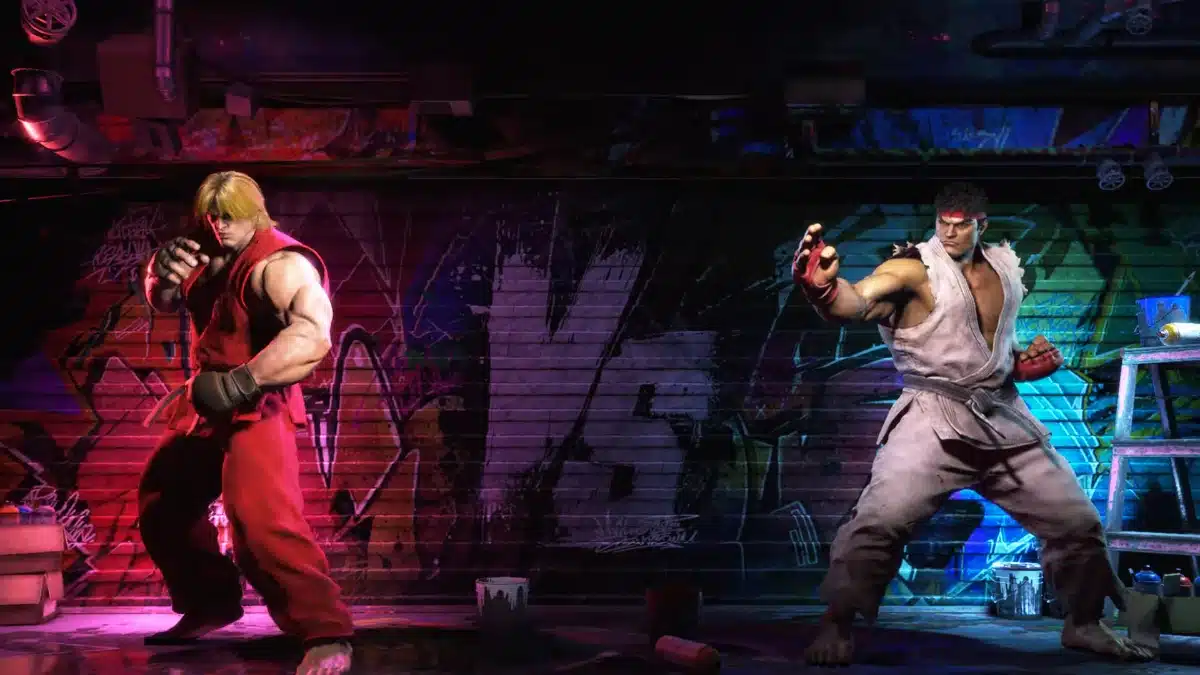
Street Fighter 6 gives its characters more physical detail without sacrificing the visual clarity required by a competitive fighting game.
Muscles deform under impact, clothing reacts to movement and facial expressions exaggerate the personality behind each attack. Paint-like effects accompany Drive techniques and create an immediate visual distinction between normal actions and resource-based mechanics.
The presentation is colourful, but important information rarely disappears beneath the effects.
Attack sounds carry enough weight to distinguish a heavy counter from a quick interruption. Drive Impact has an especially recognisable combination of colour, movement and sound, giving the defending player a brief opportunity to respond.
The soundtrack changes its tone across characters and modes rather than trying to imitate the music of earlier entries. Not every theme became memorable to me, but the wider sound design gives hits, counters and Super Arts the force they require.
World Tour makes the largest visual compromise. Metro City contains busy streets and numerous characters, but environmental detail and secondary character models sit below the standard established by the main fighting stages.
That difference is understandable given the scale of the mode, although it remains noticeable on PS5.
PS5 Performance Prioritises Competitive Fights
The PlayStation 5 version provides Resolution Mode and Performance Mode for World Tour. Standard one-on-one modes target 60 frames per second because match speed and input timing depend on consistent performance.
World Tour creates a different technical challenge because it renders explorable areas, crowds and custom avatars. Its graphical setting therefore has a larger effect on battles and image quality.
The technical information below reflects documented analysis rather than independent GamesLatestNews measurements.
| Street Fighter 6 PS5 Feature | Documented Support |
|---|---|
| Standard one-on-one battles | 60fps target |
| World Tour Resolution Mode battles | 30fps target |
| World Tour Performance Mode battles | 60fps target |
| World Tour Performance Mode resolution | 1440p reported during technical analysis |
| Low Input Delay Reduction | Supported through the in-game graphics settings |
| Online multiplayer | Ranked, Casual and Battle Hub matches |
| Cross-platform play | Supported |
| Control types | Classic, Modern and Dynamic |
| Local multiplayer | Supported |
| Reviewed version | PlayStation 5 launch version |
The competitive modes were the technical priority, and that was the correct decision. Standard fights maintained the responsiveness and stable speed required by the underlying combat system.
World Tour was less consistent. Its open areas and crowds placed greater pressure on the hardware, while its Performance Mode reduced image quality to maintain smoother battles.
The difference never undermined the mode for me, but World Tour could not match the sharp presentation of Fighting Ground.
Capcom Built More Than a Competitive Framework
A fighting game can survive for years through strong mechanics and online competition. Street Fighter 6 launched with those foundations already in place.
The Drive System gives every match a constant exchange of resources, positioning and risk. Individual mechanics initially appeared overwhelming, but learning them separately made the wider system manageable.
Modern Controls provide a credible route into that system without replacing the depth of Classic Controls. Tutorials explain the fundamentals, while Character Guides address the more useful question of when an attack should be used.
World Tour then provides something the genre frequently neglects: a substantial reason to play alone.
My 19-hour journey only carried me to the credits. It did not exhaust the available quests, progression or relationships. Few fighting games have given me that much single-player content, and fewer still have made the surrounding universe feel worth exploring.
Street Fighter V never became the fighting game I wanted it to be, regardless of how much content arrived later. SF6 established its identity immediately.
Capcom created a sequel that respects competitive players, teaches newcomers and gives solo players a complete adventure rather than a minor diversion.
The occasional visual and performance compromises in World Tour prevent the package from being flawless. They do not stop Street Fighter 6 from earning its standing among the most complete fighting games I have played.
Street Fighter 6 Quick Facts
Developer
Capcom
Publisher
Capcom
Reviewed platform
PlayStation 5
Release Date
2 June 2023
Genre
Fighting
Game Modes
Single-player, local multiplayer and online multiplayer
Main Modes
World Tour, Fighting Ground and Battle Hub
Local players
1 to 2
Online features
Ranked matches, Casual matches, Battle Hub and cross-platform play
Street Fighter 6

Our Street Fighter 6 PS5 review covers the Drive System, 18-character roster, World Tour's 19-hour campaign, and how it compares to other beat 'em ups.
Product Brand: Capcom
9
Pros
- Innovative Gameplay Mechanics: The introduction of the Drive system adds a new layer of strategy to matches, making the gameplay more engaging and dynamic.
- Balanced Character Roster: The game boasts a diverse and balanced roster of 18 characters, each with their unique style and special attacks.
- Impressive Graphics and Sound: The graphics are spectacular, and the sound design is immersive, enhancing the overall gaming experience.
- Longevity: With a variety of significant features and modes, Street Fighter 6 offers plenty of content to keep players engaged for a long time.
- Excellent Online Features: The netcode ensures smooth and lag-free matches, providing a seamless online gaming experience.
- Extra Content: Capcom has already confirmed the first four characters coming via downloadable content, promising more exciting content in the future.
Cons
- Performance Issues: There are some performance issues in the World Tour mode, with a noticeable dip in frame rate during fights.
- Visual Quality in World Tour: The visual quality of the stages and random fighters in World Tour is not as good as in other modes.
- Learning Curve for Novice Players: While the game is approachable, novice players may still feel some trepidation when stepping into the ring for the first time.