
Crimson Moon and I didn’t immediately understand each other.
ProbablyMonsters’ gothic action-adventure RPG opens with an intriguing introduction to Gildenarch and its Nephilim before teaching you the fundamentals of combat, exploration and your supernatural abilities. The tutorial does a good job of walking through each system without overwhelming you, although that didn’t stop me from completely forgetting about Angel Ascension for around two hours and making my first few runs considerably harder than they needed to be. Angel Ascension temporarily transforms your Nephilim and, crucially for me, restores health. Considering how carefully I was rationing my limited healing flasks, remembering I had another way to recover health completely changed how I approached difficult encounters.
A review code for Crimson Moon was provided to GamesLatestNews by ProbablyMonsters. This did not influence my review or final score.
I initially expected the tutorial to lead into a much larger, more open adventure. Instead, Crimson Moon is built around replayable runs through Gildenarch, where you fight increasingly dangerous enemies, collect equipment and eventually face powerful bosses before preparing to do it all again. That’s exactly how ProbablyMonsters describes its core structure.
Run-based progression isn’t normally something I’d choose to play alone, and Crimson Moon never completely changed my mind about that. However, once I stopped rushing towards every boss and started exploring, upgrading and experimenting with my build, there was considerably more here that I enjoyed.

Gildenarch Is Worth Stopping to Look At
Reaching Sanctus Clypeus was the moment Crimson Moon really caught my attention.
I immediately started taking screenshots.
Entering the hub gave me a little of the feeling I still get when discovering somewhere new in World of Warcraft, which remains my favourite game of all time. The games aren’t visually alike, but that urge to stop moving for a moment and simply look around felt very familiar.
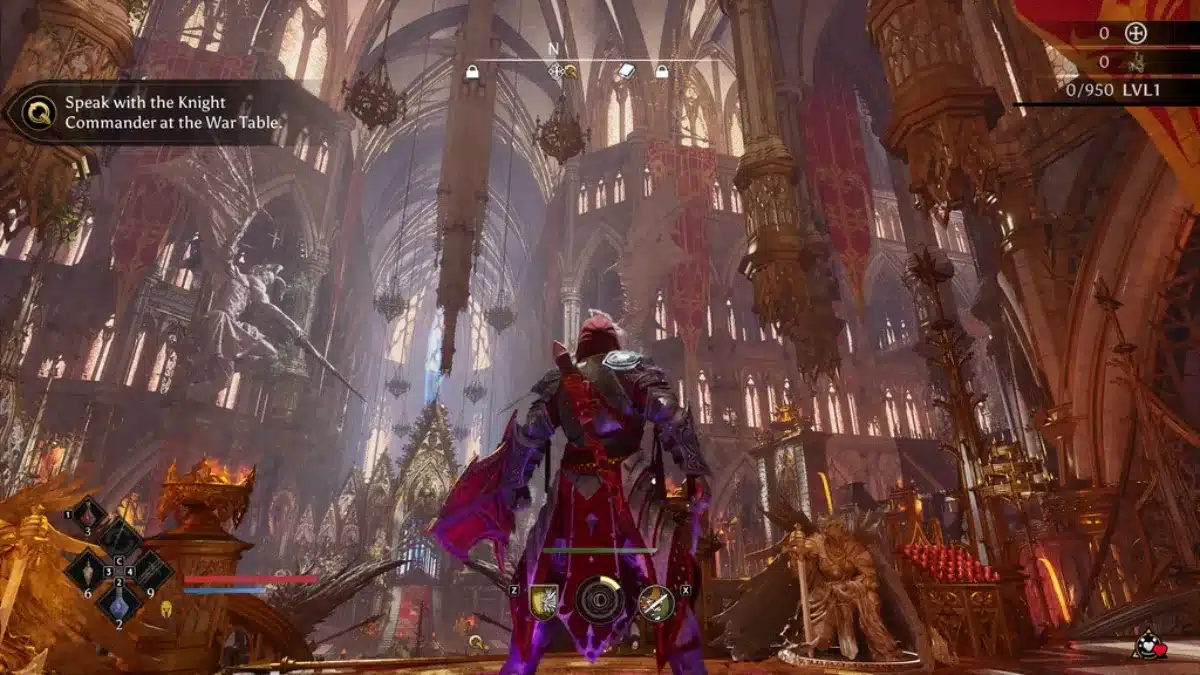
That continued throughout Gildenarch. The gothic environments are beautiful, and more than once I found myself looking at the scenery instead of concentrating on whatever wanted to kill me.
At one point, I was so busy taking screenshots that I completely missed an enemy approaching from the side, only noticing my mistake when an explosive landed at my feet and another attack came crashing into my head.
Not my finest moment, but perhaps a compliment to the art direction.
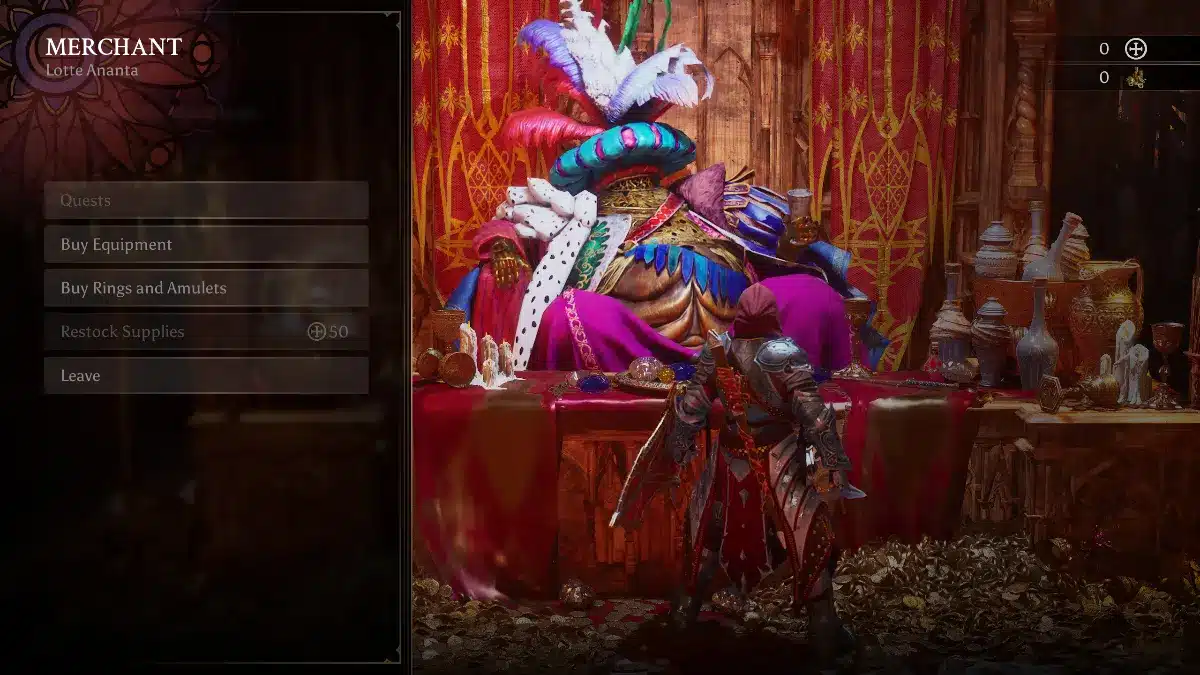
The characters also have plenty of personality. Lotte quickly became my favourite, with the eccentric treasure hunter winning me over to the point that I was considerably more interested in whatever he wanted than everybody else’s problems.
Not my finest moment, but perhaps a compliment to the art direction.
The opening lore also held my attention. I normally know how invested I am in a game’s story by whether I’m tempted to skip its cutscenes during a first playthrough. With Crimson Moon, I wanted to keep watching.
Combat Forced Me to Stop Rushing
Crimson Moon does a good job of explaining its combat. Actually using everything it teaches you is another matter.
My early strategy consisted largely of running towards the next encounter as though I’d suddenly become a speedrunner.
The Demon Brute eventually convinced me this wasn’t working.
Enemies hit hard, healing resources are limited and the ability to resurrect initially gave me a very false sense of security. I went from thinking death would make things easy to discovering that Crimson Moon is perfectly capable of killing you again before you’ve had much time to celebrate coming back. Each run gives you a limited pool of lives, so resurrection isn’t an unlimited safety net. Burning through them early simply means having fewer chances left when you reach the encounters that actually need them.
ProbablyMonsters describes its combat as Souls-inspired, and that influence becomes particularly apparent when mistakes begin costing precious health and boss encounters demand more patience.
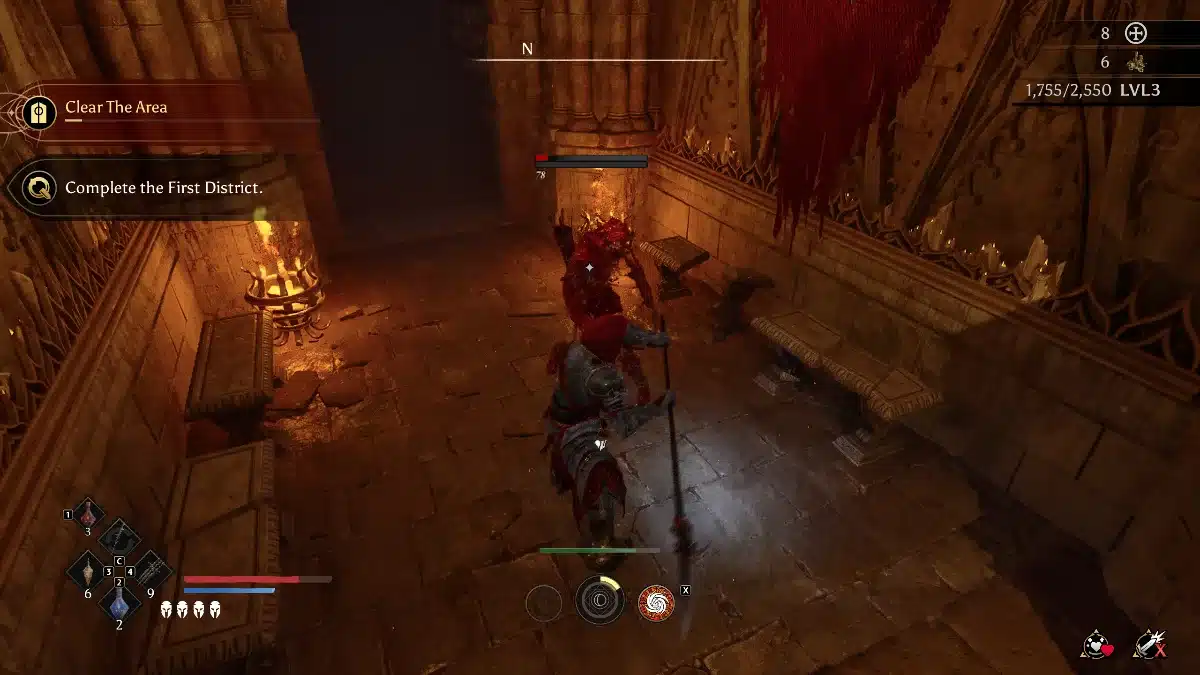
Switching to the spear became a turning point for me, although I can’t pretend there was much strategy behind discovering it. I accidentally switched to it in the middle of a fight and immediately preferred it. It hit harder than the swords I’d been using, but the extra range was what really worked for me, giving me more space between myself and enemies instead of forcing me so close to every attack. Once I’d made the switch, I never looked back.
I also began playing with keyboard and mouse before eventually switching to a controller. That’s entirely personal preference, but as someone who tends to favour a controller for games such as Elden Ring and Diablo, the change immediately felt more natural. I started getting further into my runs and became much more comfortable during combat. There wasn’t anything specifically wrong with the keyboard and mouse controls; this was entirely personal preference. I tend to favour keyboard and mouse for strategy games and city builders, where I value the extra precision, but for action games like Crimson Moon I feel more comfortable on a controller and more in control of my character. Once I switched, I started getting further into my runs simply because the control scheme suited the way I prefer to play.
Apparently, the solution was to stop charging at everything and actually think about what I was doing.
Who knew?
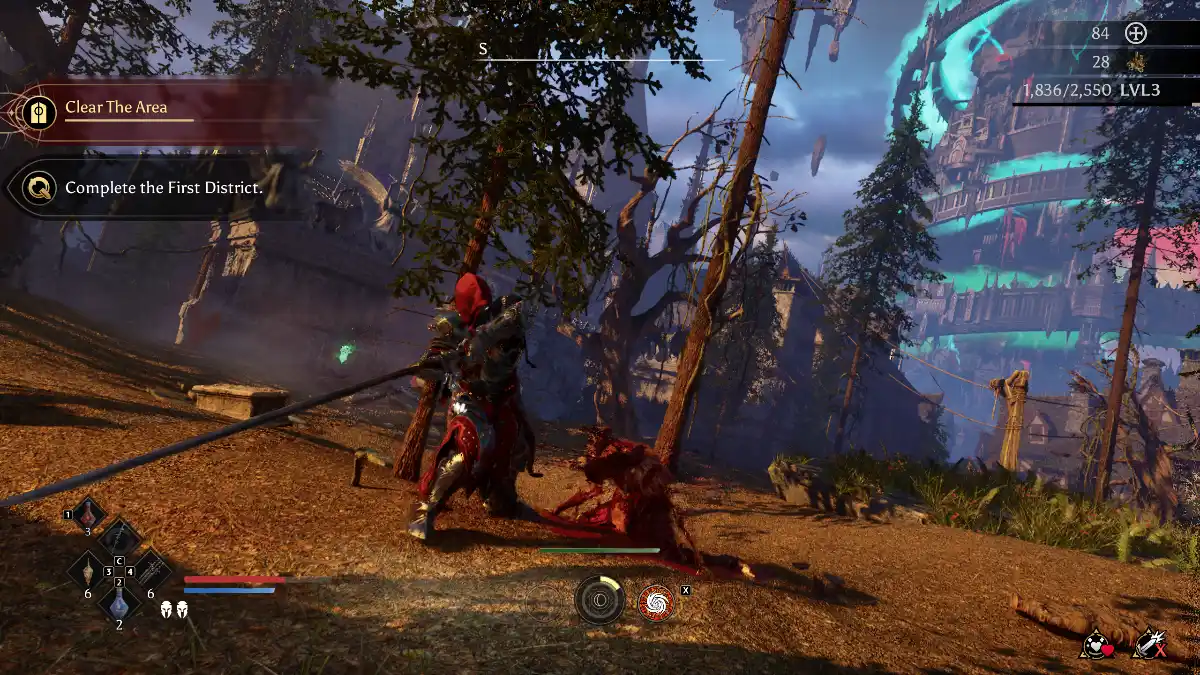
Crimson Moon was reviewed using a pre-release PC build, and I ultimately had to play on Low settings to maintain a usable experience. ProbablyMonsters warned reviewers that performance in this build was not representative of the September 1 release version, so I have documented my testing below but have not factored pre-release optimisation into the review score.
PC Performance Tested
| PC Performance | Lauren’s Testing |
|---|---|
| Platform | PC |
| Build Tested | Pre-release review build |
| Graphics Preset Used | Low |
| Reason for Low Settings | Required to maintain a playable experience on the review build |
| Performance at Higher Settings | Not suitable for assessment on the supplied build |
| Launch Performance | Not assessed |
| Developer Guidance | Reviewers were advised that pre-release performance was not representative of the September 1 release build |
| Performance Verdict | Deferred until the launch version can be tested |
During normal play, I was generally seeing around 45 FPS on the pre-release build, with boss encounters occasionally dropping that closer to 40 FPS. Those figures reflect the review build I tested on Low settings and should not be taken as representative of the September 1 launch version.
Loot and Exploration Made the Runs Click
That change in approach also made me realise I’d been largely ignoring one of Crimson Moon’s most enjoyable elements: progression.
I’d accumulated plenty of gold but hadn’t paid enough attention to what I could actually do with it.
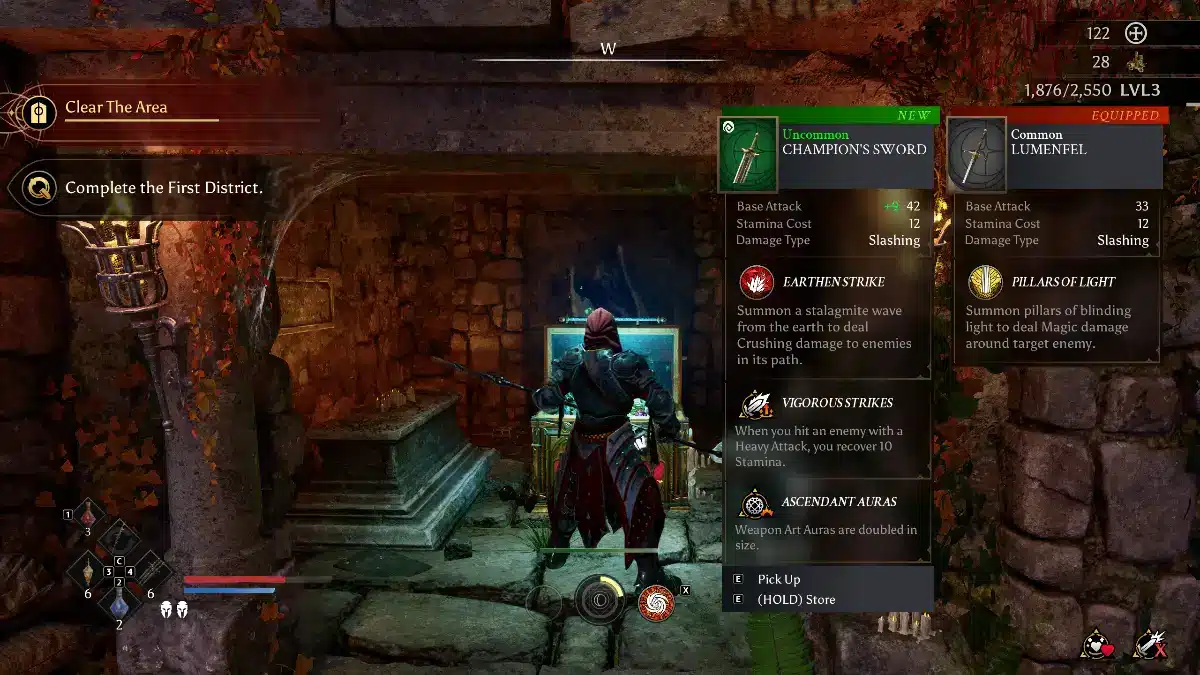
Upgrades didn’t feel prohibitively expensive, and once I started spending my resources, the difference was noticeable. Bringing equipment back from runs, purifying it and expanding the options available for future builds gave failure more purpose. Equipment recovered during successful hunts can be purified, permanently adding those weapons, armour and trinkets to your collection. That meant even when I wasn’t making dramatic progress towards the next boss, I could still return with something that expanded my options for later runs.
My approach to building the character was considerably less scientific. I wasn’t chasing a particular build or trying to find a meta combination; if I picked up equipment with better stats, I equipped it. Back at Sanctus Clypeus, I’d take whatever gold I’d earned to Gajov and upgrade the gear I already had. It was a simple approach, but it also showed me that Crimson Moon doesn’t require you to understand every part of its build system before you can start making meaningful progress.
Most importantly, progression never felt like it was deliberately wasting my time. When I hit a wall against a boss, progression often meant heading back through familiar areas, gathering more equipment and gold, upgrading at the hub and attempting the run again. I enjoyed having something to work towards during those attempts, but repeating that process alone is where the structure began to lose some of its pull for me.
The same happened with exploration.
I’d become so focused on reaching the next boss that I’d barely paid attention to the Lore Scrolls I was supposed to be finding. Once I deliberately slowed down, I started hunting for chests, artefacts and scrolls instead. Lore Scrolls aren’t simply collectibles either. Returning them to Mereda unlocks additional Boons for future hunts, so searching side paths had a practical benefit beyond satisfying my need to check every suspicious corner.
That became one of my favourite parts of the game.
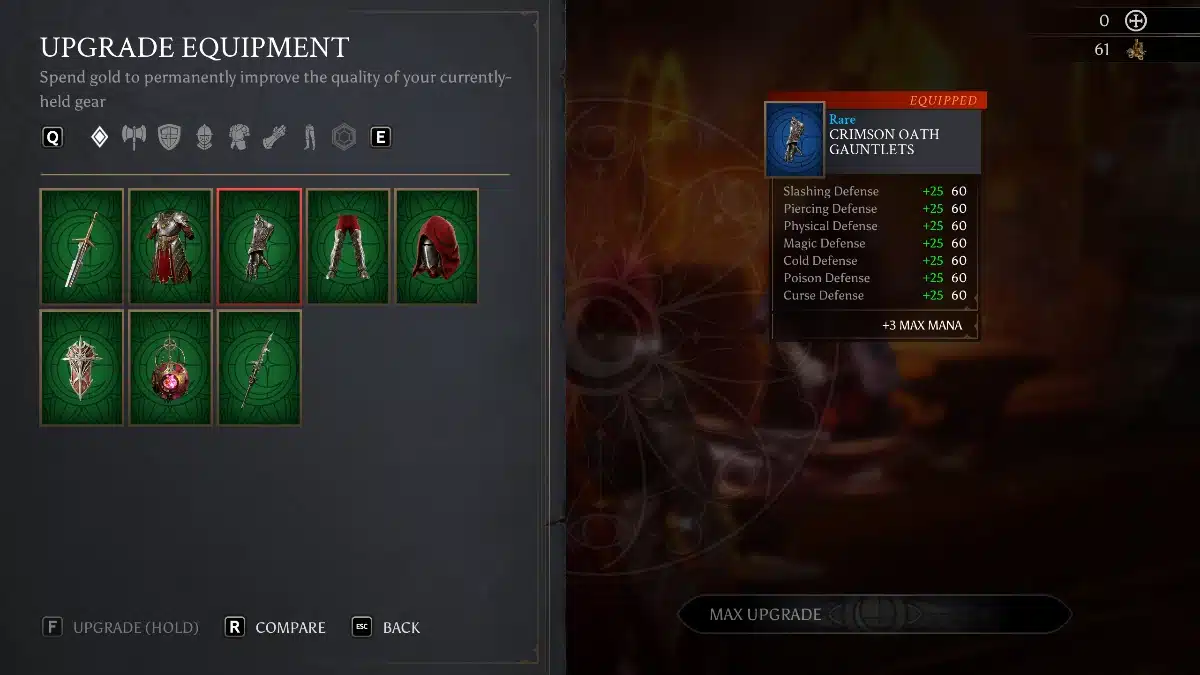
I like having tangible goals to work towards, and knowing that exploring could produce something useful gave me much more motivation than simply reaching another boss.
It also produced some questionable navigation.
One crumbling building filled with broken stairs and wooden mechanisms repeatedly left me unable to work out how I was supposed to reach the floor below. Eventually, I gave up looking for the intended route and parkoured my way down.
Whether that’s actually what ProbablyMonsters intended, I still don’t know.
It works, though, so that’s my route now.
Crimson Moon Didn’t Quite Hook Me Solo
This is ultimately where Crimson Moon and I part ways slightly.
Its basic loop becomes clear fairly quickly: enter another run, fight, explore, gather equipment, improve your build and become powerful enough to push further next time.
There’s nothing inherently wrong with that structure. Once I stopped rushing through it, I actually found myself enjoying it substantially more.
It just never gave me that overwhelming “one more run” feeling when playing alone.
ProbablyMonsters has designed Crimson Moon for either solo play or two-player co-op, with its replayable hunts and challenging encounters forming the foundation of both. I reviewed the game solo and therefore can’t judge the co-op experience itself, but it’s probably how I’d personally choose to return to Gildenarch.
Fighting bosses, experimenting with builds and inevitably getting one another killed sounds considerably more appealing to me with somebody else along for the ride.
That personal preference doesn’t make Crimson Moon a bad solo game.
Quite the opposite.
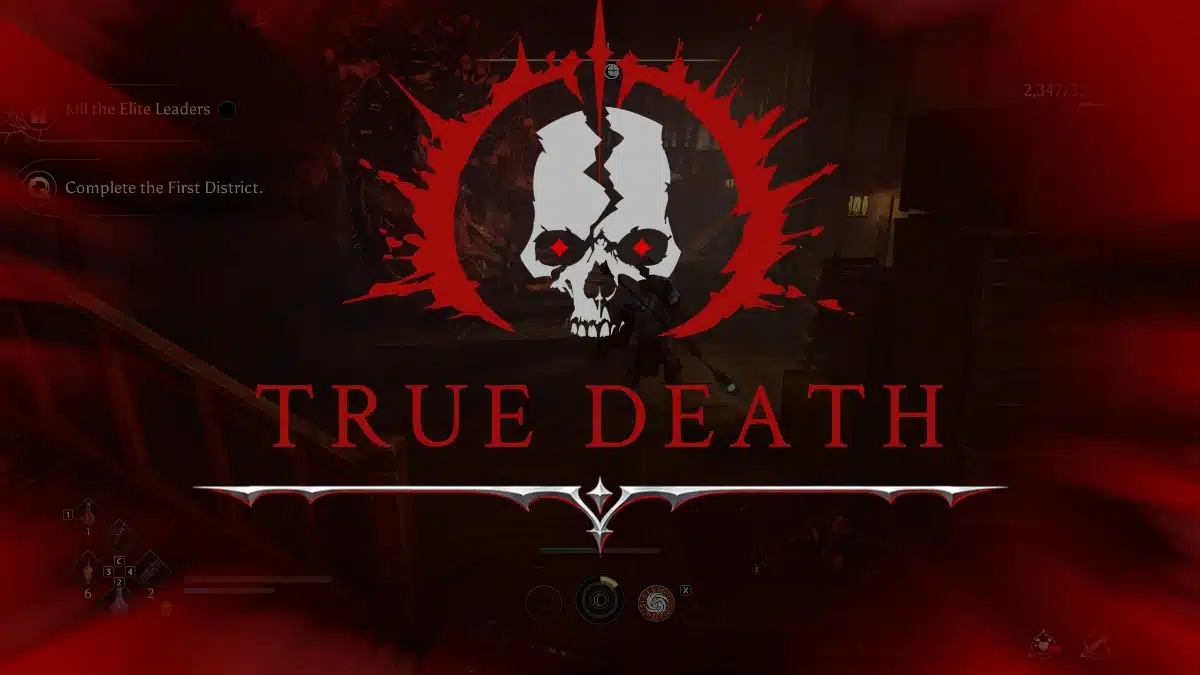
There is a lot here that I genuinely enjoyed: beautiful environments, interesting lore, memorable characters, satisfying exploration and progression that didn’t immediately turn into an exhausting grind.
At $19.99 USD for the base game, I can easily see players who enjoy difficult run-based combat and experimenting with builds getting their money’s worth. (regional pricing may vary)
It isn’t likely to become my next solo obsession, but despite thinking several times that it simply wasn’t a game for me, I’m not quite finished with Gildenarch yet.
Crimson Moon is a beautiful and challenging action-adventure RPG that became considerably more enjoyable once I stopped rushing towards bosses and started engaging with its exploration and progression systems.
Its repeated run structure never completely won me over as a solo player, particularly when progression can mean returning through familiar territory while becoming strong enough to push further. However, satisfying exploration, interesting lore, memorable characters and accessible build progression gave me plenty of reasons to keep going.
At $19.99, Crimson Moon offers an impressive amount for players who enjoy replayable challenges and character builds. It may not be the kind of game I’d normally choose to play alone, but it’s one I’ll probably continue dipping into — and one I’m particularly interested in returning to with a co-op partner.
Crimson Moon Quick Facts
Developer
ProbabyMonsters, Inc
Publisher
ProbablyMonsters, Inc
Reviewed platform
PC
Release Date
September 1st, 2026
Genre
Action-adventure RPG
Game Modes
Single-Player, Two player co-op
PEGI
M/18+
Crimson Moon
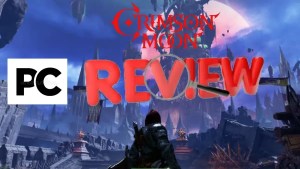
Crimson Moon is a gothic action-adventure RPG from ProbablyMonsters built around replayable hunts, Souls-inspired combat, exploration, loot progression and solo or two-player co-op.
Product Brand: ProbablyMonsters
8
Pros
- Beautiful environments that made me want to stop and explore.
- Interesting lore that held my attention from the opening.
- Memorable characters, particularly Lotte.
- Exploration makes hunting for loot, artefacts and Lore Scrolls rewarding.
- Progression and upgrades don’t feel unnecessarily grindy.
- Satisfying combat once you find a weapon and playstyle that suits you.
Cons
- Repeated runs can become less appealing when playing solo.
- Progress sometimes means replaying areas while building enough strength to push further.
- Navigation can occasionally be unclear.





This game was not on my radar at all, but it sounds like something I should look into more!
For Sure! It really is a nice game and one to look into.