Key Highlights:
- Command & Conquer: Generals Zero Hour iOS port runs the original game engine natively on ARM64 rather than through Windows emulation or streaming.
- Developer Ammaar Reshi used Anthropic’s Claude Fable 5 to help adapt existing open-source work for iPhone and iPad.
- The project includes RTS touch controls, but players must own Zero Hour and build and sideload the application themselves.
Quick Links:
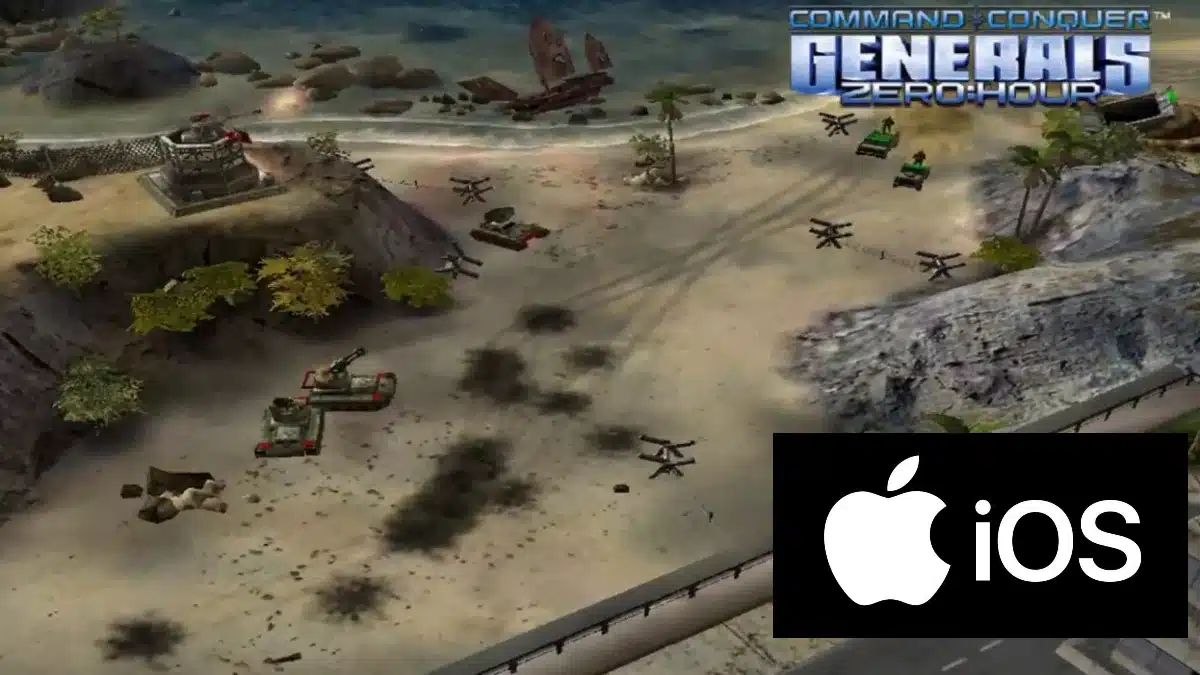
A new Command & Conquer: Generals Zero Hour iOS port has brought EA’s classic 2003 real-time strategy game natively to iPhone and iPad, more than two decades after its original PC release.
There is an important distinction, however. This is not a new Electronic Arts release and cannot simply be downloaded from Apple’s App Store.
The community project was created by developer Ammaar Reshi, lead of product and design at Google AI Studio, with assistance from Anthropic’s Claude Fable 5. It builds upon several earlier projects rather than recreating Zero Hour from scratch, including EA’s open-source release, previous Unix work and the GeneralsX project for macOS and Linux.
The timing follows a major change in how the Command & Conquer community can work with the older games. EA released source code for several classic Command & Conquer titles under the GPL v3 licence, opening the door to community development projects that would previously have been far more difficult.
Zero Hour Runs Natively Rather Than Through Emulation
The most interesting technical attribute of the project is how Zero Hour actually reaches Apple’s hardware.
The original game engine has been compiled for ARM64, the architecture used by modern Apple devices. Its graphics then travel through a translation chain from DirectX 8 to DXVK, Vulkan, MoltenVK and finally Apple’s Metal graphics API.
That means the project is not running the Windows game inside a conventional emulator or virtual machine. The original game logic is executing natively after being adapted for modern Apple hardware.
Getting there required more than recompiling the existing code.
Zero Hour’s 2003 engine expects access to a writable file system. iOS applications instead operate from signed, read-only application bundles, requiring configuration files, saves and caches to be redirected to locations where the operating system permits them to be written.
Reshi also had to solve issues ranging from audio problems to a corrupted minimap during development. Human playtesting remained part of the process, with problems identified during testing before further AI-assisted debugging.
According to Reshi, the initial build was produced in around 40 minutes before several more hours were spent debugging the port. Reported AI usage costs were around $100 to $200 in tokens.
That makes the project an interesting example of what AI-assisted development can currently achieve, but describing it simply as a game “ported by AI” would miss an important part of the story. Claude worked with accessible source code, years of previous community development and human testing rather than independently converting an inaccessible Windows game into an iOS release.
How Command & Conquer Works With Touch Controls
Playing an RTS designed around a mouse and keyboard creates an obvious problem on an iPad or iPhone, so the project introduces dedicated touchscreen controls.
Players can tap units to select them, drag a selection box around multiple units, long-press to deselect, move the camera using two fingers and pinch the display to zoom. Apple Pencil input is also supported.
The port supports Campaign, Skirmish and Generals Challenge, including missions, objectives, cutscenes and saves. Music, unit dialogue, EVA announcements, challenge taunts and briefing videos are also working.
For a game built around rapidly selecting units and navigating large battlefields, those touch controls are arguably just as important as getting the engine running. They allow Zero Hour’s traditional RTS interface to operate without requiring a mouse.
GLN has previously covered the franchise moving in the opposite direction through Command & Conquer: Legions bringing the series to mobile devices. Unlike that purpose-built mobile game, this project attempts to preserve the original Zero Hour engine and gameplay on Apple hardware.
You Cannot Download Zero Hour From the App Store
There is a significant barrier for anyone hoping to start playing immediately.
The Generals-Mac-iOS-iPad project is publicly available through GitHub, but the repository does not contain Electronic Arts’ copyrighted game assets. Players need their own legally acquired copy of Zero Hour and must provide the required game data themselves.
The iPhone and iPad versions also need to be built and sideloaded rather than installed through the App Store. The process requires a Mac with Xcode, an Apple Developer account for signing, and additional development tools before the resulting application can be deployed to the device.
Generals-Mac-iOS-iPad project on GitHub
Players therefore shouldn’t interpret the project as a free release of Command & Conquer: Generals Zero Hour. It is an open-source engine project that relies on game data supplied by someone who already owns the title.
That ownership requirement creates a useful connection to another part of the game’s recent history. Electronic Arts brought a large collection of its older games to Valve’s storefront in 2024, including Command & Conquer releases, as covered in GLN’s classic EA games arriving on Steam story.
iPad Memory Usage Remains a Problem
The native port still has technical limitations.
Long Zero Hour sessions can push memory consumption beyond 3 GB, which can cause iOS or iPadOS to terminate the application when the device comes under memory pressure. Players are therefore advised to save regularly.
The issue demonstrates one of the difficulties involved in moving a desktop RTS from 2003 onto a modern mobile operating system. Apple Silicon provides vastly more processing power than the PCs Zero Hour originally targeted, but iOS memory management and application restrictions create problems the original developers never had to account for.
The community has already taken the newly accessible Command & Conquer code in another direction too. Shortly after the Apple project appeared, another developer demonstrated Generals Zero Hour running in a web browser, building upon the recent community work to target the web instead.
Neither project represents an official new Zero Hour release from EA, but both show what has become possible since the franchise’s source code and years of community development became available to developers.
For players prepared to compile the software and supply their own game files, Zero Hour can now run natively on an iPhone or iPad with controls specifically adapted for a touchscreen. That’s a considerably more interesting technical achievement than simply getting a 2003 Windows executable running through an emulator.