
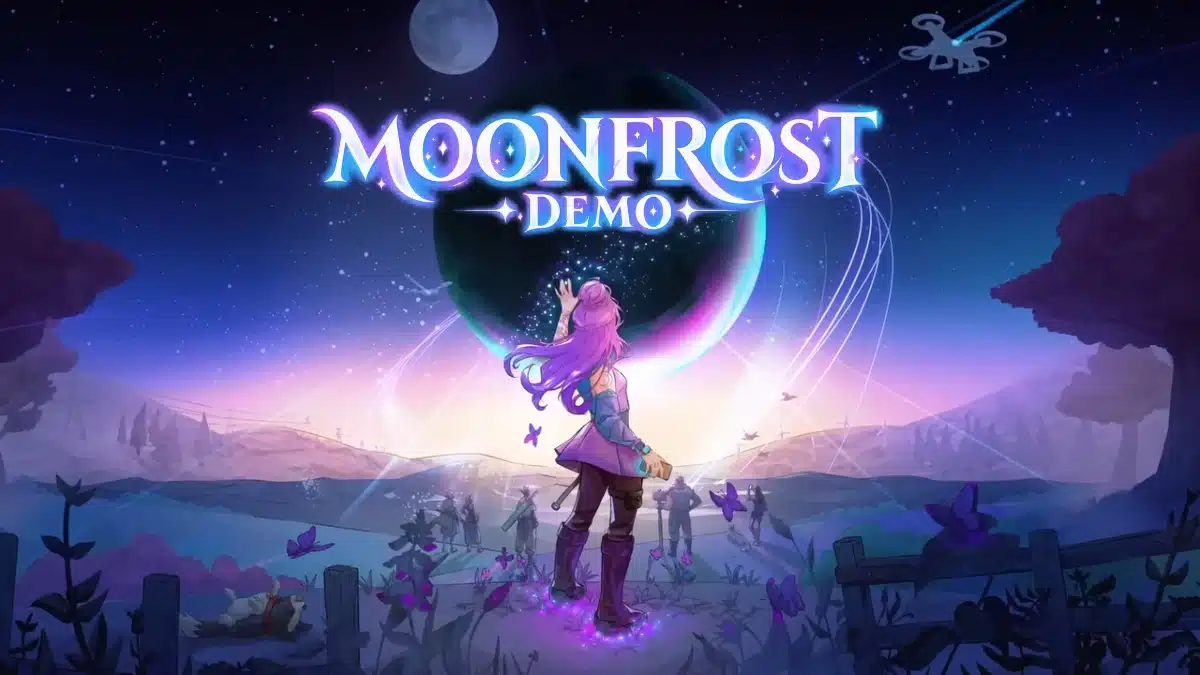
Key Highlights:
- Moonfrost launches into Steam Early Access on October 12, 2026.
- The Early Access version will include roughly half of the main storyline, 11 villagers and extensive village restoration.
- A free Steam demo is available now, and what was supposed to be a quick 20-minute look became considerably longer than planned.
I downloaded the Moonfrost demo intending to spend around 20 minutes with it.
Just enough time to understand what Oxalis Games was building, grab a few screenshots and get a better feel for the game before writing about its upcoming Early Access launch.
That did not happen.
Moonfrost launches into Steam Early Access on October 12, bringing farming, crafting, relationships and village restoration together within a world repeatedly damaged by mysterious meteor storms.
On paper, there is plenty here that already fits comfortably within the cosy life-sim genre.
Actually playing it made the appeal much clearer.
Visually, Moonfrost probably would not have been my first choice.
I tend to gravitate towards more realistic or Japanese-inspired cosy worlds, while Moonfrost’s pixel-inspired 2.5D presentation sits much closer to the Stardew Valley side of the genre.
Within a few minutes, though, I stopped caring.
My demo took around 30 seconds to load on an older PC, which was perfectly reasonable, before opening with a simple character creator.
There are basic skin-tone options and several outfits available already, while three additional customisation tabs remain locked in the current demo.
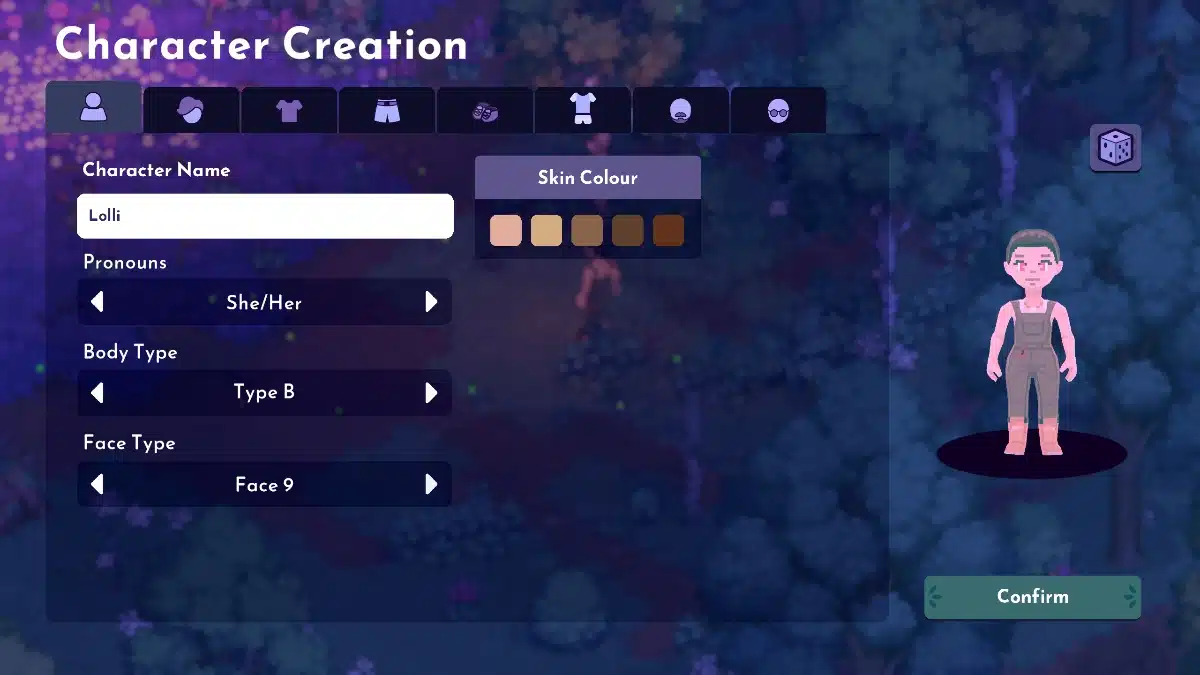
It is straightforward rather than overwhelming, and that same approach continues once the game actually begins.
The soundtrack also stood out almost immediately. It has that soft, memorable quality that feels like it could become increasingly familiar after spending dozens of hours tending crops and rebuilding the village.
Then you meet Ash.
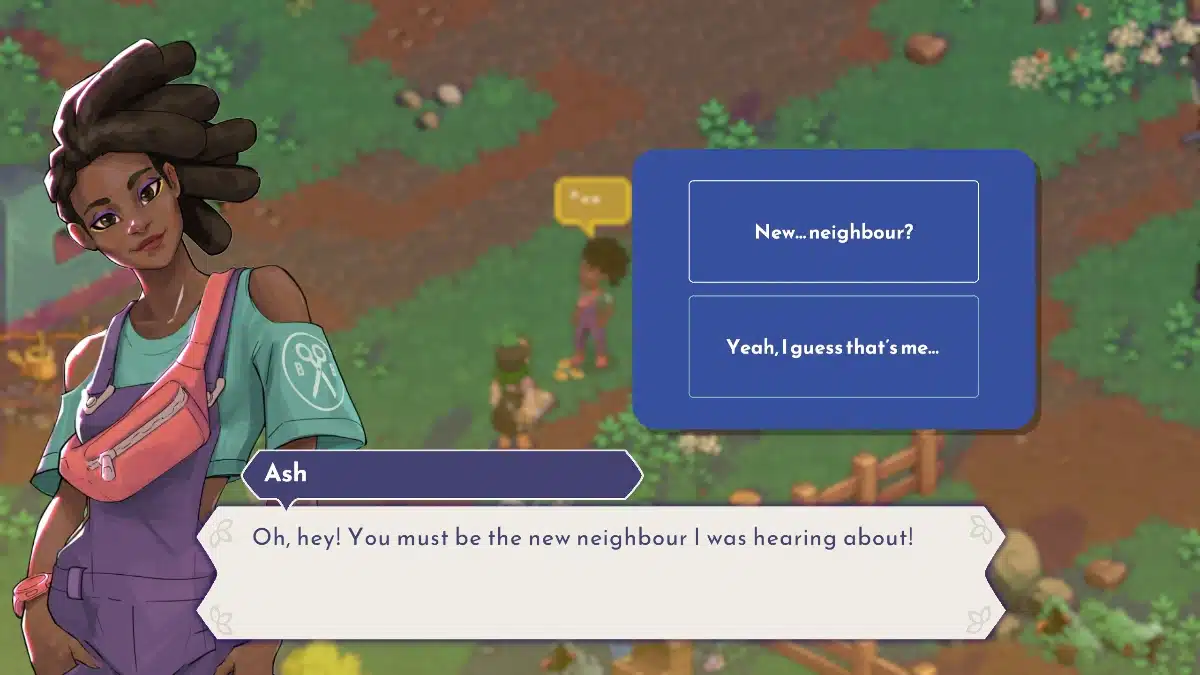
Ash introduces the basics through the familiar life-sim routine: gather some materials, craft your starter tools and learn how the world works.
Nothing particularly revolutionary there.
What did catch my attention was discovering that my character had forgotten everything.
Who they are, why they are there and what happened before their arrival are all missing, giving Moonfrost an actual mystery to sit underneath the farming and crafting.
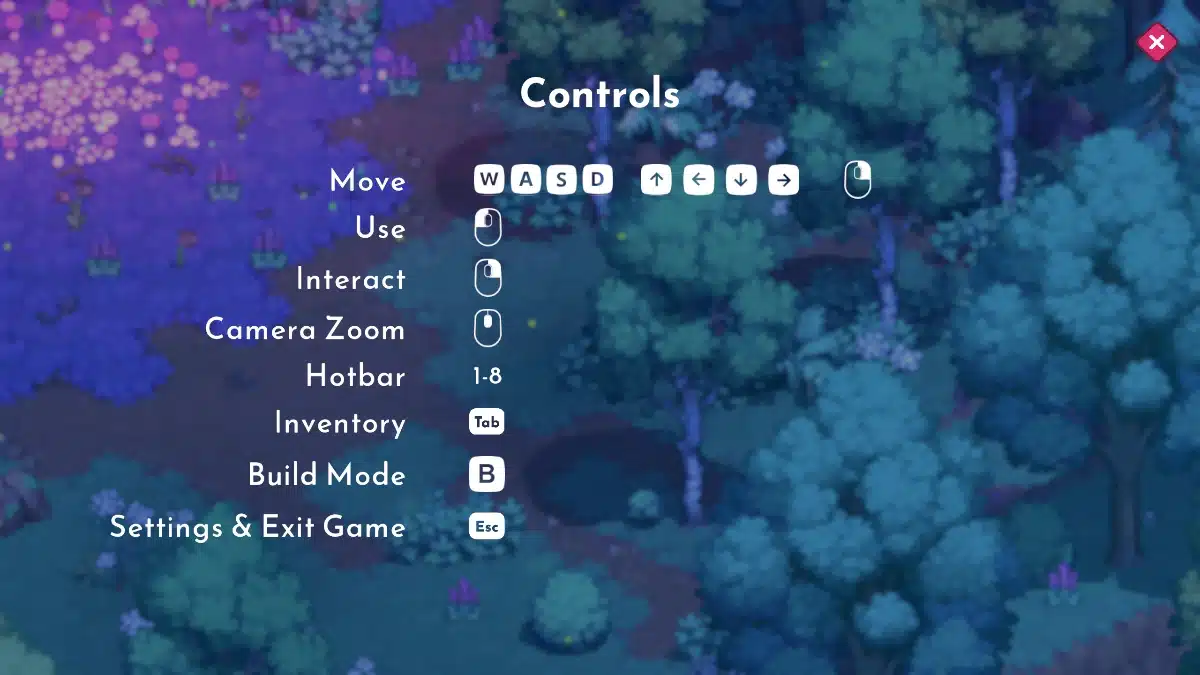
As someone who will choose a controller whenever possible, I also appreciated one very small accessibility-of-play feature far more than I expected.
I didn’t have to awkwardly spend the whole demo moving around with WASD.
Moonfrost allows me to right-click where I want to go and simply send my character there.
It sounds tiny, but for somebody far more comfortable gaming with a controller, it made playing on PC noticeably more enjoyable.
The tutorial itself remains equally easy to follow.
You are introduced early to Walter, who may already have become one of my favourite reasons to rebuild the village.
He is adorable.
More importantly, meeting him gives the destruction around you a little emotional weight.
There is a lot to repair.
The village is visibly damaged and your farm is, to put it kindly, hideous when you first arrive.
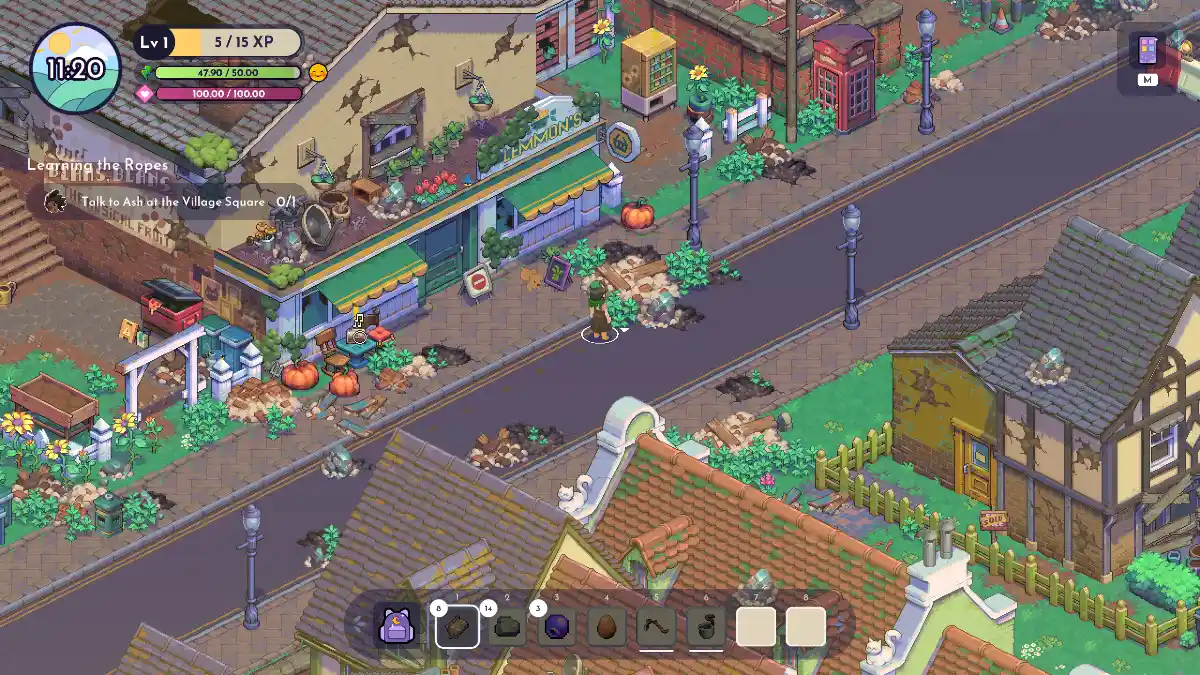
For players who enjoy gathering resources, crafting upgrades and slowly turning a ruined space into something beautiful, I can already see Moonfrost consuming a ridiculous number of hours.
Farming follows naturally from the opening tutorial.
You buy seeds, plant them and begin building up your little patch of land.
Then Moonfrost did something that immediately won me over.
There is a seed vending machine directly on the farm.
No running halfway across town because you miscounted and need one more packet.
No abandoning what you were doing because you planted everything except that final crop.
After repeatedly doing exactly that in Coral Island, I appreciate this far more than I probably should.
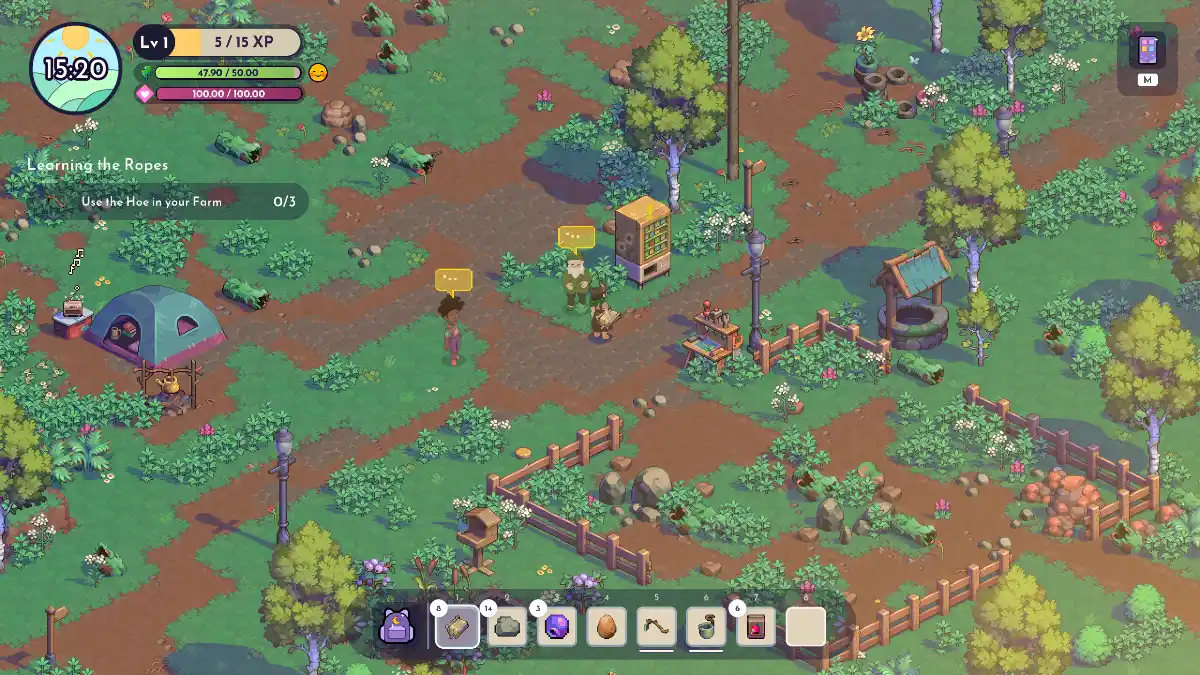
It is a tiny quality-of-life decision, but those are often the things that matter most in a game players might eventually spend hundreds of hours inside.
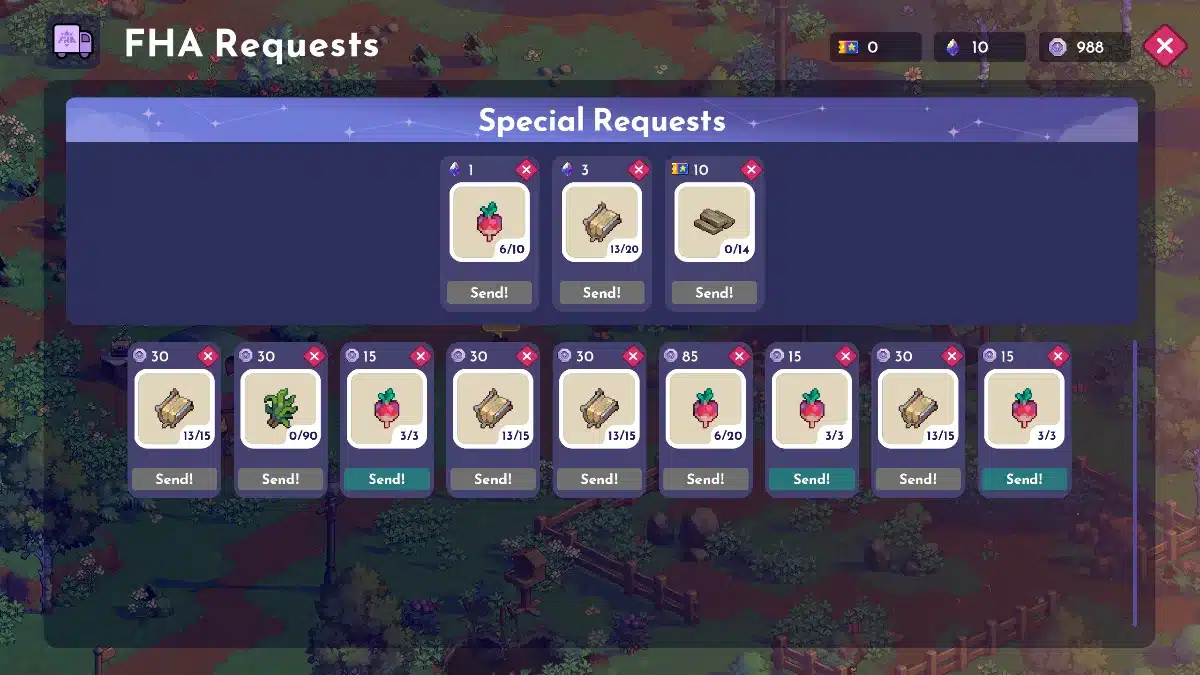
Then the requests started arriving on my phone.
This is roughly where my plan to spend 20 minutes with Moonfrost completely disappeared.
The early requests are simple.
At least during the demo, they do not feel overly grindy, the required materials are generally easy to find and completing one rarely feels like a huge commitment.
Which is precisely the problem.
I wanted to finish all of them.
One request becomes another small job, which leads to gathering something nearby, which leads to noticing something else that needs doing.
Suddenly, closing the game feels considerably less important than finishing one more task.
That loop reminded me of what I enjoyed so much about Starsand Island.
I originally went into Starsand expecting to farm and build a peaceful island home, only to find that farming, fishing, crafting, exploration and gathering constantly fed into one another until one simple plan became an entire in-game day.
Moonfrost creates a similar feeling surprisingly quickly.
The difference is that here, rebuilding gives all those little jobs a very visible purpose.
You are not simply upgrading your own farm.
You are gradually repairing somewhere that genuinely looks like it needs you.
There is also a little of the same wandering appeal I have enjoyed in Aniimo.
The two games are mechanically very different, but both encourage that dangerous thought of “I’ll just go and look at this one thing” before something else inevitably catches your attention.
For me, that is usually the point where a cosy game either works or doesn’t.
Moonfrost worked.
Oxalis Games has confirmed that Moonfrost’s October 12 Early Access build will contain around half of the main storyline.
Players will be able to meet and befriend 11 villagers, with relationships initially capped at Level 3, while the Temple will be explorable through its opening section with puzzles to discover along the way.
Village restoration will also be a major part of progression.
Players can clear leaves, rubbish and grime, repair damaged streets and restore businesses as the settlement gradually comes back to life.
Home building and decoration are already included, alongside hundreds of furniture and decoration blueprints to collect.
The developer says Early Access will continue expanding the story, characters, relationships, Temple content, rebuilding options and other features on the road towards Version 1.0.
The eventual full release is also expected to complete the main storyline and open up the full range of friendship events and romance options.
That means the October release is still very deliberately an Early Access game rather than the finished Moonfrost experience.
I only downloaded Moonfrost because I wanted some first-hand context before writing about its Early Access release.
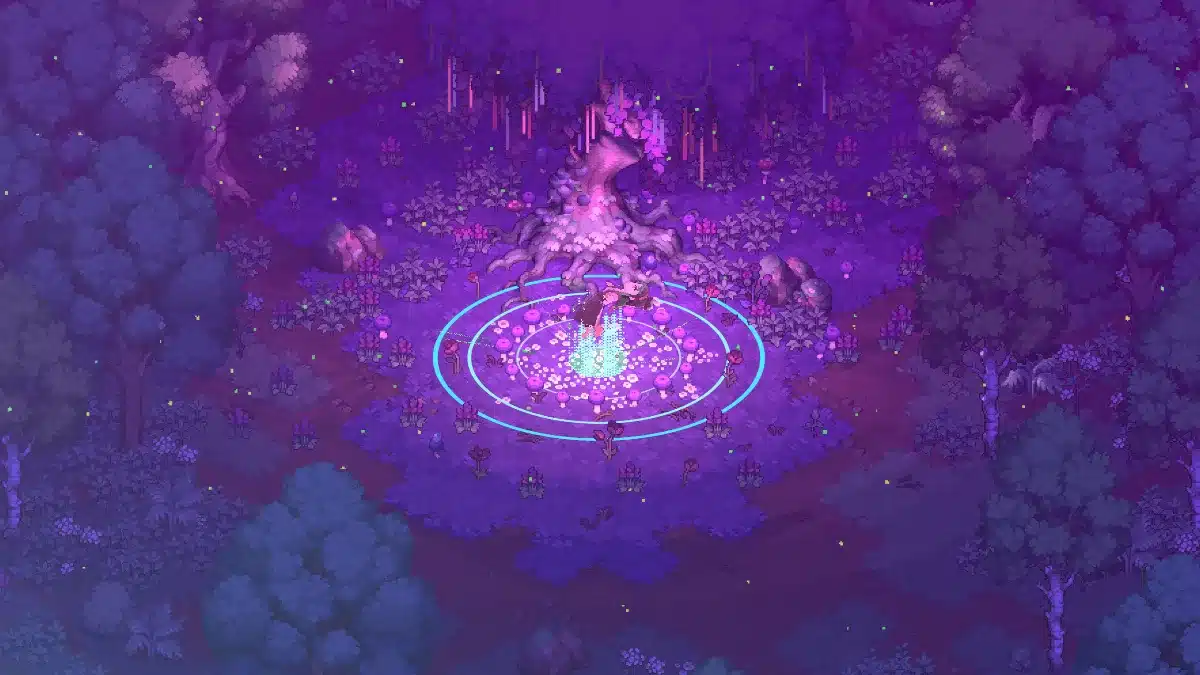
From screenshots alone, I genuinely didn’t expect it to be something I would personally choose over some of the other cosy games available.
Now I can see myself continuing with the demo.
And, more than likely, buying the full Early Access game.
That is a considerably different reaction from the one I had before pressing Play.
There are obviously much bigger questions that a demo cannot answer.
How satisfying will rebuilding remain after dozens of hours?
Will later requests become more demanding?
How deep are the relationships and story?
Does the progression continue providing reasons to come back once the initial village restoration novelty wears off?
Those are questions for Moonfrost’s Early Access period and, eventually, a proper review.
For now, the demo has accomplished something much simpler.
It made me forget that I was supposed to be writing an article.
Moonfrost launches into Steam Early Access on October 12, 2026, and its free demo is currently available through Steam.