

Key Highlights:
- League of Legends: New Dawn will overhaul the client, Summoner’s Rift visuals and gameplay during 2027.
- Riot confirms existing champions and skins will remain usable, while runes and the Hextech engine are being retained.
- A full reveal is planned for January 2027, followed by player testing ahead of the update’s release later that year.
Riot Games has unveiled League of Legends New Dawn, a major overhaul coming in 2027 that will modernise the game’s client, revamp Summoner’s Rift and introduce substantial gameplay changes without replacing players’ existing champions or skins.
Announced during the 2026 League of Legends World Championship final on 14 November, New Dawn was introduced by executive producer Paul “Pabro” Bellezza and League Studio head Andrei “Meddler” van Roon.
The pair outlined Riot’s plans to modernise several parts of the MOBA, including the experience for new players. Bellezza acknowledged that the current client needs improvement, while van Roon explained that the changes are intended to help League remain relevant for years to come.
The accompanying New Dawn teaser trailer offers a first look at updated champion models, redesigned environments and what appears to be a substantially refreshed Summoner’s Rift.

Among the characters shown are Blitzcrank, Lux, Leona, Sett, Ekko, Jhin and Ahri. The footage also features updated ability effects, a redesigned Baron Nashor and changes to the battlefield’s appearance.
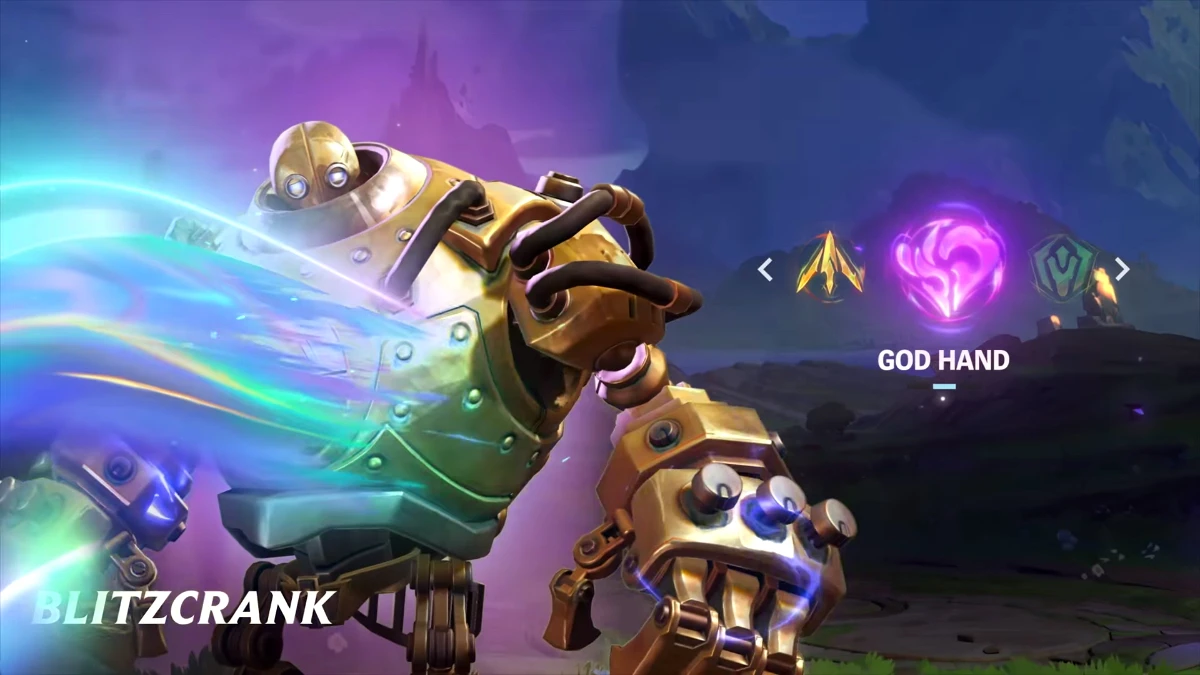
However, one of the most interesting moments involves Blitzcrank selecting an option labelled “God Hand” before demonstrating altered combat effects. The sequence suggests that Riot is exploring additional ways to customise how individual champions play.
Exactly how these choices will affect abilities remains unexplained.
Following the trailer, van Roon addressed several questions circulating among players on 16 November, providing important clarification about what New Dawn will and won’t change.
The existing rune system is being streamlined rather than removed. Players will still select runes, including a Keystone, although Riot hasn’t explained how those choices will interact with the new champion customisation options.
New Dawn will also continue using an upgraded version of League’s existing Hextech engine, rather than switching to a different game engine.
Perhaps most importantly for long-term players, every current champion and skin will remain usable following the update.
Riot also confirmed that New Dawn isn’t a sequel or a separate game. The name describes the upcoming overhaul and won’t permanently replace the League of Legends title.
The improvements to new-player accessibility could prove particularly valuable. When I reviewed League of Legends on PC earlier this year, its enormous learning curve remained one of my biggest criticisms.
A modernised interface and better introduction to the game’s mechanics could make a considerable difference to newcomers, particularly if Riot can simplify the experience without sacrificing the competitive depth that keeps existing players invested.
There’s also fresh information about when players will get to see more.
In its 16 November developer update, Riot confirmed that New Dawn will receive a full reveal in January 2027, replacing the usual Season Start presentation.
Broader playtesting is then planned shortly after the reveal, allowing players to provide feedback before the overhaul launches.
Riot separately outlined gameplay changes arriving with January’s new season, including the return of Kleptomancy and a new Keystone called Titanborn. Those changes are intended for the existing game, with some systems designed to carry forward into New Dawn.
January is not New Dawn’s release window. Riot has only committed to launching the overhaul later in 2027, with no exact date announced.
Players interested in following its development can register for New Dawn updates through Riot’s official website.
As things stand, the redesigned client, champion customisation and revised Summoner’s Rift remain works in progress, with January’s presentation expected to explain how the changes will function together.