

Resident Evil Requiem feels like Capcom looking back across almost three decades of survival horror and asking how many different versions of Resident Evil can comfortably exist inside one game.
The answer is surprisingly close to all of them.
I thoroughly enjoyed Resident Evil Requiem and would happily recommend it, particularly to players who already have an attachment to the series. More than anything else, it struck me as a genuine love letter to Resident Evil, combining its survival-horror roots with the increasingly confident action design that has defined some of Capcom’s strongest modern entries.
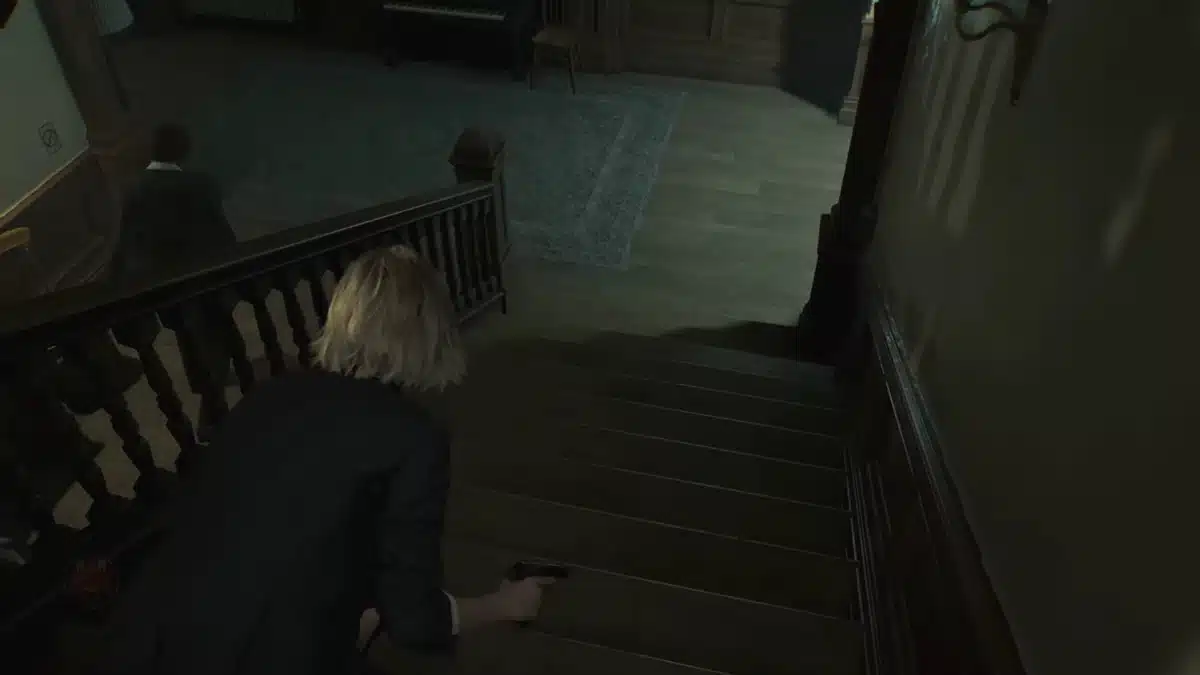
Its greatest trick is making Grace Ashcroft and Leon S. Kennedy feel as though they belong to completely different Resident Evil games without making Requiem itself feel broken in half.
Grace is vulnerable, inexperienced and frequently terrified by what is happening around her. Leon walks into danger with the confidence of somebody who has spent decades surviving situations that should have killed him.
That distinction extends far beyond characterisation.
Grace’s gameplay is built around tension, resource management and deciding whether an enemy is worth confronting at all. Leon is considerably more capable in combat and delivers the sort of action-heavy power fantasy expected from a veteran protagonist.
I really enjoyed being moved backwards and forwards between those two approaches.
Grace gave me concentrated survival horror that frequently reminded me of the philosophy behind Resident Evil 7 and Village, while Leon delivered something much closer to the action rhythm I loved in Resident Evil 4 Remake.
That comparison carries particular weight for me because Resident Evil 4 Remake remains one of my favourite Resident Evil experiences.
Requiem never simply attempts to recreate it, but Leon’s sections regularly capture the satisfaction of controlling somebody who is exceptionally capable without making every threat around him irrelevant.
Ironically, Leon’s gunplay initially made a poor impression on me.
His weapons could feel strangely floaty and less responsive than I expected. Considering how polished combat has become across modern Resident Evil games, I initially wondered whether I was experiencing some form of input or responsiveness problem.
The longer I played, the more obvious it became that the sensation was tied to progression rather than technical performance.
After investing in Leon’s weapons, their handling became noticeably more responsive and satisfying. What had initially struck me as awkward gunplay gradually made sense as part of the weapon progression curve.
From my testing, I came away convinced that the deliberately weaker initial handling was intended to make the upgrades themselves meaningful rather than being evidence of an underlying PS5 problem.
It is a clever idea, although one that risks creating the wrong first impression.
Grace progresses very differently.
Her syringes and crafted upgrades gave me a satisfying sense of development without gradually transforming her into another version of Leon. Her vulnerability remains essential to why her gameplay works, so simply giving her increasingly powerful firearms would have undermined much of the tension.
Leon naturally places greater emphasis on improving his weapons.
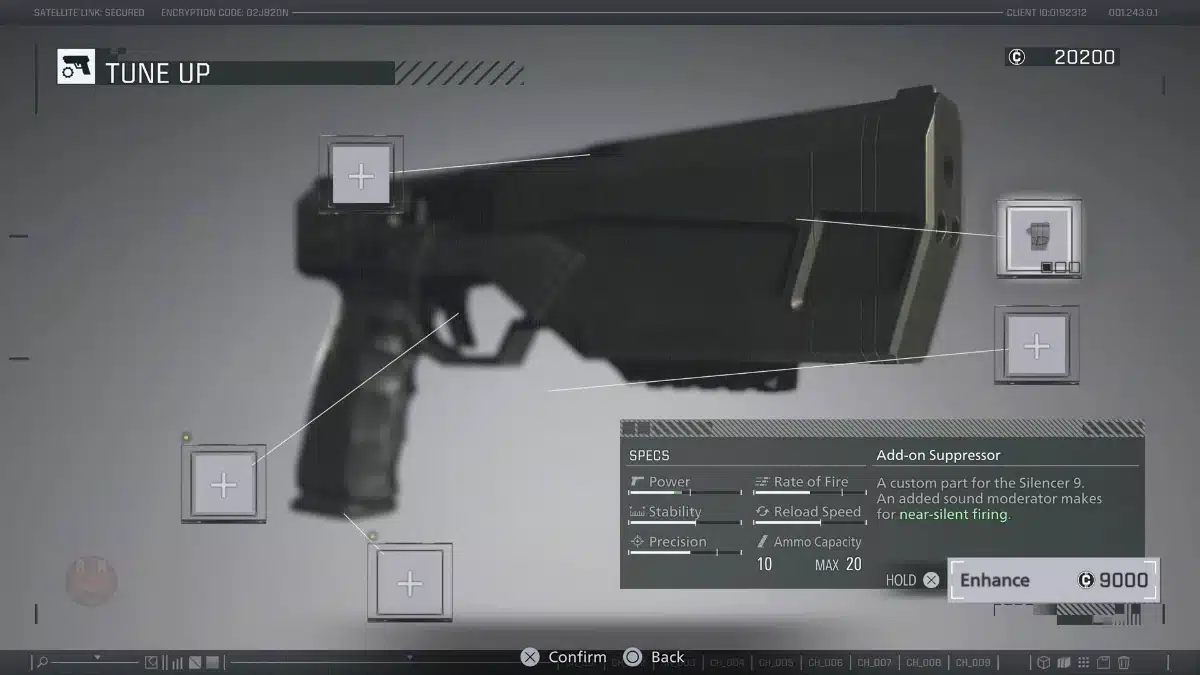
Even without falling back on the familiar merchant system, I thought his progression remained rewarding, and I was impressed by how well Capcom paced both characters despite continually switching between them.
Neither character ever felt as though their development had been abandoned while I was playing as the other.
The contrast also gives Requiem one of the better survival-horror and action combinations Capcom has produced.
Grace can make a relatively contained room feel threatening because every bullet potentially matters. Leon can enter a similar situation and completely alter the balance of power.
Neither approach is inherently better.
They make each other more effective.
Playing as Grace reminded me what vulnerability feels like, which made returning to Leon noticeably more empowering. Conversely, Leon’s more aggressive encounters provided welcome relief after some of Grace’s most uncomfortable stretches.
The zombies are a major reason Grace’s sections work as well as they do.
I felt the new zombies were some of the most impressive the series has offered to date, and much of that comes from how individual they can seem.
One of the earliest examples appears in the Care Centre.
Grace encounters a zombie restrained on an operating table while being experimented upon, and the creature appears to be in obvious agony. It was an effective early reminder that these enemies had once been people rather than disposable monsters placed around the environment purely to absorb ammunition.
That individuality continues throughout encounters.
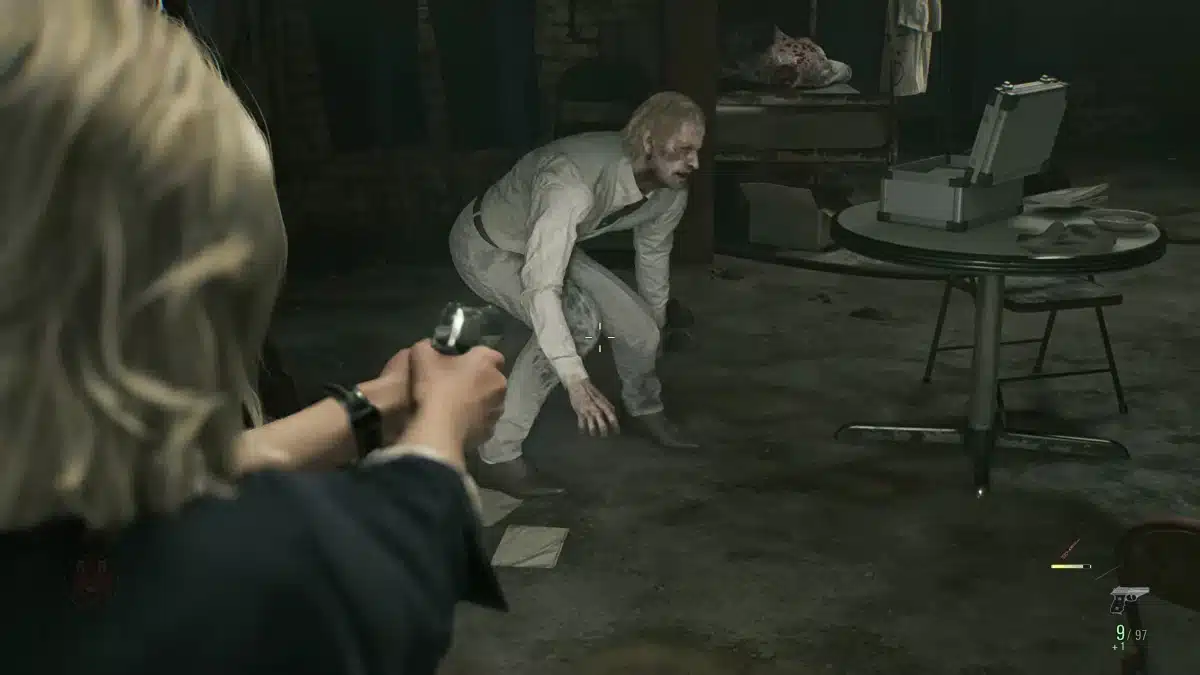
Different zombies began to feel like individual problems rather than interchangeable targets. Their behaviour, positioning and durability encouraged me to learn what I was dealing with before automatically deciding to fight.
On Standard difficulty, I generally found that an ordinary zombie required somewhere around four to seven pistol rounds to kill, although shot placement and the individual encounter naturally affected the result.
That number matters when ammunition is limited.
Four bullets might be an acceptable investment. Seven can suddenly feel expensive when there is no guarantee another enemy is not waiting around the next corner.
Learning when to spend ammunition and when to avoid confrontation became one of my favourite parts of Grace’s gameplay.
Requiem also understands that good horror is about considerably more than whatever monster happens to be standing in front of you.
Its sound design is exceptional.
One particular moment in the Care Centre captured it perfectly for me. Grace was audibly nervous and frightened while I moved her up a wooden staircase. Her footsteps creaked against the timber as rain simultaneously battered the windows surrounding the building.
Each individual sound was simple.
Together, they created an incredibly atmospheric sequence.
Playing with headphones made those details far more effective. Grace’s breathing, environmental movement, footsteps and noises from somewhere beyond my immediate field of view regularly became as important to the tension as anything I could actually see.
There were times when simply hearing something nearby was more uncomfortable than confronting it.
Capcom has also put considerable work into Requiem’s spatial audio. The developers explained that ambient sounds were captured across 12 channels, including vertical positioning, to produce more convincing spatial reverb. That technical effort made sense to me after experiencing how precisely layered some of the Care Centre sequences could sound through headphones.
Visually, Requiem is equally impressive.
Ray tracing can sometimes feel like a graphical feature included because modern hardware allows it rather than because the game genuinely benefits from it.
I didn’t feel that way here.
Lighting and reflections made a noticeable contribution to the presentation during my playthrough, especially because darkness, confined interiors, wet environments and sharp differences between illuminated and unlit spaces are so important to the horror.
There are also some fantastic smaller visual details.
I particularly liked Leon’s tactical shotgun reload animation. It is the sort of animation most players will perform repeatedly without consciously thinking about it, yet the attention put into something so routine adds personality to the character.
Those details matter in a game where Leon is supposed to feel experienced.
He doesn’t just need to tell the player that he knows what he is doing. The way he handles weapons should communicate it too.
PS5 Performance Tested:
| PS5 Performance | My Testing |
|---|---|
| Console | Standard/base PS5 |
| Frame Rate | Up to 60 FPS |
| 120 FPS Mode | No |
| Higher-Performance Graphics Preset | No |
| VRR Support | Yes |
| Ray Tracing | Yes |
| General Stability | Very stable throughout most of my playthrough |
| Minor Performance Dips | Occasionally noticeable during heavier real-time hair physics |
| Major Performance Issue | Repeatable frame-rate drop near the subway exit/detonator area in Raccoon City |
| Crashes | None encountered |
| Bugs/Glitches | None encountered |
That higher frame-rate functionality belongs to PS5 Pro. Capcom has confirmed that PS5 Pro can deliver 4K at 60fps with full ray tracing, while disabling ray tracing allows the enhanced console to reach up to 120fps, with Capcom describing an average of around 90fps.
Requiem supports VRR on my setup, although its usefulness on the standard console is naturally more limited when the game is targeting a maximum of 60fps. I found it more relevant to maintaining a smooth presentation and preventing tearing than providing any dramatic performance improvement.
Most of my playthrough remained very stable.
I encountered no crashes and no gameplay bugs or glitches that disrupted my progress.
There were, however, a few small frame-rate fluctuations that seemed to coincide with Requiem’s dynamic hair simulation doing considerably more work.
Rapid head turns, running movements or animations involving a character vigorously shaking their head could occasionally introduce a small dip as the additional hair strands reacted to the movement.
It was minor enough that I would not consider it a serious performance problem, but it was something I began to notice once I knew what to look for.
One location caused a much more substantial issue.
While controlling Leon in Raccoon City, I experienced a pronounced frame-rate drop when coming out of the subway entrance close to the detonator area.
The slowdown was severe enough during my first encounter with it that I stopped moving for a moment because I genuinely thought the game might crash.
It didn’t.
What made the issue more notable was that I could reproduce it.
Passing through the same area during subsequent runs caused the frame rate to drop again, which strongly suggested a localised performance bottleneck rather than an isolated random hitch.
It was easily the most significant technical issue I encountered on the standard PS5, but also very much an exception to how the rest of the game performed.
The puzzles were less impressive.
Some were so straightforward that they barely felt like puzzles at all.
The Chairman’s Office Puzzle Box in the Care Centre was particularly easy for me, as was the Organ Box. Neither demanded much experimentation or deduction before the solution became apparent.
Not every Resident Evil puzzle needs to leave players staring at a notebook for twenty minutes, but I would have liked Requiem to trust the player a little more often.
Its combat and resource systems regularly ask you to make meaningful decisions. Some of the puzzle design could have benefited from providing a similar level of resistance.
Requiem’s relationship with Resident Evil’s past is another area where my feelings were more complicated.
For the most part, the game succeeds brilliantly as a celebration of the franchise.
Returning characters, familiar ideas and references to previous events feel appropriate in a game arriving during Resident Evil’s 30th anniversary year.
But some material reused from Resident Evil 2 Remake and Resident Evil 3 Remake disappointed me.
There is an important distinction between revisiting something because it has narrative or historical significance and reusing something that already feels thoroughly explored.
Requiem is at its best when it uses the series’ history as a foundation for something new.
When nostalgia starts feeling closer to recycling, some of that impact is lost.

None of those criticisms caused me as much frustration as the game’s length.
My first completion took just over seven hours.
I wasn’t rushing through the campaign either. Based on what I now know about its routes and progression, I believe I could cut that down substantially if I concentrated almost entirely on reaching the end.
A focused playthrough of somewhere around five hours feels entirely achievable to me.
Runtime alone is not a useful measure of quality.
I would always rather play seven excellent hours than spend twenty hours completing repetitive content that exists solely to make a game appear larger.
Requiem’s problem is different.
There simply wasn’t enough of the material I enjoyed.
It frequently feels like two excellent Resident Evil games being asked to share the running time normally afforded to one.
Grace has enough mechanical identity to support a much larger survival-horror experience.
Leon has more than enough mechanical depth, history and combat potential to support a significantly expanded action campaign.
Instead, both repeatedly have to make room for the other.
I felt that most strongly during Leon’s time in Raccoon City.
I wanted considerably more gameplay there.
More challenges, more substantial encounters and additional boss battles would have given his side of the campaign much more room to develop without feeling like padding.
Grace suffers from essentially the same problem from the opposite direction.
Her sections establish a strong survival-horror loop built around ammunition conservation, vulnerability and environmental tension, yet the campaign can move away from her just as those mechanics are gathering momentum.
For me, Resident Evil Requiem has a portion-size problem rather than a quality problem.
I rarely wanted Capcom to remove anything.
I wanted Capcom to give me more of almost everything.
That makes Requiem’s central weakness unusually frustrating because it exists largely as a consequence of how successful the individual components are.
The game feels like two experiences packed into one. Grace supplies the vulnerability and resource pressure, while Leon provides the release that comes from temporarily becoming the most capable person in the room.
Remarkably, Capcom makes those extremes strengthen one another.
Grace makes Leon’s power feel earned because the same game has already reminded you how frightening these creatures can be when your resources and abilities are limited.
Leon provides catharsis after prolonged periods of tension.
Switching between them creates its own rhythm.
Resident Evil Requiem never convinced me that one of its protagonists was unnecessary.
It convinced me that both deserved more time.
That is ultimately why I came away so positive despite having several clear criticisms.
Leon’s sections left me wishing his return to Raccoon City had been substantially expanded, while Grace’s survival-horror gameplay was strong enough to support far more than the campaign ultimately gives her. The same applies to the boss encounters, although my frustration there was less about quantity than challenge.
Several bosses felt far too forgiving, and the parry mechanic was a major reason why. Once I became comfortable with its timing, it could neutralise so much incoming danger that fights which should have tested everything I had learned instead became surprisingly manageable.
That problem was most obvious during the final encounter.
I’m deliberately avoiding naming the final opponent here because the identity itself would spoil a significant late-game reveal, but the fight was surprisingly effortless on my playthrough.
I defeated the final boss on my first attempt without taking any damage. More tellingly, there was never a point during the encounter where I genuinely believed I was in danger of dying.
The parry mechanic was a major reason for that. Once I became comfortable with its timing, it felt enormously powerful and could neutralise attacks that should probably have carried far greater threat.
By the end of the campaign, I felt the parry system was strong enough to undermine some of the boss design. Instead of forcing me to adapt, conserve resources or learn complicated attack patterns, certain encounters became much easier simply because reliable parries removed so much of the danger.
That made the final battle particularly disappointing. A climactic Resident Evil boss should feel like a culmination of everything the player has learned, yet I finished Requiem’s last encounter untouched on my first attempt.
Considering how effective the game is at creating tension elsewhere, I expected its major bosses to provide considerably more resistance.
Resident Evil Requiem repeatedly left me wanting more, but usually for the right reasons.
Requiem understands the fear of being under-equipped.
It also understands the satisfaction of becoming powerful enough to fight back.
It understands why cautiously climbing a staircase while listening to rain strike the windows can be just as fundamental to Resident Evil as confidently unloading a shotgun into something that should already be dead.
Most importantly, Capcom manages to celebrate those two identities without allowing either to completely erase the other.
Resident Evil Requiem isn’t quite the definitive version of either style.
Given more time, it might have been.
What is here, however, is one of the most interesting attempts Capcom has made to reconcile what Resident Evil was, what it became, and what its modern audience now expects from it.
I just wish they’d served a larger portion.
Resident Evil Requiem Quick Facts
Developer
Capcom
Publisher
Capcom
Reviewed platform
PlayStation 5
Release Date
27 February 2026
Genre
Survival Horror
Game Modes
Single-player
Engine
RE ENGINE
Digital Download Size
72.88GB
Resident Evil Requiem

Resident Evil Requiem is a PS5 survival-horror game that combines Grace Ashcroft’s tense, resource-driven gameplay with Leon S. Kennedy’s action-focused combat.
Product Brand: Capcom
8.5
Pros
- Grace and Leon provide two genuinely distinctive styles of Resident Evil gameplay.
- Excellent zombie design makes individual infected feel unusually memorable.
- Outstanding environmental and spatial audio, particularly when using headphones.
- Strong progression systems maintain each protagonist's mechanical identity.
- Ray tracing makes a meaningful contribution to Requiem's lighting and atmosphere.
- Generally excellent performance on the standard PS5.
- A convincing celebration of multiple eras of Resident Evil.
Cons
- The campaign doesn't give either Grace or Leon enough time to fully exploit their potential.
- Some puzzles are far too easy.
- Portions of reused Resident Evil 2 and Resident Evil 3 Remake material are disappointing.
- Leon's weapons can initially feel awkward before upgrades improve their handling.
- A significant, reproducible frame-rate drop occurs in one Raccoon City location on the standard PS5.
- Leon's Raccoon City gameplay needed more challenges and boss encounters.