

DmC: Devil May Cry took one of Capcom’s most recognisable action series and handed it to British developer Ninja Theory, resulting in a reboot that changed Dante’s appearance, personality and world while attempting to preserve the fast, combo-driven combat that made Devil May Cry famous.
Those changes were controversial before the game even launched. This was a younger Dante with short dark hair, a different attitude and a new history, while the gothic environments of earlier games were replaced by the distorted streets of Limbo City.
Strip away the arguments surrounding Dante’s redesign, though, and DmC has a much stronger combat system than its reputation sometimes suggests. The PC version is particularly enjoyable because its higher frame rates complement a game built around rapid weapon switching, precise dodges and increasingly elaborate combos.
Quick Links:
Gameplay and Combat
Combat remains the strongest part of DmC: Devil May Cry.
Dante begins with his Rebellion sword and Ebony and Ivory pistols, but his arsenal expands considerably as the campaign progresses. Angel and Demon weapons introduce two distinct sides to the combat system, with players able to switch between them during combos rather than committing to a single weapon for an entire encounter.
I much preferred this fast weapon-switching system to simply cycling through weapons. It worked so well that I found myself wishing the previous games had offered something similar.
Demon weapons prioritise heavier attacks and can break certain defences, while Angel weapons favour speed and crowd control. Rebellion sits between the two, giving Dante a flexible base moveset that can be combined with either weapon type.
The result is a combat system that rewards experimentation.
Stylish play is rewarded through the familiar combat ranking system, encouraging players to vary their attacks instead of repeatedly relying on the same moves.
Dante can also use Angel Lift and Demon Pull outside direct combat. One pulls Dante towards particular objects or enemies, while the other drags objects and enemies towards him. Both abilities become part of the game’s platforming and environmental puzzles. I loved having the ability to pull enemies towards me, especially the hard to get to flying enemies.
Devil Trigger returns too, although its implementation differs from earlier Devil May Cry games. Activating it launches nearby enemies into the air and temporarily enhances Dante, creating an opportunity to deal significant damage or recover health through successful attacks.
The combat isn’t flawless. The original release uses colour-coded enemies that restrict which weapons can damage them, occasionally forcing players away from the free-flowing weapon combinations that otherwise make the system enjoyable.
I have to say that the lack of manual lock-on frustrated me at times. The auto targeting was not bad, but it could have been better.
Even with those limitations, chaining attacks and pushing for higher style rankings remains the reason DmC works.
Limbo City and Level Design
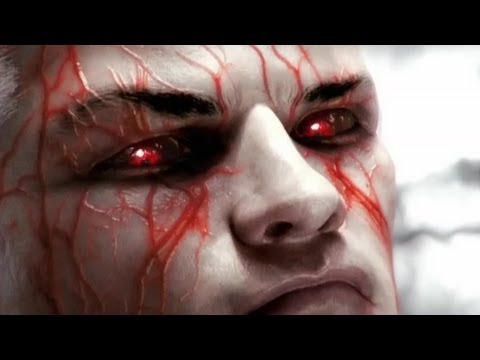
Limbo is one of the reboot’s best ideas.
Rather than simply sending Dante through conventional city streets, DmC regularly transforms the environment around him. Buildings stretch apart, floors collapse, walls close in and messages appear across the scenery as Limbo reacts to Dante’s presence.
These transformations aren’t purely visual.
Platforming sections use Angel Lift and Demon Pull to move between platforms, manipulate parts of the environment and reach areas that initially appear inaccessible. The mechanics are straightforward, but they break up the fighting and give the campaign a stronger sense of movement.
Some of the visual ideas remain striking years later. The nightclub sequence is particularly memorable, while other missions distort television studios, streets and industrial environments into surreal combat spaces.
I particularly liked the separate Limbo realm and the paranormal atmosphere it created. Some of its environments were visually stunning, and I enjoyed seeing the way Dante’s actions within Limbo could directly affect the normal world.
The level design also encourages exploration through hidden areas, Lost Souls and Secret Missions. Returning to earlier stages after unlocking additional abilities can reveal routes and collectibles that were inaccessible the first time through.
That gives individual missions more replay value than simply chasing a better combat rank.
Story and Characters
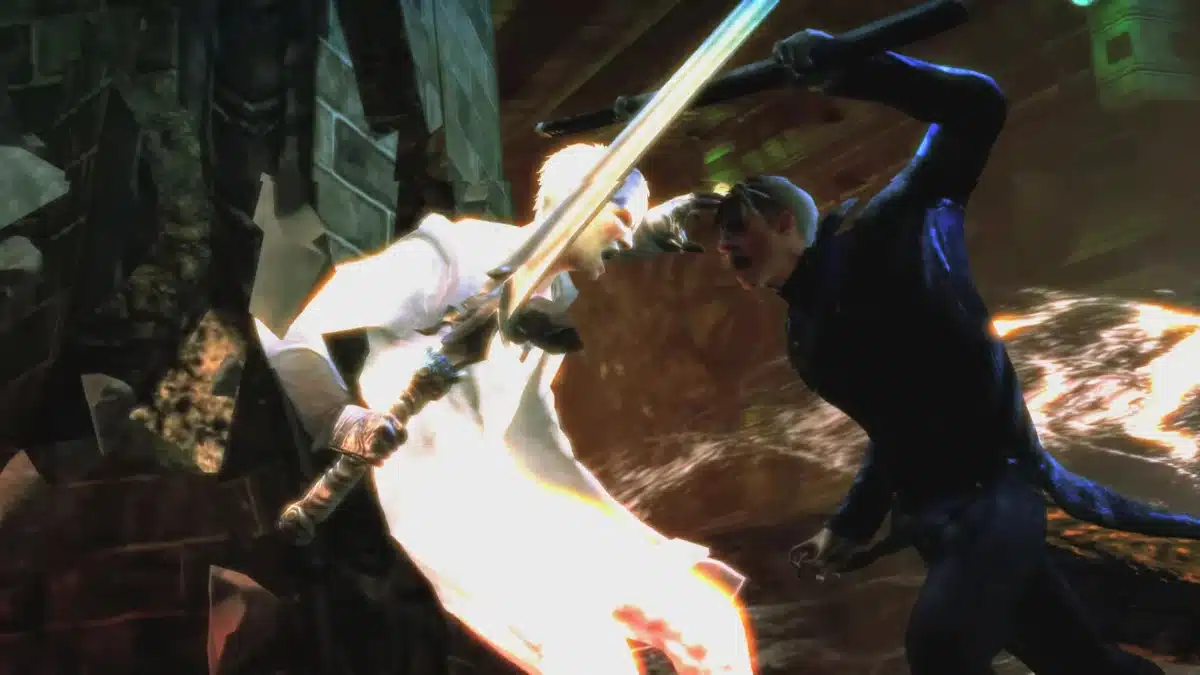
DmC completely reworks Dante and Vergil’s origins.
Dante begins the game as a rebellious young demon hunter who has little interest in the wider conflict surrounding him. That changes after meeting Kat and his brother Vergil, who leads an organisation called The Order against the demons secretly controlling humanity.
Their primary target is Mundus.
I actually preferred this version of Mundus in terms of character depth.
The reboot presents demons as manipulating society through surveillance, media, debt and consumer products, giving the story a noticeably different identity from the earlier games.
Dante himself is deliberately abrasive at the beginning. His dialogue and attitude won’t appeal to everyone, particularly players attached to the original character, but he does develop as the campaign progresses.
Vergil is more restrained, while Kat gives the story a human perspective and acts as Dante’s connection to the real world when he enters Limbo. I thought Kat received considerably more development than many of the female supporting characters from the earlier games, with Lady being the main exception.
The writing can be crude and occasionally tries too hard to establish how rebellious this version of Dante is. Even so, the central relationship between Dante and Vergil becomes increasingly important towards the end of the story.
It isn’t the Dante that long-time fans knew, but treating the reboot as its own interpretation makes the changes easier to appreciate.
Graphics and PC Performance
DmC: Devil May Cry runs on Unreal Engine 3, and the art direction does considerably more work than raw graphical complexity alone.
Limbo’s shifting architecture, exaggerated colours and environmental transformations give the game a distinctive appearance. Character models and some textures inevitably show their age today, but the visual design remains effective because Ninja Theory built entire stages around the idea that the world itself is hostile to Dante.
The PC version also has an important advantage for this type of action game: high frame-rate support.
Capcom promoted the PC release as capable of running beyond 100 FPS on suitable hardware, while the game supports higher refresh rates rather than being restricted to the 30 FPS target of the original console releases. The increased responsiveness is particularly valuable during fast combos, dodges and weapon changes.
On PC, DmC: Devil May Cry supports configurable resolutions and higher refresh rates alongside enhanced textures and shadows. Its ability to run well beyond 60 FPS on suitable hardware makes the PC release particularly well suited to the game’s fast combat:
| PC technical feature | DmC: Devil May Cry |
|---|---|
| Resolution | Configurable, including 4K |
| Frame rate | Supports 60 FPS and higher frame rates |
| High refresh rate | 120 Hz and higher possible |
| V-Sync | Supported |
| Widescreen | Supported |
| 4K | Supported |
| DirectX | DirectX 9.0c |
| Controller support | Xbox 360 controller and compatible third-party controllers |
| Storage requirement | 9 GB |
The PC release was handled by QLOC and is a strong conversion overall. Higher resolutions, improved textures and faster loading were among the enhancements Capcom highlighted for the platform.
There are some modern compatibility quirks documented by PC players, including occasional problems with refresh-rate settings and resolution configuration. These can vary depending on the hardware and display being used, so performance should not be described as universally flawless on every modern PC.
For a combat game where timing matters, however, the ability to play at high frame rates remains one of the PC version’s biggest advantages.
Sound and Music
DmC’s soundtrack takes a much more aggressive direction than the traditional gothic sound associated with parts of the series.
Combichrist and Noisia provide much of the game’s industrial, electronic and metal sound, giving battles a relentless rhythm that fits Dante’s new world surprisingly well.
Combat music reacts naturally to the action and helps reinforce the pace of encounters, particularly when several enemies are on screen and the style ranking begins to climb.
Voice acting is generally solid, although the quality of the dialogue itself varies. Some exchanges work well, while others lean heavily into the reboot’s deliberately provocative tone.
The sound design during combat is more consistently effective. Heavy Demon attacks have noticeably more impact than faster Angel weapons, helping each part of Dante’s arsenal feel different beyond its animation.
Bosses and Enemy Variety
DmC introduces a varied collection of demons built around the reboot’s grotesque visual style.
Standard encounters gradually become more complicated as enemies require different approaches, positioning and weapon combinations. Flying enemies, shielded opponents and heavier demons force Dante to move around the battlefield rather than simply attack whatever is closest.
The colour-coded enemy system is less successful. Enemies that require Angel or Demon weapons restrict some of the improvisation that makes the rest of the combat system so satisfying.
Boss battles provide more spectacle.
Several encounters make extensive use of Limbo’s visual transformations, turning the surrounding environment into part of the fight rather than simply placing a large enemy inside an arena.
Not every boss demands the same mechanical depth as the best standard encounters, but they provide memorable punctuation between the game’s longer combat sequences.
Replayability and Difficulty
Finishing the campaign is only part of what DmC offers.
Higher difficulty settings substantially increase the challenge, while mission rankings provide a reason to replay stages and improve combat performance. Secret Missions, Lost Souls and other collectibles add further objectives for players who want to explore each level completely.
The more demanding modes are where knowledge of the combat system becomes particularly important. Dodging, crowd control, weapon switching and understanding individual enemy behaviour become increasingly necessary as the margin for error shrinks.
Unlocking more abilities also changes how earlier missions can be approached.
This gives DmC the kind of replayability expected from Devil May Cry. A first playthrough teaches the mechanics, while subsequent runs provide the opportunity to actually master them.
For PC players, DmC: Devil May Cry remains a technically flexible version of Ninja Theory’s reboot, with high frame-rate support being particularly valuable for its fast combat.
DmC: Devil May Cry — Quick Facts
Developer: Ninja Theory
PC conversion: QLOC
Publisher: Capcom
Reviewed platform: PC
PC release date: 25 January 2013
Engine: Unreal Engine 3
Genre: Hack and slash, action-adventure
PEGI: 16
Game mode: Single-player
PC storage requirement: 9 GB
PC performance: Supports 60 FPS and higher frame rates
DmC: Devil May Cry

See my review of DmC: Devil May Cry on PC, highlighting its revamped combat system, dynamic level design in Limbo City, and enhanced performance with high frame rates and customisable graphics.
Product Brand: Capcom
7
Pros
- Fast, fluid combat with excellent weapon switching
- High frame-rate support suits the PC version particularly well
- Limbo City has imaginative and distinctive level design
- Angel and Demon abilities add variety to combat and traversal
- Strong replayability through difficulty modes, rankings and collectibles
- Aggressive soundtrack complements the action
Cons
- Colour-coded enemies restrict combat freedom
- Dante's new characterisation and dialogue can be divisive
- Some boss fights lack the depth of regular combat encounters
- Storytelling and dialogue are inconsistent
- Minor resolution and refresh-rate quirks can occur on modern PCs