Key Highlights:
- Game ownership now ranges from physical media and digital licences to subscription access, with each giving players different levels of long-term control.
- Star Wars Outlaws shows the distinction clearly through Game Pass, digital purchases and the Switch 2 Game-Key Card, which requires a download before play.
- DRM-free releases, storefront closures and discontinued online games show that owning a copy does not always guarantee permanent access or preservation.
Quick Links:
There has probably never been an easier time to play a Star Wars game.
In January, Star Wars Outlaws joined Xbox Game Pass, meaning a subscriber could go from vaguely wondering what Kay Vess was up to after dinner to downloading the entire game without buying it separately. On supported devices, cloud streaming can remove even the download. Thirty years ago, playing a new Star Wars game involved finding a shop, buying a box, carrying several floppy disks or CDs home and occasionally discovering that your computer disagreed with one of them on a philosophical level.
Access has won.
Ownership is less straightforward.
Outlaws itself provides a wonderfully strange example. Buy it through one digital storefront and the game exists as a licence tied to an account. Play it through Game Pass and access depends on a subscription and on the game remaining in the service. Buy the physical Switch 2 release and you receive something that looks reassuringly like a traditional cartridge, except Ubisoft confirmed that it is a Game-Key Card. The game data itself has to be downloaded before you can play.
All three routes let you play Star Wars Outlaws. All three mean something different when you say, “I own this game.”
That difference matters more in 2026 than it used to.
Game Pass makes access wonderfully temporary

Subscription libraries are one of the best things to happen to curious players. There is much less risk in trying something when the financial decision has already been made at the subscription screen. As Stephen noted when Outlaws arrived on Game Pass, the move immediately put Ubisoft’s open-world Star Wars game in front of a much larger potential audience.
That is good for games. It is particularly good for games that launched into mixed expectations and spent the following months being patched, adjusted and expanded. Someone discovering Outlaws through Game Pass in 2026 is not necessarily playing the same experience that someone bought at launch in 2024.
But Game Pass is access, not a collection.
Games rotate. Microsoft says so openly, and every monthly announcement includes the other half of the bargain: what arrives and what leaves. The service is closer to an extraordinarily generous rental library than to a shelf of boxes. That is not criticism. Libraries are useful precisely because we do not need to own every book inside them.
The distinction only becomes important when we stop asking, “Can I play this tonight?” and start asking, “Can I play this in 2046?”
Those are very different questions.
A physical box no longer guarantees a physical game
This is where Switch 2 makes the language particularly odd.
In the six-month Switch 2 review, Game-Key Cards were one of the clearest reservations about Nintendo’s new ecosystem. They look like game cartridges, can be lent or resold like cartridges and must remain inserted while playing. But unlike a traditional cartridge, the full software is not stored on the card.
Nintendo describes them quite literally as keys. The first time one is used, the console needs an internet connection to download the game. After that, the downloaded data can be played offline as long as the card is inserted.
That makes a Game-Key Card more substantial than a download code printed inside a box. It remains transferable. It is not permanently married to one Nintendo Account. But it is also not a self-contained copy of the game.
Star Wars Outlaws is therefore an interesting physical object. You can put it on a shelf. You can sell it. You can lend it to someone. Twenty years from now, however, the important question will not only be whether the card still works. It will also be whether the software it points to can still be obtained.
The cartridge survives.
The game may depend on something elsewhere.
That is a very modern kind of ownership: you possess the key, while somebody else maintains the door.
Digital can sometimes preserve a game better than the original disc
The easy response is to declare physical media good and digital distribution bad. Star Wars history makes that argument much harder to sustain.
Try playing an original 1993 copy of X-Wing on a modern Windows PC. Owning the disks is not the same thing as having a convenient, functioning game. Old software depends on operating systems, drivers, display modes, processors, installers and assumptions about hardware that disappear surprisingly quickly.
Meanwhile, GOG’s Preservation Program now includes classic Star Wars titles such as Dark Forces, X-Wing, TIE Fighter, the original Battlefront and the Rebel Assault games. These versions have been updated for modern systems, and GOG sells them without DRM.

That means a digital copy purchased in 2026 can, in practical terms, give its owner more control than the physical copy from the 1990s. The installer can be stored locally. No disc drive is required. No activation server needs to approve the launch. Someone has also done the deeply unglamorous work of making thirty-year-old software cooperate with Windows 11.
Looking through more than four decades of Star Wars games, this is the pattern that appears repeatedly: preservation is rarely about keeping one original object untouched. It is about keeping enough pieces of the surrounding technology alive that the object still does something.
A game is not preserved because the box exists.
A game is preserved because someone can still play it.
Licensed games have another expiration date
Star Wars games also have a complication that Tetris does not.
They are licensed products.
A Star Wars game may involve Lucasfilm, a publisher, a developer, a platform holder, music, actors, middleware and online infrastructure. Different contracts can have different lifespans, and when one part stops making commercial or legal sense, availability can change even though the software itself has not suddenly stopped existing.
The two Angry Birds Star Wars games are a useful example. Rovio removed Angry Birds Star Wars and Angry Birds Star Wars II from app stores in 2020 alongside other older titles. Anyone discovering those games today cannot simply open the current App Store and buy them again.
Then there are games where losing the storefront is not even the biggest problem. Star Wars: Commander shut down in 2020. Star Wars Galaxies officially closed years earlier in 2011. Once a game depends on servers, databases and persistent online systems, preserving the client only preserves part of the experience.
This is why storefront closures matter even when companies promise that existing purchases can still be downloaded. GLN’s coverage of the Xbox 360 Marketplace shutdown showed the difference clearly: previously owned compatible content could continue functioning, but the ability for a new player to buy many items disappeared.
The same tension is visible again as Sony begins winding down purchases on PS3 and Vita storefronts. Existing owners retaining download access is important, but a preserved personal library is not the same thing as a preserved public catalogue.
If I bought a game in 2012 and can still download it, that is good ownership.
If nobody else is allowed to buy it in 2026, that is bad preservation.
Both statements can be true at once.
Maybe ownership is really a stack of dependencies
The problem may be that we still talk about owning games as though there is one thing to own.
There are actually several layers.
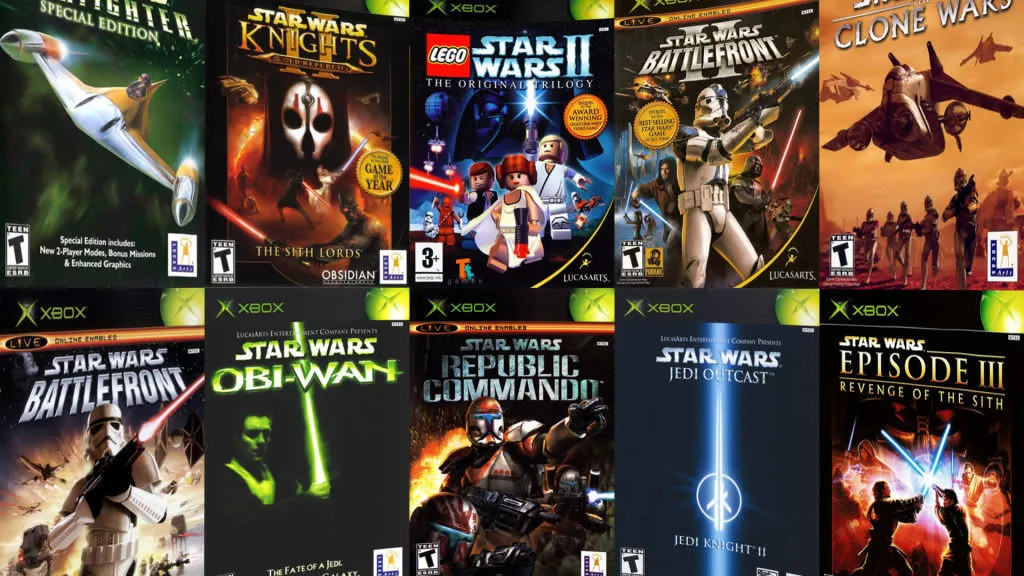
You can own a plastic cartridge but depend on a server for the files. You can have permanent access to DRM-free files but own no physical object at all. You can own an original disc but depend on emulation or community patches to make it work. You can have a game installed perfectly and discover that its servers no longer exist.
For an online game, the player may possess almost none of the things that make the experience function. The publisher controls authentication. Someone else operates matchmaking. Another company runs the platform. Your console firmware decides whether the executable can launch.
The more dependencies a game has, the less useful the traditional image of ownership becomes.
This does not mean modern games are doomed. In several ways, preservation is healthier than it was twenty years ago. Backwards compatibility is taken much more seriously. Classic games are routinely reissued. Source ports, fan patches and preservation projects rescue software that publishers have stopped maintaining. Digital distribution has made obscure games available to audiences that would never have found an original boxed copy.
The strange part is that convenience and permanence are moving in opposite directions.
We have never had easier access to more games.
We have also rarely had to trust so many external systems to keep that access working.
The best copy might be the one that needs nobody’s permission
So what does it mean to own a Star Wars game in 2026?
It probably cannot be answered by pointing at a box.
For collectors, physical media still matters. A complete cartridge or disc can provide something digital services cannot: an independent copy that survives account problems, subscriptions and storefront changes. But that only works when the physical media actually contains a usable version of the game.
For digital games, the strongest form of ownership may be something much less photogenic: a complete set of files that can be backed up, installed and launched without asking a remote server for permission.
And for online games, true preservation may eventually require something even more radical: developers planning for the day when official servers stop responding.
Star Wars Outlaws sits neatly in the middle of all these contradictions. In 2026, it can be streamed through a subscription with almost no friction. It can be bought digitally. It can be purchased in a physical Switch 2 box containing a card that still requires the game to arrive over the internet.
The game has never been easier to reach.
Whether any particular version is easier to preserve is another matter.
Perhaps that is the distinction we need to start making. Access tells us whether a game can be played today. Ownership tells us how much control we have over that access.
Preservation asks the uncomfortable third question.
Who still controls it tomorrow?