
Key Highlights:
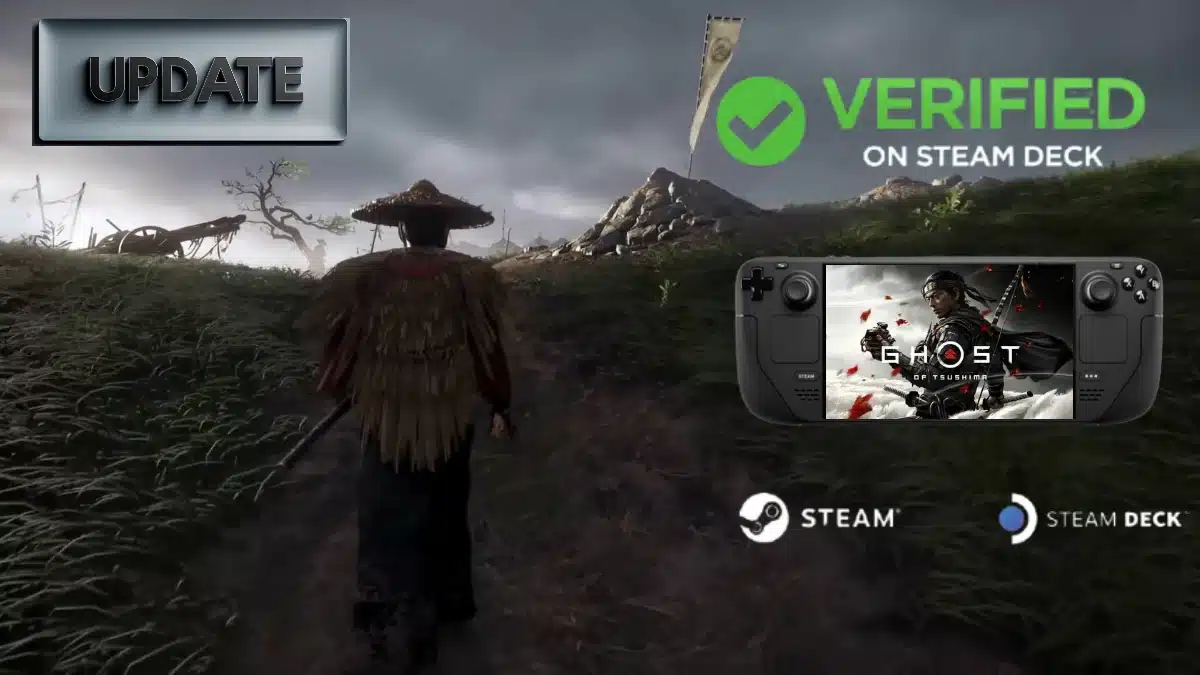
- Ghost of Tsushima is now Steam Deck verified with new optimisations and bug fixes.
- Legends multiplayer becomes a free standalone DLC for Director’s Cut owners.
- Patch 8 introduces AMD FSR 3.1.4, UI tweaks, and improved performance across platforms.
Ghost of Tsushima has just received one of its most meaningful PC updates yet. Patch 8 quietly rolled out this week and made the game officially Steam Deck verified, while also separating its Legends multiplayer mode into a standalone DLC. For a title that first launched back in 2020, it’s impressive how consistently it’s still being supported, and it’s now arguably at its best on PC.
The verification is a big deal for portable players. Before this patch, you could run Ghost of Tsushima on the Deck, but it required fiddling with frame caps and Proton settings to get a consistent experience. Now, the new Steam Deck graphics preset automatically optimises shadows, reflections, and texture quality, and it even adjusts the UI scale to make text easier to read on the smaller screen.
Performance sits comfortably around 40–45 FPS on the native display refresh rate, and that’s exactly what you want for a cinematic game like this.
The update also splits the Legends mode from the main game. That might sound minor, but it’s actually a smart move. The separation allows the multiplayer portion to update independently, which should make matchmaking smoother and future patches faster to deploy. Anyone who already owns the Director’s Cut automatically gets Legends for free, though it still requires a linked PlayStation Network account to play.
You can view the patch notes on the official Nixxes website using the hyperlink.
From a technical standpoint, this patch also updates the game’s AMD FidelityFX Super Resolution (FSR) from 2.2 to 3.1.4, improving temporal stability and reducing ghosting.
Players with Radeon RX 9000 series GPUs can even enable FSR 4 directly via their AMD drivers, which the game now recognises and displays in its launcher. The result is sharper visuals and steadier performance, especially during combat-heavy scenes with lots of particle effects.
I think what’s worth appreciating here is how well Sucker Punch and Nixxes have handled the PC port long after release. The initial launch was already excellent, but instead of moving on, the developers have kept fine-tuning every detail. The audio glitch in the “Eternal Blue Sky” mission is gone, Steam Input crashes are resolved, and stability improvements have helped smooth out frame pacing in busy areas like the Golden Temple. These aren’t flashy changes, but they’re exactly the kind of polish that keeps a game timeless.
Even small improvements like reduced input latency make a huge difference in a combat system built entirely around precision and timing. I’ve always said Ghost of Tsushima rewards rhythm over reaction, so any drop in delay between button press and blade strike changes how fluid the game feels.
If you’re running it on high-end hardware, the patch won’t alter your visuals, but you might notice slightly tighter responsiveness, especially during parries and multi-enemy encounters.
Five years on, Ghost of Tsushima remains one of PlayStation’s defining single-player experiences, and its continued updates on PC just reinforce that legacy.
Steam Deck verification not only opens it up to a new wave of players but also reminds everyone how rare it is for a studio to keep nurturing a port this long after launch.
If you already own the Director’s Cut, make sure to install the Legends DLC and check out the new optimised settings. For newcomers, there’s never been a better time to experience Jin Sakai’s story, whether you’re playing on a desktop rig or slicing through the Mongol horde on the train ride home.