
Key Highlights:
- Sony is already increasing investment in its next-generation PlayStation platform, although the company has not officially named it PlayStation 6.
- Project Amethyst with AMD is developing machine-learning graphics, advanced ray tracing and memory-efficiency technology intended for future console hardware.
- Reports point to both a traditional next-generation console and a native PlayStation handheld, but their specifications, launch timing and even the handheld itself remain unconfirmed.
Quick Links:
The next PlayStation generation is starting to take shape, even though Sony has still not officially announced a console called PlayStation 6.
Recent discussion around PS6 has mixed confirmed Sony investment, genuine AMD technology work and a growing pile of hardware leaks. Separating those three states reveals a much clearer picture than the specification lists currently circulating online.
Sony has already confirmed that it is spending more on what it calls its “next-generation platform”. Its latest financial results specifically attribute part of an increase in Game & Network Services costs to investment in that platform, giving us something considerably firmer than an anonymous hardware leak.
Sony has not, however, confirmed that the finished product will officially be called PlayStation 6. It has also not announced a design, release date, price or final specification.
That distinction is worth keeping because the technical direction is considerably more certain than the eventual product details.
Sony and AMD are already building future PlayStation technology
The strongest indication of what Sony wants from its next console comes from Project Amethyst, its long-term engineering collaboration with AMD.
Sony announced the deeper partnership in late 2024, with PS5 and PS5 Pro lead architect Mark Cerny describing a programme focused on machine-learning technology for graphics and gameplay.
The work has since moved beyond research.
An upgraded version of PlayStation Spectral Super Resolution released for PS5 Pro in 2026 using an algorithm and neural network developed through Project Amethyst. AMD’s corresponding FSR technology shares the same underlying collaboration, effectively giving current hardware an early version of technology intended to evolve much further.
Cerny has been unusually open about where that work is heading.
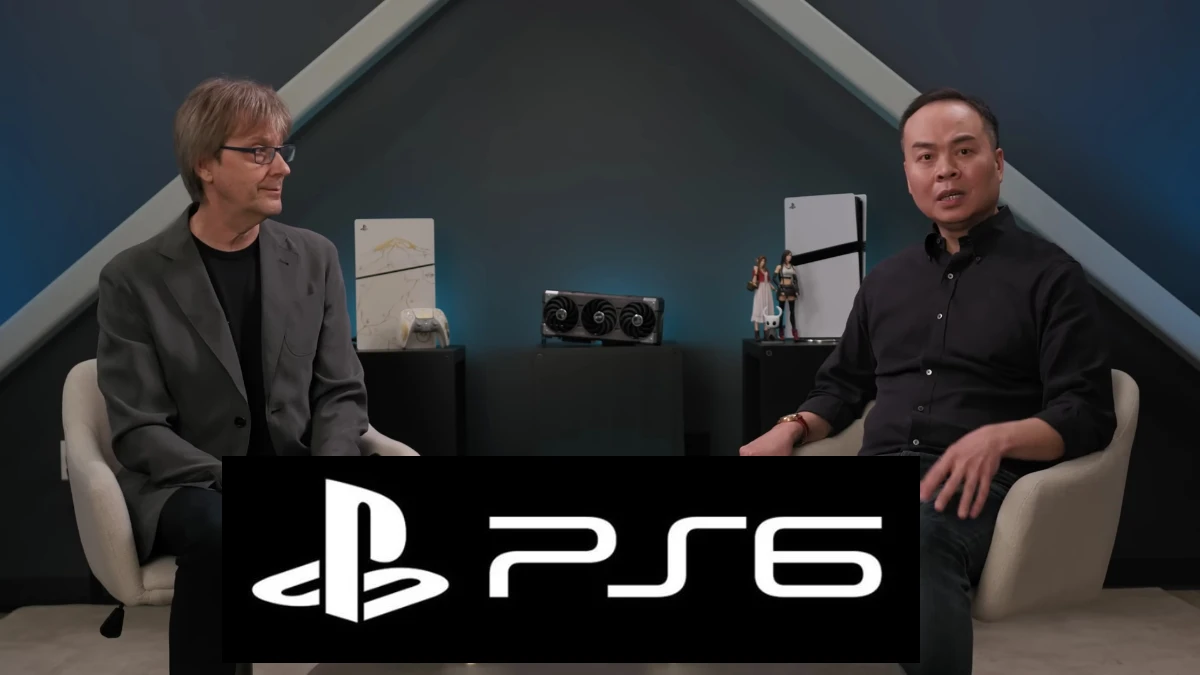
In an official PlayStation and AMD presentation, Cerny and AMD executive Jack Huynh discussed three technologies under development: Neural Arrays, Radiance Cores and Universal Compression. Cerny described the work as early and still existing in simulation, but said he was excited about bringing it to a “future console” in the coming years.

Neural Arrays are designed to make machine-learning workloads more efficient by allowing groups of GPU compute units to work together on larger AI models.
Radiance Cores are dedicated hardware intended to accelerate ray-tracing and path-tracing calculations rather than forcing conventional GPU components to handle the entire workload.
Universal Compression tackles a less glamorous but increasingly important limitation: memory bandwidth. Instead of compressing only specific types of graphical data, Sony and AMD want more information travelling through the GPU to be compressed automatically, effectively increasing usable bandwidth without simply widening the memory interface.
I think Universal Compression may end up being one of the most important pieces of the next PlayStation design because improving effective bandwidth and efficiency could matter more than chasing an enormous raw teraflop number.
Cerny has also confirmed that machine-learning frame generation is being developed for future PlayStation platforms, although he has not named which machine will first support it.
That gives us a much more defensible technical expectation for Sony’s next console: AI reconstruction, stronger ray tracing and better memory efficiency are real priorities.
The exact CPU clock speed or GPU compute-unit count is not.
The leaked PS6 specifications remain much less certain
Most detailed PS6 specification claims originate from material attributed to older AMD planning documents and hardware leakers rather than Sony.
The most widely circulated reports describe a home-console chip sometimes referred to as Orion, allegedly using AMD Zen 6 CPU cores and next-generation RDNA graphics.
Reported targets have included eight Zen 6-class CPU cores, roughly 40 to 48 GPU compute units, GDDR7 memory and a considerably larger emphasis on ray tracing than on conventional rasterisation gains. Some reports place total board power around 160W and suggest manufacturing could begin during 2027.
Those numbers should be treated cautiously.
The leaked material is reportedly based partly on AMD planning information dating back to 2023. Even if genuine, hardware specifications can change significantly between an architectural target and a retail console several years later.
The rumoured performance numbers illustrate the problem particularly well.
Some reports have suggested approximately three times the base PS5’s rasterisation performance but potentially six to twelve times its ray-tracing performance. That would fit Sony and AMD’s publicly stated focus on specialised ray-tracing hardware, but Sony has never confirmed those multipliers.
The architectural direction and the leaked specification sheet therefore should not be treated as equal evidence.
Sony has publicly shown that it wants better machine-learning graphics, ray tracing and memory efficiency.
Everything from Zen 6 core counts to 40-plus compute units remains reported rather than confirmed.
A native PlayStation handheld could launch alongside it

The other major part of the current PS6 discussion is potentially more significant than another traditional home console.
Multiple reports claim Sony is developing a native PlayStation handheld, commonly associated with the reported codename Canis.
Unlike PlayStation Portal, which began as a Remote Play device and later gained cloud-streaming support, the rumoured handheld is described as running games locally.
Reported hardware includes four Zen 6c CPU cores for games, two lower-power CPU cores for system duties and next-generation AMD graphics. Other claims include a touchscreen, microSD expansion, an M.2 SSD slot, haptic feedback and the ability to dock to an external display.
None of those specifications has been announced by Sony.
Reports also claim that Sony wants both the home console and handheld to maintain compatibility with PS4 and PS5 software. Again, backward compatibility is reported, not confirmed.
The more interesting official clue is what Sony itself has started saying about how PlayStation hardware should be used.
During a July investor meeting, Sony described hardware as the foundation of its gaming experience but specifically highlighted PlayStation Portal as an example of providing ways to play “beyond the living room”.
That does not confirm a native handheld, but it fits remarkably well with the direction described in the reports.
Former PlayStation executive Shawn Layden has also weighed in on the possibility.
Speaking on Kiwi Talkz this month, Layden warned that Sony historically struggled to support two hardware platforms simultaneously. He cited the PSP and PS3 era as an example, explaining that development and marketing resources effectively had to be divided between two businesses.
His comments are analysis rather than confirmation of Sony’s plans, but they identify the real challenge if the reports are correct.
The difficult question is not whether AMD can build a powerful portable chip. It is whether Sony can make one software ecosystem scale cleanly across a home console and handheld without creating two separate development burdens.
Sony has not decided the launch date or price
One of the most important confirmed PS6 details is actually what Sony hasn’t decided.
During its May 2026 financial Q&A, Sony was directly asked about next-generation platforms amid rising memory prices.
The company said:
“As for next-generation platforms, no decisions have been made regarding timing or pricing.”
Sony added that it will monitor future market conditions before making those decisions.
That makes confident claims of a fixed 2027 launch premature.
A late 2027 or early 2028 window appears repeatedly in leaks, and Sony’s own previous console cycles make that plausible, but there is currently no official launch year.
Memory pricing could materially influence that decision.
Sony says it has secured the memory required for its 2026 hardware plans, but rising component costs remain a concern beyond that period.
Sony has also given a fairly strong indication that consumers should not expect it to absorb those costs indefinitely.
In July, the company said it does not intend to sell hardware at significant losses and acknowledged that passing component increases to buyers can affect adoption.
That is important context for PS6 pricing speculation.
Whatever Sony eventually launches will arrive in a market where the company is already more protective of hardware margins than it was during some previous generations.
The next PlayStation may also launch into a digital-only future
There is another confirmed Sony decision that could directly shape its next console generation.
From January 2028, Sony will stop producing physical discs for new PlayStation game releases. Games released physically before that cutoff can continue to be manufactured, but new releases after it will move entirely to digital distribution.
That decision has already generated substantial backlash. Recently there was the PlayStation blackout over Sony’s 2028 disc cutoff, which followed a petition attracting hundreds of thousands of signatures.
The timing creates an obvious next-generation question.
If Sony’s next console arrives in or after 2028, its software environment could begin life after Sony has already stopped producing discs for newly released games.
That does not confirm that the next PlayStation will lack an optical drive. Existing PS4 and PS5 discs could still matter if backward compatibility is included, and Sony has not revealed the hardware.
It does mean that the economics surrounding a future disc drive will be very different from those surrounding the PS5.
The wider legacy transition is already underway too. Sony is closing the PlayStation Store on PS3 and PS Vita globally in July 2027, although previously purchased games will remain downloadable for the foreseeable future.
Taken together, Sony’s next-generation investment, Project Amethyst research, digital distribution shift and portable-play strategy point towards a much broader platform transition than simply replacing PS5 with a faster box.
For now, the safest conclusion is also the most interesting one.
Sony is openly spending money on its next-generation platform, AMD is publicly developing graphics technology for a future PlayStation console, and Sony is increasingly talking about playing beyond the traditional living room.
What remains unknown is whether that becomes one machine or two, whether the retail name is actually PlayStation 6, when it launches and how much Sony expects players to pay.