
There are very few games I can return to after hundreds of hours and still get that feeling of seeing the world for the first time.
Elden Ring is one of them.
I’ve completed the game three times, spent around 380 hours in the Lands Between and somehow decided that wasn’t enough. With Elden Ring back in the spotlight, I started another run on PS5 to see whether a game I already know so well could still have the same effect on me.
This time, however, I made one rule: no returning to the comfort of my usual Samurai-style bleed build. I chose a Sorcerer instead.
When I opened the doors and stepped into Limgrave again, I still stopped.
The Erdtree towered above the landscape, the ruins stretched out in front of me and for a moment it felt like I was discovering the Lands Between all over again. I got so excited that I made my boyfriend look at my screenshots.
After 380 hours, Elden Ring can apparently still do that to me.
My First Trip to the Lands Between Was a Disaster
My relationship with Elden Ring didn’t exactly begin well.
I’d recently rage-quit Bloodborne, but everything I’d seen of Elden Ring looked incredible. I knew exactly what I was signing up for with a FromSoftware game, but the open world caught my attention. If something was too difficult, surely I could explore somewhere else and come back?
That sensible revelation came later.
During my first attempt, I stepped into Limgrave, wandered around collecting anything I could find and spotted a large golden knight on horseback nearby.
My thinking was essentially: he’s right there. I haven’t gone very far. I’ll fight him.
It was the Tree Sentinel.
This was a mistake.
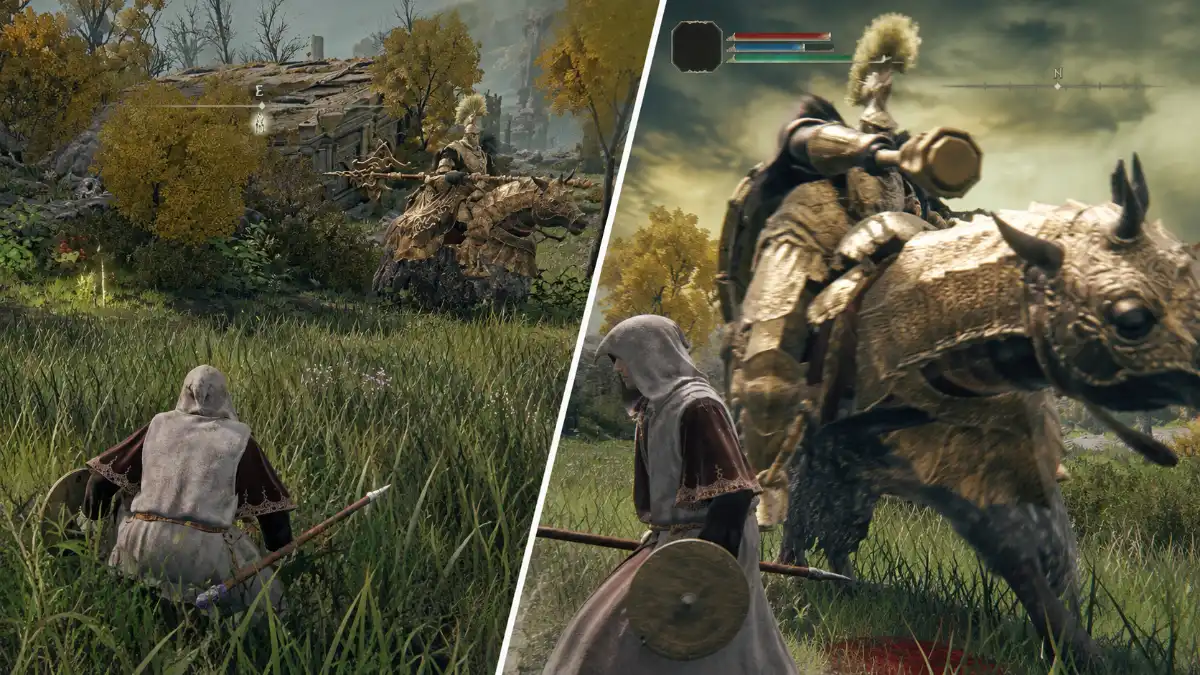
After that humiliation, I eventually found myself around Gatefront Ruins, where I spent roughly three hours fighting soldiers because I was still approaching Elden Ring like every enemy standing between me and the next area had to die.
Eventually, I quit.
It took a few months before I returned and decided to properly give Elden Ring another chance. That second attempt completely changed how I understood the game.
I stopped treating every enemy as a wall.
I explored. I found equipment. I upgraded. I discovered Sites of Grace and started paying attention to what the world was actually telling me.
When I eventually headed through Stormgate and a troll came crashing down in front of me, I expected another disaster. Instead, something clicked. I was parrying, dodging and fighting far more comfortably, and I made it through without even using a Flask.
Elden Ring had taught me perhaps its most important lesson:
Just because I can see something doesn’t mean I’m ready to fight it.
And if I’m not? I can leave.
Exploration Is Never Just Empty Space
That freedom is still one of the things I love most about Elden Ring.
Limgrave alone consumed around two days of my early playthrough because I wanted to investigate everything. Caves, ruins, strange noises, NPCs, suspicious paths — if something looked remotely interesting, I was going over there.
By “exploring”, I mostly mean checking absolutely everything in case there was something else to hoard.
But that obsession is rewarded.
Weapons, spells, upgrade materials, Spirit Ashes and seemingly insignificant items can become important much later. NPC encounters can begin questlines without a giant icon appearing above someone’s head to announce it.
Boc the Seamster is one of my favourite early examples. I heard someone calling out while exploring and went looking for the source. That small moment helped me understand how much attention Elden Ring expects from its players.
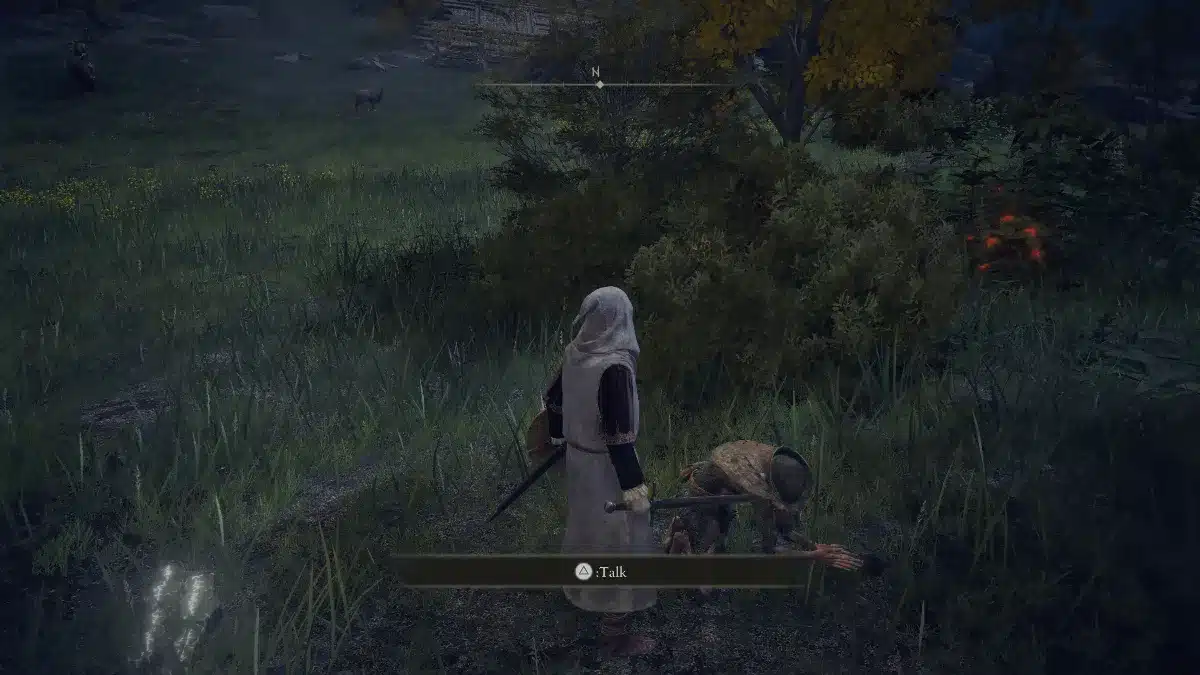
You might receive some dialogue, an item or a vague idea of what to do next. Then the game largely leaves you alone.
For players who want a clear checklist, that can undoubtedly become confusing. A walkthrough will probably become your best friend unless you genuinely enjoy wandering around wondering what on earth you’re supposed to be doing.
I did.
The important difference is that wandering rarely feels pointless.
Then Elden Ring Gave Me Far Too Much Confidence
Eventually, I made my way towards Stormveil Castle and faced Margit, the Fell Omen.
I beat him on my first attempt.
This gave me a level of confidence that nobody playing a Souls game should ever be allowed to have.
Godrick the Grafted followed and, again, I found the fight surprisingly manageable. At this point I was strutting around thinking I was the best gamer alive.
Approximately two minutes later, a normal enemy killed me.
Elden Ring has a wonderful way of correcting your ego.
From there, the journey escalates dramatically. Raya Lucaria Academy remains one of my favourite areas, both visually and mechanically, while the route through Ranni’s questline eventually became the path I chose for my ending.
That journey took me through some of the most beautiful — and deadly — locations in the game, eventually leading towards the Age of Stars ending.
Royal Knight Loretta forced me to properly study her movements because I initially struggled to read the speed and variation of her attacks. Starscourge Radahn was another matter entirely. That fight became an on-and-off battle lasting most of a day, and I summoned every bit of help the game was willing to give me.
Pride has limits.
A World That Just Keeps Going
One of Elden Ring’s greatest tricks is convincing you that you’ve grasped the scale of its world before revealing that you absolutely haven’t.
Liurnia of the Lakes and Raya Lucaria were places I happily explored for hours. Following Ranni’s questline then took me underground, through areas that felt completely removed from the landscapes I’d already explored, and eventually towards Astel.
At one point I climbed into a coffin because Elden Ring had apparently trained me to consider getting inside mysterious coffins a reasonable method of transportation.
It worked.
Then there is Leyndell, Royal Capital.
Beautiful? Absolutely.
Did I calmly explore every street?
Absolutely not.
Leyndell frequently became a highly sophisticated tactical manoeuvre known as running away. Enemies hit hard, things seemed determined to attack me from every direction and I learned very quickly that sometimes Torrent and my own two legs were the best weapons available.
The Draconic Tree Sentinel was treated with the respect it deserved.
By which I mean I avoided fighting it whenever possible.
Later, the Fire Giant took me the better part of a day, with the snow doing absolutely nothing to help my ability to see what was happening.
Mohg was another fight I eventually decided I simply wasn’t ready for. I left, levelled, came back stronger and made very enthusiastic use of Mohg’s Shackle.
That ability to leave is important. Elden Ring is difficult, but its open-world structure means being stuck doesn’t always mean spending the next five hours repeatedly throwing yourself at the same boss.
You can go somewhere else.
Usually somewhere containing an entirely different nightmare.
My Bleed Build Became Home
Across my previous playthroughs, I experimented with basic weapons until I found what became my weapon: Rivers of Blood.
From that point, bleed builds became home.
Every subsequent run eventually turned into the same mission: find the equipment I wanted, rebuild my preferred setup and return to the combat style I knew.
When Elden Ring’s combat clicks, it is exceptional. Dodging, positioning, parrying and knowing when to commit to an attack become just as important as whatever number appears beside your weapon.
It also means familiarity can make an enormous difference.
Which is precisely why I decided to ruin everything for myself on playthrough number four.
Apparently I Am a Sorcerer Now
My current run is completely different.
I chose a Sorcerer specifically because magic had largely existed in the background of my previous playthroughs. I remembered fighting Mad Pumpkin Head and discovering Sorceress Sellen afterwards, but as a melee-focused character she wasn’t particularly important to the way I was playing.
Now she is.
Unfortunately, becoming a Sorcerer has also revealed how much of my confidence came from knowing exactly how I wanted to fight.
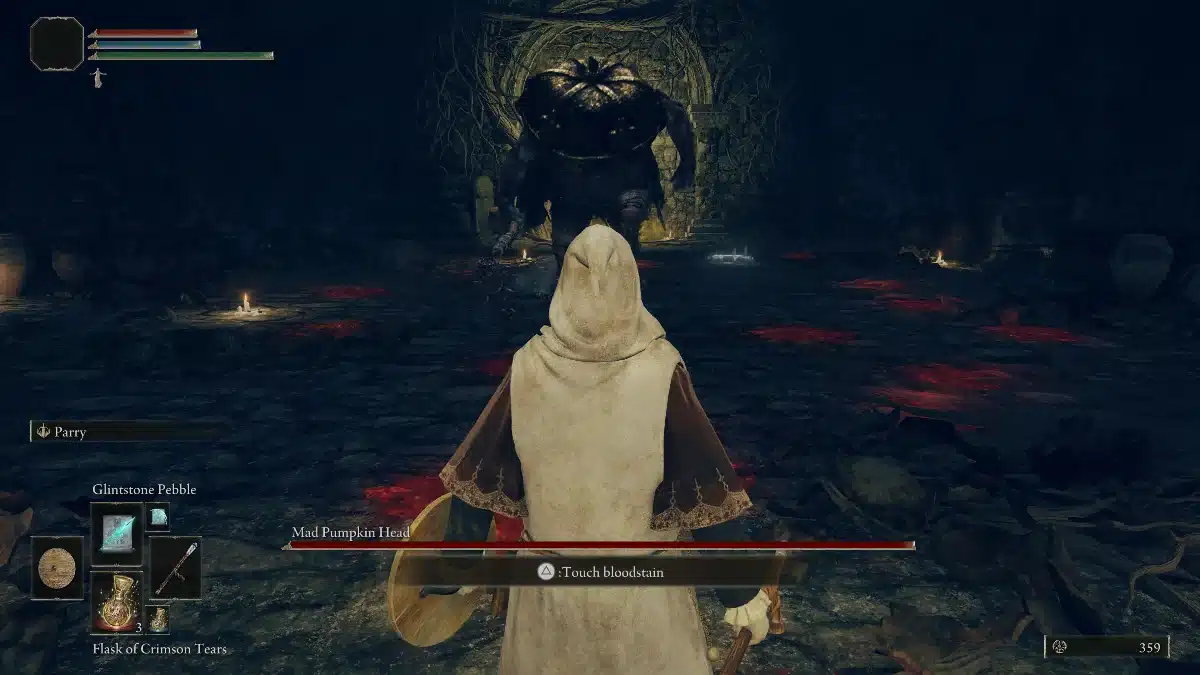
Mad Pumpkin Head had been straightforward with my old build.
This time he repeatedly smashed me.
Keeping my distance, managing FP and learning when locking onto an enemy is actually making things harder has forced me to reconsider encounters I thought I already understood. I eventually retreated, visited the Church of Elleh, obtained the ability to summon spirits and returned with some assistance.
Pumpkin Head went down on the next attempt.
I’ve also already made the completely sensible decision to head into Caelid at around level six because I wanted the Meteorite Staff and Rock Sling.
Nothing says experienced Elden Ring player quite like willingly entering a Scarlet Rot swamp at level six.
Sorcery still hasn’t completely clicked for me. My heart belongs to katanas, and right now my mission is essentially to find something capable of distracting enemies while I stand at a safe distance throwing rocks at them.
But that’s exactly why this run has surprised me.
I know Elden Ring.
I don’t know this version of Elden Ring.
The Bosses I Still Remember Years Later
There are too many bosses to turn this review into a blow-by-blow account of all three playthroughs, but some encounters have permanently lodged themselves in my brain.
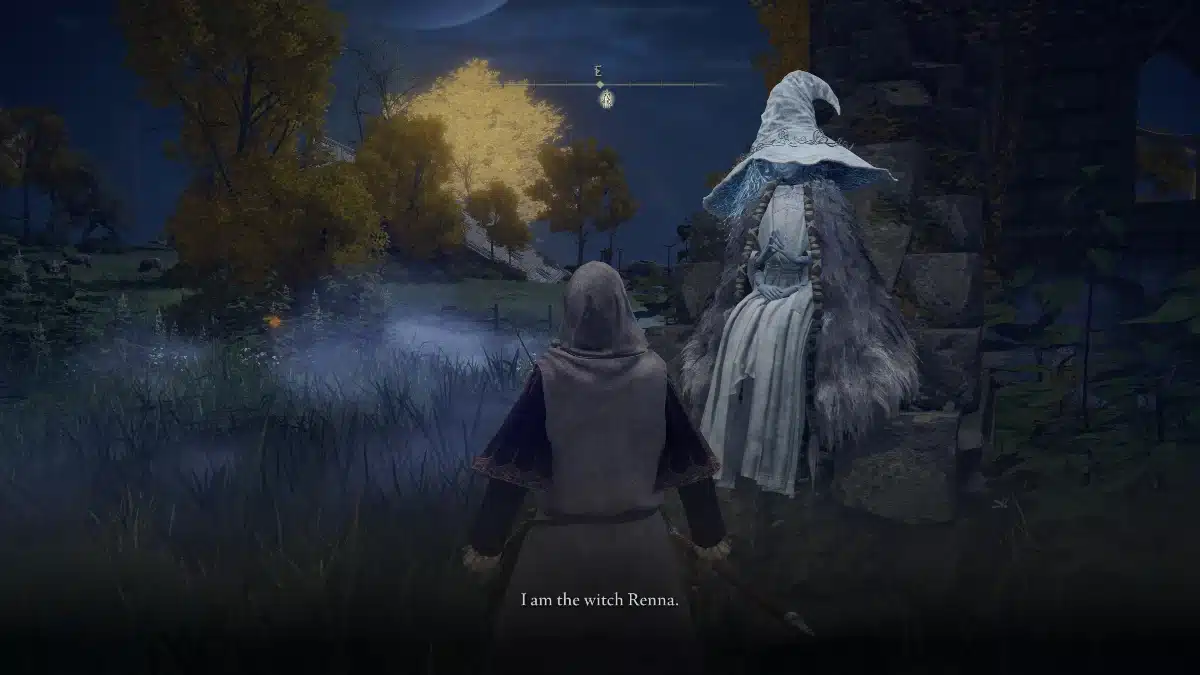
Godskin Duo are impossible to forget simply because… look at them.
Farum Azula itself was somewhere I loved exploring despite getting lost repeatedly, but that encounter remains one of the strangest visual memories of the game.
Then there is Malenia.
Three days.
It took me three days to defeat her on my first proper attempt, to the point that I started making videos documenting my increasingly questionable mental state while trying.
“I am Malenia, Blade of Miquella.”
I know.
I KNOW.
By the time I finally beat her, every boss waiting afterwards felt almost relaxing.
The Haligtree as a whole remains one of the most stressful areas I’ve explored in a game. Beautiful, dangerous and seemingly constructed specifically to test how much misery one player can tolerate before putting the controller down.
Radagon wasn’t as brutal as I expected after everything I’d survived.
Then the Elden Beast took another two days.
Not continuously. I reached the point where I needed a weekend away from it before returning because I refused to go through everything I’d endured and not see the ending I’d worked towards.
Eventually, I did.
I chose the Age of Stars.
Worth it.
“I am Malenia, Blade of Miquella.”
I know.
380 Hours Later, It Still Looks Incredible
Elden Ring’s visual design deserves just as much praise as its combat.
The Lands Between constantly shifts between beauty and horror. Limgrave’s golden forests give way to the flooded landscapes of Liurnia, the Academy towers over the lake, Caelid looks like the land itself has become diseased, Leyndell is spectacular even while everything inside it is trying to murder you, and Farum Azula feels unlike anywhere that came before it.
There are locations I’ve visited multiple times and I still stop to look.
That happened again during this review.
I opened the door to Limgrave, looked across the landscape and had exactly the same reaction I remembered having years ago.
That’s rare.
Performance on PS5
| PS5 Performance | Lauren’s Testing |
|---|---|
| Console | PlayStation 5 |
| Game Version | Native PS5 version |
| Graphics Mode Used | Prioritise Frame Rate |
| Target Frame Rate | 60 FPS |
| Average Frame Rate Observed | Not measured but consistent |
| Lowest Noticeable Frame Rate | Not measured |
| Resolution / Output | 3840 × 2160 (4K), 60Hz |
| HDR Used | Yes — PS5 HDR set to Always On |
| VRR Used | No — disabled |
| Ray Tracing Used | Yes — Medium |
| General Stability | Smooth during the latest review playthrough |
| Noticeable Lag | None encountered |
| Crashes | None encountered |
| Bugs / Glitches | None encountered during the latest run |
| Combat Responsiveness | Responsive throughout testing |
PS5 remains my preferred way to play Elden Ring, and performance during my latest run has been excellent.
I’ve experienced smooth gameplay, no noticeable lag and no bugs during this playthrough so far. Combat feels responsive, which is particularly important in a game where a mistimed dodge or parry can be the difference between winning and staring at YOU DIED again.
Torrent, however, continues to occasionally interpret my directional input as a polite suggestion.
I already know we will fall off many cliffs together.
Some things never change.
Can a completely new player start Elden Ring now?
My next Elden Ring experiment may be slightly more evil. My Partner has downloaded the game for the first time so there is another question worth asking with Elden Ring: can someone who has never touched, or even watched, a Souls game pick it up and actually enjoy it? I now have a guinea pig to answer that.
My partner went in completely blind, and his first instinct was exactly what most games have taught him: see a group of random enemies, run in and start swinging. Elden Ring quickly beat that confidence out of him at the soldier camp. For the first day, I walked him through the basics, while the most repeated phrase in our house became, “OMG, LOCK ON!”
Elden Ring does have a tutorial, and it explains the basics of combat and the mechanics you’ll need to survive. But if you’re anything like him, you’ll read it, remember it for about five minutes, and then forget what half the paragraphs said once you’re out in the world. It’s one thing to understand how to lock on or use a summon when you’re reading about it. It’s another to remember those instructions when you’re being attacked from every angle and the game is handing you amulets and prawns.
When I asked him what would have happened if I hadn’t been there, his answer highlighted one of Elden Ring’s biggest barriers for a completely new player: he still doesn’t really know what he’s doing. He thinks he would have eventually figured out that the Sites of Grace were leading him somewhere, but initially they would have simply been glowing things he happened to stumble across. Rather than exploring as much as he did, he thinks he would have followed them, ended up somewhere eventually and turned to a walkthrough whenever he couldn’t figure something out.
That’s important because Elden Ring doesn’t give a newcomer much direction. It gives you a world and expects you to learn its language. Graces, runes, summons and knowing when an enemy is essentially telling you to come back later might feel obvious after spending years with Souls games, but they aren’t obvious to someone seeing them for the first time.
Yet, around fifteen hours in, something has clearly clicked. After exploring extensively, he defeated Margit in roughly four attempts despite repeatedly forgetting his summon existed. He learnt to look for Graces, started treating his runes like a lifeblood and, after repeatedly entering an Evergaol, discovered another important Souls lesson: sometimes “no thank you” is a perfectly acceptable strategy. He’s now reached Raya Lucaria Academy and is attempting to fight a dragon. He dies. But he’s trying and honestly is doing far better then most.
He’s nowhere near far enough into Elden Ring for me to ask him to fairly rate it, but he does think he’ll continue playing. More tellingly, I’ve already stopped sitting beside him. I’m back playing my own game and, apart from the occasional “NOOOO” travelling through the house, he isn’t calling me down for help.
So, can someone completely unfamiliar with Souls games pick up Elden Ring and enjoy it? From what I’ve watched, yes — but I wouldn’t call the opening experience particularly newcomer-friendly. Elden Ring gives you the freedom to discover its world, but very little reassurance that you’re discovering it correctly. Without an experienced player beside them, I can easily see a newcomer reaching for a walkthrough — or simply wandering until something finally makes sense. The interesting part is that once it does start making sense, the game seems perfectly capable of keeping them there.
With Elden Ring also heading to Nintendo Switch 2, that question feels particularly relevant for players who may be discovering the Lands Between for the first time. Whether you’re approaching it as a Souls veteran or a complete newcomer, our Elden Ring: Tarnished Edition Switch 2 coverage offers a closer look at what to expect from the release.
Is Elden Ring Still Worth Playing in 2026?
Completely.
Elden Ring isn’t effortless to learn. Its combat expects you to understand timing rather than button-mashing, its quests don’t constantly tell you where to go, and players who want to see everything will probably end up consulting a walkthrough.
But you’re also free to approach the Lands Between in an extraordinary number of ways.
Fight the boss.
Don’t fight the boss.
Spend six hours exploring caves.
Follow an NPC because they said something suspicious.
Become obsessed with finding every Living Jar because the pot people deserve nothing but happiness.
Build an overpowered character.
Or, apparently, travel to Caelid at level six because you want a particular staff.
After three completed playthroughs, around 380 hours and the beginning of a fourth run, I’m still finding reasons to stay.
The recent Community Quests have already given Tarnished another reason to return to the Lands Between, but changing my class has reminded me that Elden Ring doesn’t necessarily need new content to feel different. Sometimes choosing another way to play is enough.
And if I ever finish my current wand-waving experiment without crawling back to a katana, there may be another review in that.
Elden Ring remains one of the strongest open-world RPGs I’ve played. Its world rewards curiosity, its combat rewards learning and its freedom means failure rarely leaves you completely trapped.
More importantly, after hundreds of hours, it can still surprise me.
Elden Ring Quick Facts
Developer
FromSoftware
Publisher
Bandai Namco Entertainment
Reviewed platform
PS5
Release Date
25 February 2022
Genre
Action RPG
Game Modes
Single-player, Online Multiplayer
PEGI
18
Elden Ring
Elden Ring is an open-world action RPG from FromSoftware set in the Lands Between, featuring challenging combat, extensive exploration, character builds and online multiplayer.
Product Brand: Bandai Namco Entertainment
9.5
Pros
- Vast, rewarding open world that makes exploration feel meaningful.
- Challenging, satisfying combat with a huge variety of weapons, builds and playstyles.
- Exceptional boss encounters and memorable world design.
- Strong replayability, with different builds making each journey feel fresh.
- Rich environmental storytelling, lore and unforgettable characters.
- Consistently smooth performance during my latest PS5 playthrough.
Cons
- Limited guidance can make the opening hours overwhelming for complete newcomers.
- Some mechanics and systems are difficult to understand without outside help.
- Certain areas and encounters can feel frustrating when you are underprepared.
- Occasional awkwardness with Torrent’s movement and platforming.