
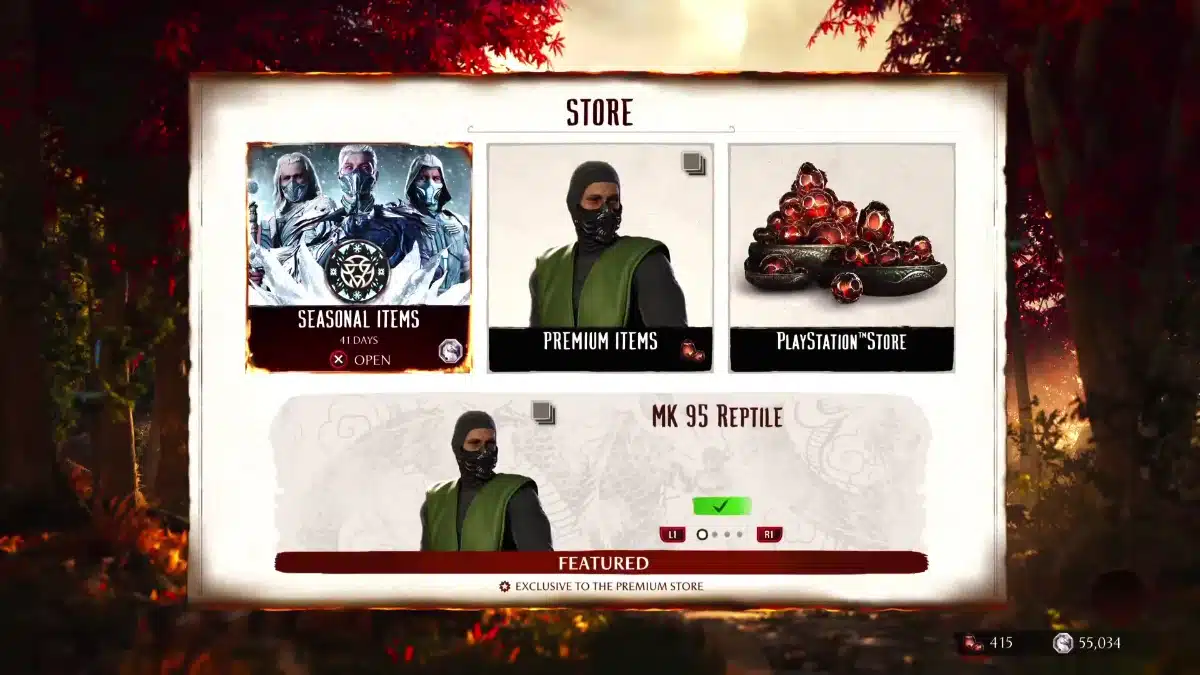
The Premium Store in Mortal Kombat 1 is an in-game storefront that offers a rotating selection of cosmetic content and other premium items. Players primarily use Dragon Krystals to purchase available items, with each product displaying its price before a purchase is made.
Unlike reward systems that provide random items, the Premium Store allows players to choose a specific item from the current selection. Purchased content is permanently added to the player’s collection, although the items available to buy can change as the store rotates.
Quick Links:
How Does the Premium Store Work in Mortal Kombat 1?
The Premium Store displays a selection of items that players can purchase individually using Dragon Krystals. Each listing shows the item being offered and the number of Dragon Krystals required to obtain it.
Players choose which available items they want to purchase rather than receiving a randomly selected reward. This gives the Premium Store a direct-purchase structure within Mortal Kombat 1’s wider cosmetic and reward economy.
The store’s inventory rotates over time. An item that disappears from the current selection may return during a future rotation, although players cannot freely access the entire Premium Store catalogue at once.
Items purchased through the Premium Store remain permanently unlocked after the store selection changes.
What Can You Buy from the Premium Store?
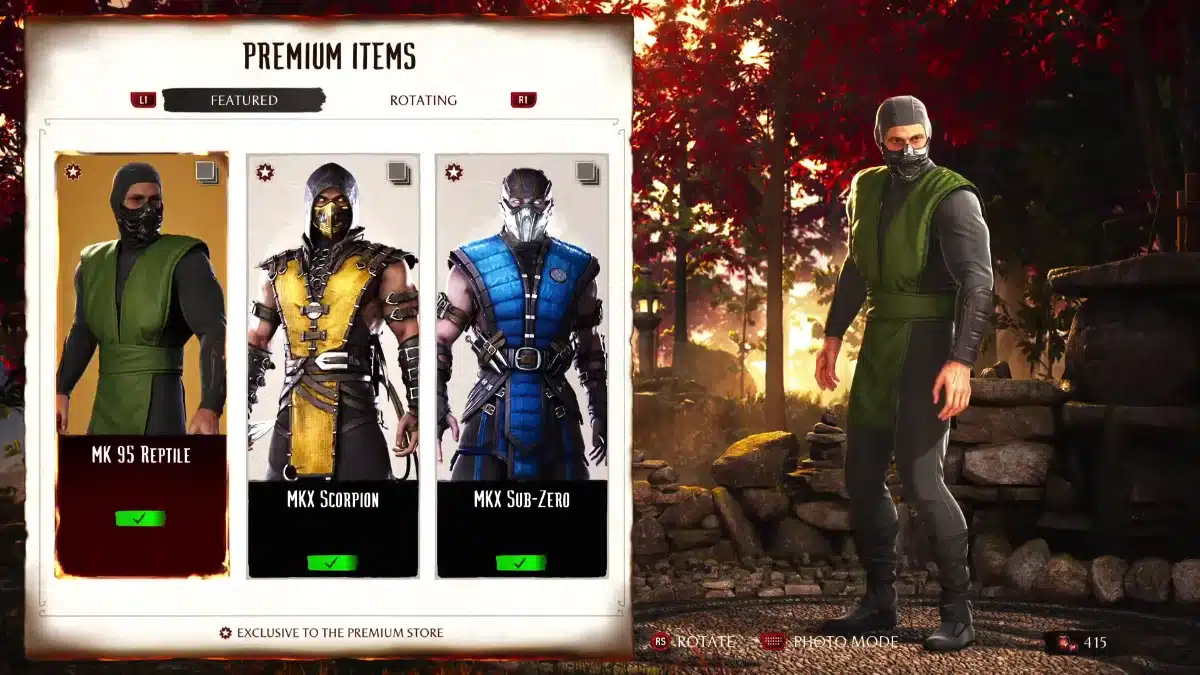
The Premium Store can offer character skins, palettes, gear, announcer voices, and other cosmetic or customisation content. The exact selection depends on the items available during the current store rotation.
Some Premium Store items are sold individually, while certain content can be presented as part of a bundle. The Dragon Krystal price reflects the specific item or package being offered.
Some Premium Store bundles can also receive a reduced Dragon Krystal price when the player already owns eligible content included in the bundle. This prevents certain previously unlocked bundle components from being charged at their full value again.
Not every cosmetic item in Mortal Kombat 1 belongs to the Premium Store. Other rewards can be obtained through systems such as Character Mastery, Kameo Mastery, Invasions, the Shrine, and other gameplay activities.
An item’s appearance in the Premium Store does not necessarily mean the content is exclusive to the store. Some cosmetics or related palettes can also have alternative unlock methods, so players may already own part or all of an offered set through another source.
The Premium Store therefore represents one part of Mortal Kombat 1’s wider content economy rather than a complete catalogue of every unlockable item in the game.
What Currency Does the Premium Store Use?
The Premium Store primarily uses Dragon Krystals, which function as Mortal Kombat 1’s premium currency. Each purchasable item has a Dragon Krystal price that must be paid before the content is permanently added to the player’s collection.
Dragon Krystals can be purchased with real money, while players can also obtain limited amounts through progression and selected gameplay rewards.
Koins and Krowns cannot normally be substituted for Dragon Krystals when purchasing Premium Store content. These currencies serve different purposes within Mortal Kombat 1’s economy.
This separation means that accumulating large quantities of gameplay currencies does not directly provide access to Premium Store items unless the player also has the required Dragon Krystal balance.
Does the Premium Store Rotate Items?
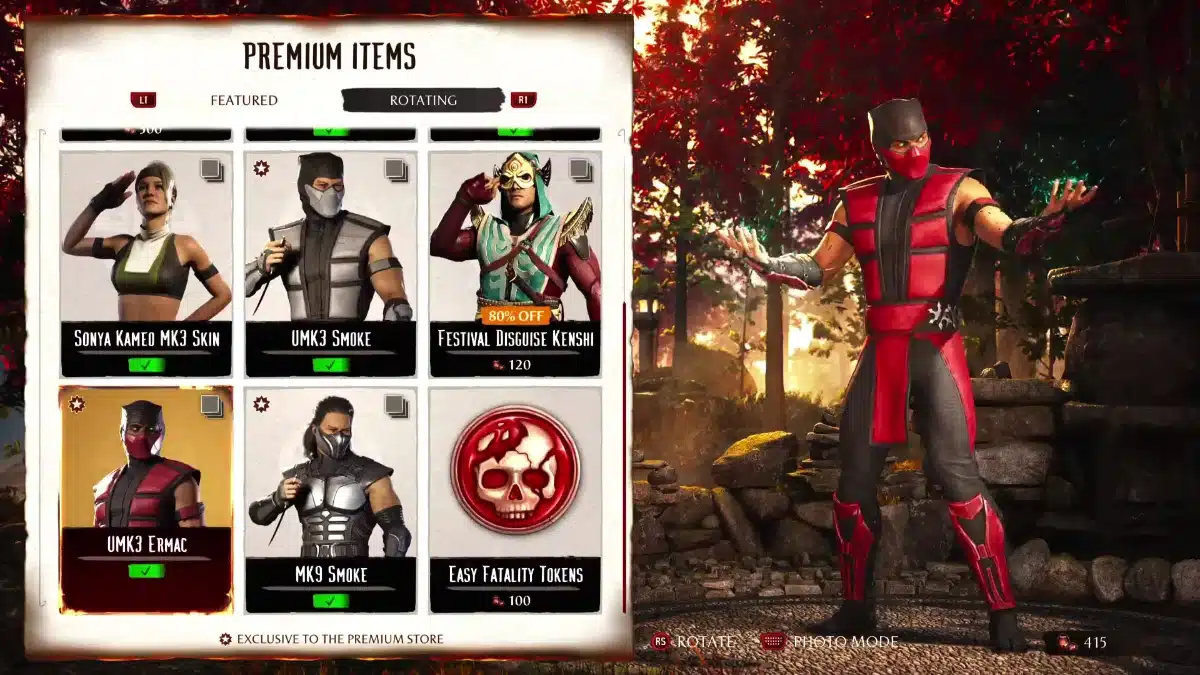
The Premium Store uses a rotating inventory rather than making every premium item permanently available at the same time. The selection changes periodically, replacing some currently listed items with different content.
A cosmetic leaving the store does not necessarily mean it has been permanently removed from availability. Previously offered items can return in later rotations, giving players another opportunity to purchase them.
The rotation system means players looking for a particular cosmetic may need to wait until that item appears in the Premium Store again.
Is the Premium Store the Same as the Shrine?
The Premium Store and the Shrine are separate systems for obtaining content in Mortal Kombat 1.
The Premium Store primarily uses Dragon Krystals and allows players to select specific items from its current inventory. The player knows which item will be received before completing the purchase.
The Shrine uses Koins and awards items from its available reward pool. Players spend a fixed amount of Koins without directly selecting the specific reward they receive.
The main difference is therefore both the currency and the method of obtaining content. The Premium Store uses a direct-purchase model with Dragon Krystals, while the Shrine exchanges gameplay-earned Koins for rewards from its available pool.
Do Premium Store Purchases Expire?
Items purchased from the Premium Store do not expire when the store rotates. Once purchased, the content remains permanently available in the player’s collection.
The rotation affects which items can currently be purchased, not the ownership of content that a player has already obtained.
This distinction allows players to continue using purchased skins, palettes, gear, and other content even after those items are no longer displayed in the current Premium Store selection.
Why Is the Premium Store Important?
The Premium Store provides direct access to selected premium content within Mortal Kombat 1. Unlike systems based on random rewards or progression milestones, it allows players to decide whether a currently available item is worth spending their Dragon Krystals on.
I’ve found the rotating inventory makes Dragon Krystal management more important than it initially appears. Saving Krystals for a particular skin or cosmetic can be more useful than spending them immediately, especially when there is no guarantee that a preferred item will be part of the current rotation.
In Mortal Kombat 1, the Premium Store functions as the primary storefront for Dragon Krystal purchases. Its direct-purchase model, rotating inventory, and permanent ownership of purchased content distinguish it from gameplay reward systems such as the Shrine.