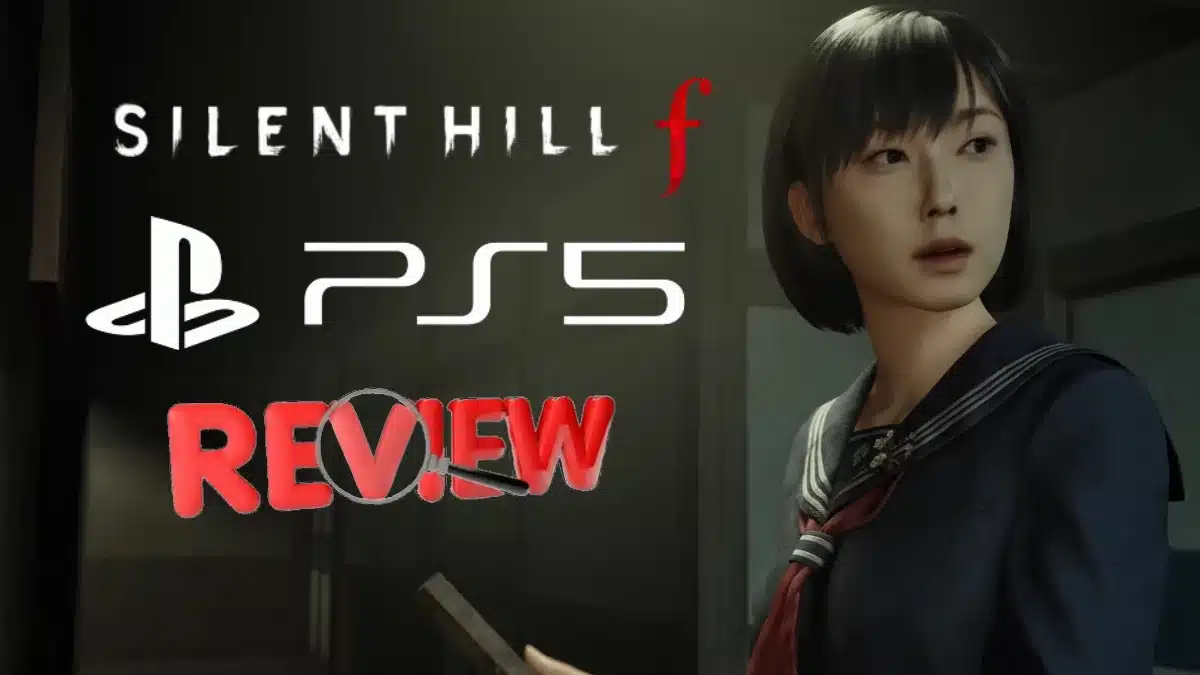
| Developer NeoBards Entertainment | Publisher Konami | Platform PlayStation 5 | Release Date March 2026 | Genre Psychological Horror | File Size ~37 GB |
Silent Hill has been dormant for so long that expectations surrounding Silent Hill f were always going to be sky high. After spending several playthroughs exploring Ebisuga, seeing multiple endings and experimenting with different action settings, I came away impressed by what NeoBards Entertainment has achieved. At the same time, I also found myself understanding why the game has divided long-time fans.
As a horror game, I think Silent Hill f is excellent. As a traditional Silent Hill experience, it’s more complicated.
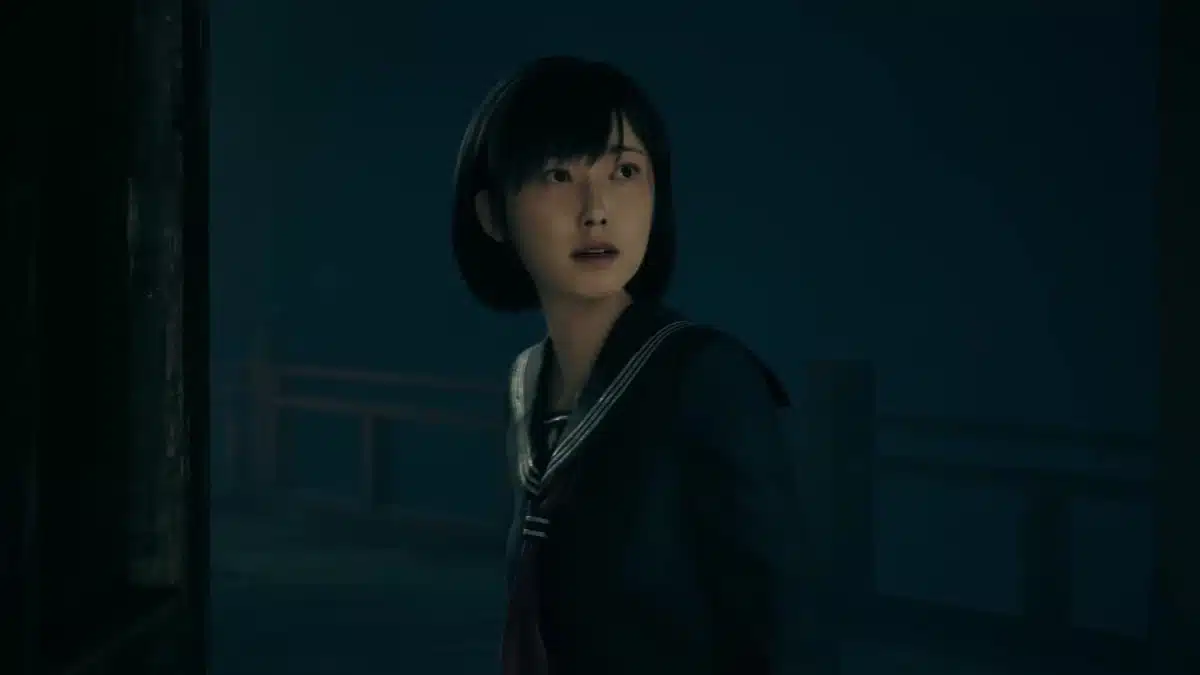
Set in rural Japan during the 1960s, Silent Hill f follows teenager Hinako Shimizu, whose difficult home life is turned upside down when a mysterious fog engulfs her hometown of Ebisuga. Friends disappear, grotesque creatures emerge and reality itself begins to twist into something deeply unsettling. What starts as a survival story gradually becomes something far more psychological.

One of the things I appreciated most was how committed the game is to its setting. Silent Hill has always been a Japanese series masquerading as an American horror franchise, but Silent Hill f finally embraces its roots. The 1960s backdrop isn’t just there for aesthetics. Cultural traditions, religion, social expectations and attitudes towards medicine all influence the story and the characters. I found myself reading every note and journal entry because almost all of them added meaningful context rather than feeling like filler.
Hinako herself is an excellent protagonist. At first, she seems reserved and emotionally distant, but the more I progressed, the more interesting she became. Her journal entries, which mix objective details with her own thoughts and feelings, do a lot of heavy lifting. By the end of the game, I found her story surprisingly affecting without relying on excessive exposition.
Visually, Silent Hill f is stunning on PlayStation 5. The contrast between beauty and horror is one of the game’s greatest strengths. Fields of red spider lilies, abandoned shrines and traditional Japanese architecture create an atmosphere unlike anything else in the series. The monster designs are equally memorable. The scarecrow-like Ayakashi creatures are instantly recognisable and might end up becoming some of the franchise’s most iconic enemies.
I also thought the audio work was exceptional. Akira Yamaoka’s music, unsettling environmental sounds and strong voice performances combine to create a constant sense of unease. I played with the Japanese voice track and found it particularly effective, although the English dub is also strong.
Exploration is another area where Silent Hill f excels. Ebisuga feels interconnected and labyrinthine, with side paths rewarding curiosity through upgrades, lore notes, inventory expansions and charms. The map design does an excellent job of guiding progress without making exploration feel overly linear. Most of the puzzles struck a good balance between challenge and accessibility. I rarely felt frustrated, and solving them usually brought genuine satisfaction.
Combat, however, is where opinions are likely to split.
Unlike older entries, Silent Hill f places much greater emphasis on melee combat. Hinako uses pipes, bats and other improvised weapons, all of which can break. Dodging, stamina management and counterattacks form the backbone of the combat system. I actually enjoyed many of the one-on-one encounters because they require patience and timing, but fights against groups can quickly become messy due to the cramped environments and occasionally awkward camera.
Weapon durability and upgrade systems never completely clicked with me. Repair materials and enhancement items are useful, but I often found myself engaging with them because I had to rather than because they added meaningful depth. They work, but they feel more functional than satisfying.
On PS5, performance was generally solid. I experienced minor frame drops in Performance Mode, but nothing severe enough to affect my enjoyment. Most of the game ran smoothly and looked fantastic.
The install size is refreshingly reasonable at around 37GB, which feels surprisingly modest compared to many modern AAA games that regularly push beyond 100GB.
The biggest issue I had involved difficulty balancing. Hard mode feels brutally unforgiving, with enemies capable of killing Hinako in only a few mistakes, while Story Mode swings too far in the opposite direction and removes much of the tension. I often found myself wishing there was a Normal setting that sat comfortably between the two extremes.
Another area that left me conflicted was the tone. Silent Hill f certainly contains disturbing imagery and psychological themes, but I never found it as oppressive or terrifying as Silent Hill 1 through 4. The fear here comes more from emotional unease and creeping dread than outright terror. I spent more time reflecting on what I’d witnessed than recovering from jump scares. Whether that’s a strength or a weakness will depend entirely on what you expect from a Silent Hill game.
Replayability is surprisingly strong. Multiple endings and New Game Plus additions make subsequent runs worthwhile. New scares, altered notes and additional story context reveal themselves over time. In many ways, I felt like my second playthrough enhanced my appreciation of the story. However, the requirement to revisit the same areas and repeatedly fight the same enemy types can make repeat runs feel repetitive.
Enemy variety is one of the game’s weakest aspects. Outside of bosses, I kept encountering variations of the same few creature archetypes. By my third playthrough, I definitely felt the repetition.
Despite some flaws, I couldn’t stop thinking about Silent Hill f after the credits rolled. Its themes, characters and imagery stayed with me long after I put the controller down. I admire its willingness to move away from familiar territory and embrace Japanese folklore and culture. At the same time, I understand why some fans may find it less frightening and less oppressive than previous entries.
If I judge it purely as a horror game, Silent Hill f is one of the strongest entries in years. If I judge it solely against the classic Silent Hill titles, it falls short in atmosphere and pure terror. Somewhere between those two viewpoints lies the truth.
For me, Silent Hill f succeeds because it isn’t trying to recreate Silent Hill 2. Instead, it delivers its own identity. It may not be the scariest game in the series, but it’s one of the most memorable, and that’s something I value just as highly.
After several playthroughs on PS5, I came away impressed by Silent Hill f’s story, atmosphere and stunning presentation. Its heavier focus on combat, uneven difficulty balance and limited enemy variety prevent it from reaching the heights of the classics, but I still found it to be a compelling and deeply memorable horror experience.
Silent Hill f
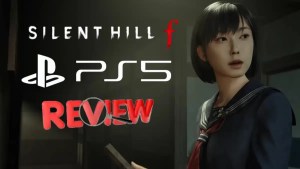
A bold, atmospheric entry set in 1960s Japan that leans into vulnerability, body horror and sanity mechanics, with some combat and technical rough edges.
Product Brand: Konami Digital Entertainment
8.7
Pros
- Beautiful art direction and striking 1960s Japanese setting.
- Excellent audio design and strong voice acting.
- Hinako is a compelling protagonist.
- Memorable creature designs.
- Rewarding exploration and satisfying puzzles.
- Multiple endings and meaningful New Game Plus additions.
- Strong psychological themes that linger after the credits.
Cons
- Combat can feel clunky, especially against groups.
- Hard mode is punishing while Story Mode is too easy.
- Limited enemy variety becomes noticeable on repeat playthroughs.
- Not as oppressive or frightening as classic Silent Hill entries.
- Some systems, such as weapon durability and upgrades, feel awkwardly implemented.
- Replaying large sections for additional endings can become repetitive.