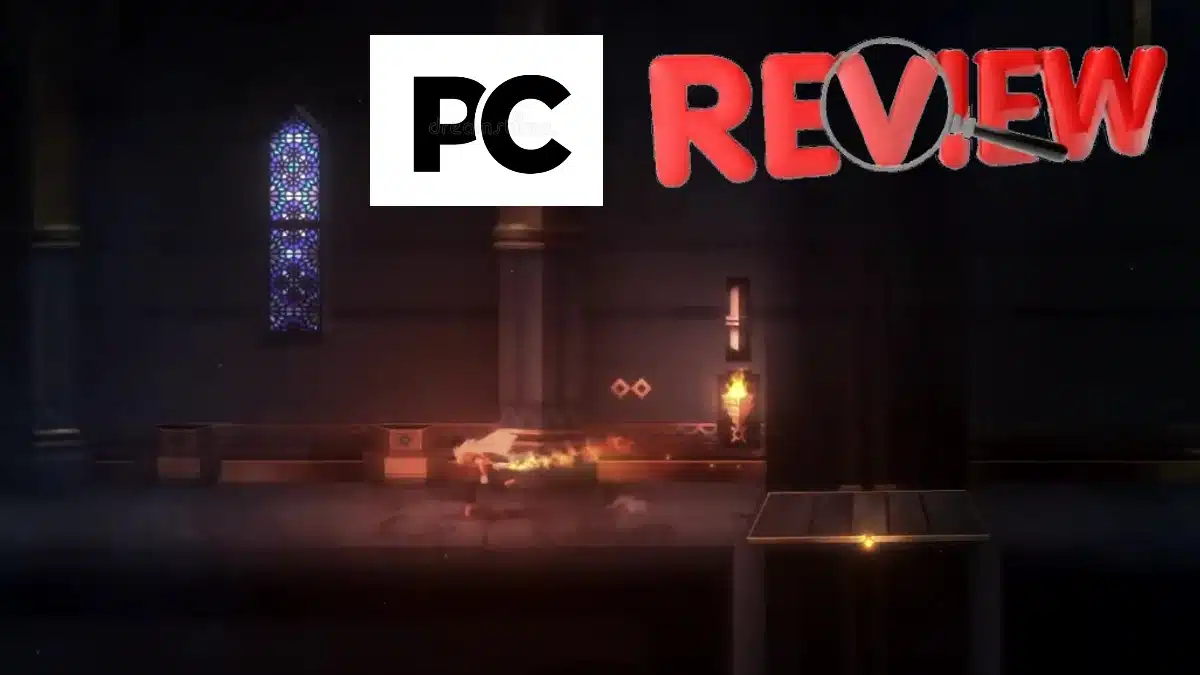
After playing through Nocturnal on PC, I came away impressed by how much Sunnyside Games achieved with one central idea. Fire is Ardeshir’s weapon, protection and means of interacting with the island of Nahran. Almost every worthwhile mechanic develops from that relationship.
Ardeshir is a soldier of the Enduring Flame who returns to Nahran after years away. A mysterious Mist has consumed much of his homeland and transformed its inhabitants into hostile creatures. Ardeshir must cross the island, uncover what happened during his absence and use his flaming sword to push back the darkness.
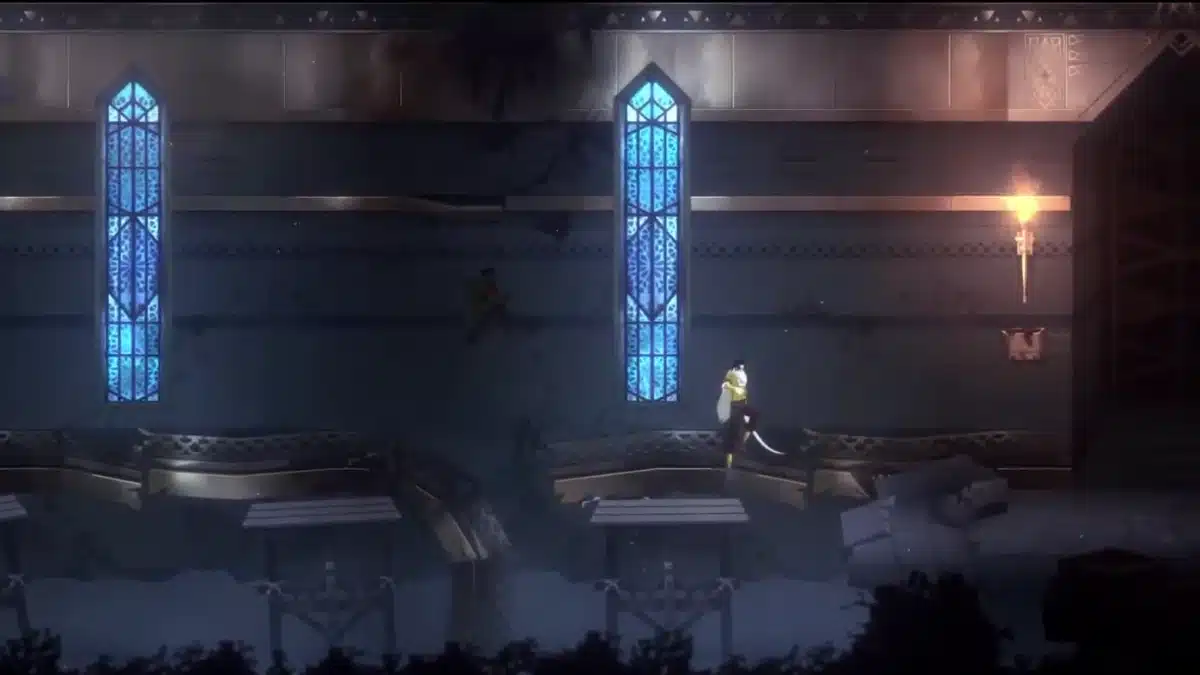
The premise is simple, but the atmosphere immediately gave the journey a strong identity. Nahran feels isolated and damaged. Ruined temples, darkened halls and abandoned settlements suggest a history that existed long before Ardeshir returned.
Nocturnal occasionally reminded me of Dark Souls, although not because its combat reaches the same level of difficulty. The similarity came from its isolation, environmental storytelling and the feeling that I had entered a place already ruined by events I did not yet understand.
Its visual presentation and side-scrolling exploration also invited comparisons with Ori and the Will of the Wisps. Both games use striking scenery and environmental obstacles to make movement through their worlds feel meaningful. I personally preferred Nocturnal because its fire mechanic created a more immediate connection between combat, exploration and survival.

The Mist is not merely part of the background. Remaining inside it without a flame causes Ardeshir to lose health, which turns every available source of fire into a temporary refuge.
Ardeshir can ignite his sword from braziers and other burning objects. The flame then lasts for a limited period before going out. A burning blade can damage enemies born from the Mist, activate mechanisms and ignite parts of the environment.
This creates a reliable rhythm. I would light the sword, clear nearby enemies and move quickly through a darkened section while searching for the next brazier. Exploration became more stressful whenever I travelled too far from a known flame source.
Some of my favourite moments came from desperately searching for another light as Ardeshir’s health began disappearing inside the Mist.
That pressure made the world feel dangerous without depending entirely on powerful enemies. A quiet corridor could become threatening when my sword was close to going out and I did not know where the next flame would appear.
The system also prevented fire from becoming a visual gimmick. Lighting the sword changed what I could safely explore, which enemies I could hurt and which environmental objects I could use.
Combat uses a compact selection of sword attacks, evasive movement and unlockable abilities. Ardeshir can strike enemies directly, launch them into the air and move through attacks with a quick dash.
The movement took some adjustment. Early encounters occasionally felt awkward while I learned the distance covered by the dash and the timing required to move through an attack without placing Ardeshir in another dangerous position.
Once the movement clicked, combat became much smoother. I could pass through an advancing enemy, turn and attack from the opposite side rather than remaining directly in front of it.
Enemy behaviour encouraged different responses. Sword-wielding opponents tried to close the distance, while ranged enemies could throw explosives or attack through the Mist. Mixed encounters became more demanding because concentrating on one enemy often created an opening for another.
The flame added another consideration. Fighting too cautiously could waste its remaining duration, but rushing into a group often resulted in unnecessary damage. I had to balance the need to preserve health with the need to reach another fire source.
Certain encounters caused noticeable difficulty spikes. Groups containing several enemy types could become chaotic, particularly when I was also watching the flame timer and trying to identify the correct route forwards.
The checkpoint system prevented these moments from becoming exhausting. Death rarely removed much progress, so I could reconsider an encounter without repeating a long section of exploration.
The puzzles produced a less consistent experience. The best examples used fire naturally by asking me to ignite mechanisms, carry a flame between locations or identify a safe route through the Mist.
Other sections were less clearly communicated. I occasionally found myself moving through the same rooms while trying to determine whether I had missed an object, misunderstood a mechanism or simply taken the wrong path.
Those moments interrupted the otherwise confident pace. The eventual solution could be straightforward, but the route towards understanding it was not always adequately signposted.
Boss battles provided the largest tests of movement and attack timing. The Shadow Dog became my favourite because its speed forced me to use the evasive movement I had developed throughout the game.

The encounter felt aggressive without becoming unreadable. I could recognise its attacks, but reacting correctly still required concentration. It was the point where Ardeshir’s movement felt most important rather than merely useful.
Arsia provided an appropriately substantial final confrontation. The battle combined the game’s movement, swordplay and fire mechanics without abandoning the rules established during the journey.
Progression is handled through ash collected from enemies and the environment. Ash can be offered at Phoenix statues to unlock new abilities and permanent bonuses.
The upgrade paths improve attributes such as flame duration, combat effectiveness and healing. These choices are uncomplicated, but each one affects how comfortably Ardeshir can survive inside the Mist.
Longer flame duration increases the time available to explore or finish a battle before searching for another brazier. Combat upgrades improve Ardeshir’s ability to deal with enemies quickly, which indirectly preserves flame by reducing the time spent in each encounter.
The healing ability became particularly valuable during my playthrough. It gave me a way to recover during more demanding sections and reduced my dependence on reaching the next checkpoint with almost no health remaining.
I relied on healing regularly once the difficulty increased. That made the upgrade feel like a meaningful extension of the flame system rather than a conventional addition to a skill tree.
The progression pace initially felt slow because several useful improvements competed for the same ash. However, the limited number of upgrades suited the game’s compact structure. Nocturnal did not bury its central mechanic beneath an excessive number of statistics or equipment levels.
Exploration also reveals letters, tombs and other fragments of Nahran’s history. These discoveries explain more about the island, the Enduring Flame and the events surrounding Ardeshir’s return.
I became genuinely interested in learning how the flame had been passed between generations. The optional discoveries made the journey feel connected to a wider history rather than existing only as a route between combat encounters.
The narrative is restrained. Long conversations and cinematic sequences rarely interrupt the action. Most of the context comes from short exchanges, environmental details and material discovered while exploring.

That approach supported the lonely atmosphere, although some players may find the story too lightly developed. The island’s mystery remained more compelling to me than the individual characters involved in it.
The visual design is easily Nocturnal’s strongest quality. Bright orange flames stand out against the black Mist, while pale skies and muted environments prevent the darker areas from becoming visually flat.
Fire also improves gameplay readability. I could quickly recognise whether Ardeshir’s sword was burning, which objects could be ignited and where the Mist had made an area unsafe.
The animation gives weight to otherwise simple actions. Ardeshir’s cloak reacts to his movement, flames shift around the blade and defeated enemies collapse with enough force to make sword strikes feel effective.
Each environment retains the same wider identity while introducing enough variation to avoid looking repetitive. Temples, open landscapes and enclosed ruins all belong to Nahran, but they create different moods and navigation challenges.
The ambient music supports that atmosphere without overwhelming it. Quieter sections allow wind, fire and distant environmental sounds to carry the scene, while combat introduces enough urgency to signal danger.
The PC version is modest in its hardware requirements. Sunnyside Games lists 8 GB of RAM and 2 GB of available storage among the minimum specifications. The game supports keyboard input and controllers, although its movement and combat felt naturally suited to a gamepad. These are documented platform details rather than independent GamesLatestNews benchmark measurements.
| Nocturnal PC Feature | Documented Support |
|---|---|
| Operating system | 64-bit Windows |
| Minimum memory | 8 GB RAM |
| Minimum storage | 2 GB available space |
| Minimum GPU | GeForce GT 650M or Radeon HD 4870 X2 |
| Controller support | Supported |
| Keyboard support | Supported |
| Game modes | Single-player |
| Steam features | Achievements and Steam Cloud |
| Reviewed platform | Windows PC |
My playthrough took approximately four to five hours. Sunnyside Games presents Nocturnal as a deliberately compact experience and estimates around three hours, so completion time will depend on exploration, puzzle solving and how frequently individual encounters need to be repeated.
Its length worked in its favour. The flame remained interesting because the game ended before it was stretched across too many repeated environments or progression systems.
A few ideas could have supported further development. More varied puzzles and additional uses for environmental fire would have expanded the central mechanic, while clearer navigation would have prevented the occasional periods of running between familiar rooms.
The short runtime may also disappoint players seeking an expansive Metroidvania. Nocturnal is a mostly focused action-platformer rather than a large interconnected world filled with extensive backtracking and dozens of optional upgrades.
That narrower scope allowed Sunnyside Games to commit fully to its strongest idea. The flame affects survival, combat, exploration, progression and visual design. Each part of the game reinforces the same relationship rather than feeling attached to an unrelated system.
The difficulty occasionally rises without enough warning, and several puzzles could communicate their logic more clearly. Progression also feels slightly restricted during the opening stages, before healing and longer flame duration provide more freedom.
Those issues never overcame what worked. I remained invested in the mystery of Nahran, enjoyed learning Ardeshir’s movement and repeatedly felt genuine pressure when the surrounding darkness began draining his health.
Nocturnal does not reinvent the 2D action-platformer, but it understands the value of developing one mechanic properly. Its combination of fire, darkness and deliberate exploration produces a memorable journey that remains focused from beginning to end.
The striking artwork is the immediate attraction. The way fire connects every major system is what makes the experience worth completing.
Nocturnal Quick Facts
Developer
Sunnyside Games
Publisher
Dear Villagers
Reviewed platform
PC
Release Date
7 June 2023
Genre
2D action-platformer
Game Modes
Single-player
Core Mechanic
Fire-based combat, exploration and survival
Minimum memory
8 GB RAM
Minimum storage
2 GB available space
Input support
Keyboard and controller
Steam features
Achievements and Steam Cloud
Nocturnal PC Review

Our Nocturnal game review, a captivating side-scrolling action platformer by Sunnyside Games.
Product Brand: Dear Villagers
7.8
Pros
- Atmospheric world with beautiful art and music
- Smart flame mechanics that tie into combat and exploration
- Satisfying combat with a nice variety of enemy types
- Strong pacing and focused level design
- Excellent checkpoint system avoids frustration
Cons
- Some difficulty spikes in puzzles and encounters
- Navigation can occasionally feel unclear
- Upgrade progression feels slow early on
- Short runtime might leave some wanting more