Key Highlights:
- No Man’s Sky Cosmos Update 7.0 lets players direct and customise space stations, build orbital bases and form massive player alliances.
- New star-system maps lead to asteroid belts, infested outposts, space hulks and other fixed deep-space locations that can be explored and salvaged.
- The free update also adds full spacewalking, reachable stars, Expedition 23, major rendering upgrades and technology being developed alongside Light No Fire.
Quick Links:
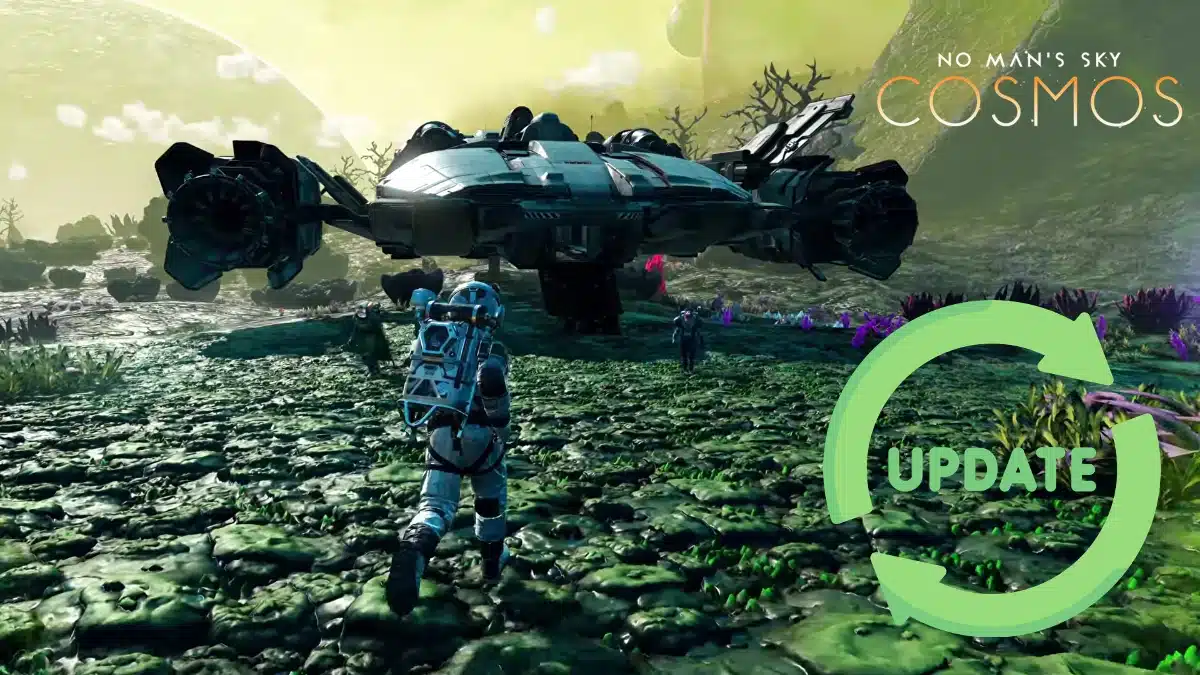
After ten years with space itself largely untouched, No Man’s Sky has released Cosmos Update 7.0, rebuilding deep-space exploration with player-controlled stations, orbital construction, galactic alliances, salvageable hulks and an entirely new star-system map.

Cosmos is available now as a free update across PC, PS4, PS5, Xbox One, Xbox Series X|S, Nintendo Switch and Switch 2, with Xbox Game Pass also included in Hello Games’ current release log.
Hello Games says space has remained largely unchanged throughout No Man’s Sky’s decade of updates. Cosmos is designed to make travelling between planets an activity in itself rather than simply the journey between two destinations.
The official Cosmos breakdown details dozens of new systems, while Hello Games has also released a traditional update trailer and a longer deep-dive video explaining how the overhaul fits into the future of both No Man’s Sky and Light No Fire.
Space is now a destination of its own
Every system now has an interactive Star System Map accessible from the Quick Menu. It shows planets, the local space station and newly discovered deep-space points of interest, with players able to mark locations and receive navigational assistance towards them.
Those locations can include rocky and icy asteroid belts, inhabited outposts, infested outposts, debris fields, asteroid platforms, anomalies and procedurally generated space hulks.
They are also persistent locations rather than temporary random encounters. Hello Games says deep-space points of interest occupy fixed positions that can be revisited later.
The map does not immediately reveal everything on a brand-new save. Deep-space locations begin appearing once the player has reached the Space Anomaly for the first time, while a new Signals tutorial introduces the mapping and navigation systems.
Asteroid belts are no longer merely scattered rocks either. Dense belts of rock and ice can contain rare minerals and crystals, with miners, traders and outlaws drawn towards particularly valuable areas. Some naturally formed asteroid platforms are large enough to support player bases.
Players can finally travel directly towards a system’s star as well.
Stars now exist as reachable deep-space destinations through long-haul flight. Hello Games describes the journey as deliberately dangerous because getting sufficiently close to the burning plasma can kill the Traveller.
I think the fixed deep-space locations may prove more important to everyday play than even station ownership because they fundamentally change what players can expect to find between planets instead of treating open space as something to pulse through.
You can direct a Space Station and build anywhere in orbit
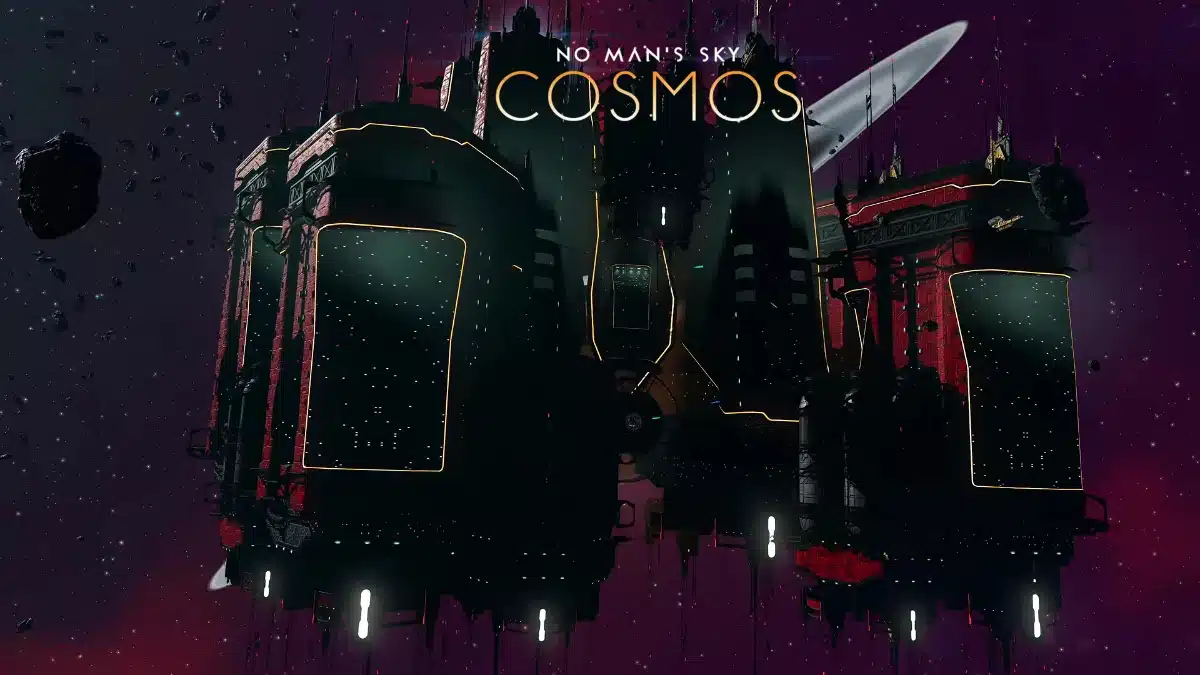
One of Cosmos’ biggest additions is Space Station Directorship.
Players can prove themselves to local authorities and take control of a system’s station, gaining access to tools for changing its central lobby, additional rooms and exterior appearance. Hundreds of large decorative components can be unlocked, while existing base-building pieces can be used inside.
Station directors can rearrange existing furnishings, construct additional compartments from the main hangar and build completely custom layouts inside those new rooms.
Exterior customisation is much larger in scale. Monumental structures can be positioned around the station itself, allowing players to create anything from a welcoming social hub to something deliberately intimidating.
Cosmos also removes the requirement to build on a planet altogether.
A Deep-Space Base Computer can claim an empty volume anywhere in space, allowing completely free-floating orbital bases to be constructed without needing an asteroid underneath them. Natural rock platforms remain available for players who want physical terrain beneath a star base.
That means orbital restaurants, trading stops, military facilities or entire floating settlements can now exist independently in deep space.
The feature builds naturally on the Voyagers update, which introduced custom Corvette-class ships, walkable interiors and multiplayer crews. Cosmos takes that idea of living in space and extends it from ships into permanent infrastructure.
Station ownership also unlocks No Man’s Sky’s new social system: Galactic Alliances.
Directors can create an alliance with its own name and banner or join one through an alliance-controlled station. Members can travel quickly between associated systems through teleporters and collectively build a network of stations across the galaxy.
Individual players can belong to up to three alliances simultaneously.
Activity feeds into new leaderboards visible from station cores. Hello Games tracks factors including population, member activity and territorial expansion, allowing alliances to compete over which communities become the largest and most prominent.
Sean Murray goes considerably further in the Cosmos Deep Dive, describing the technology as capable of supporting alliances containing tens of thousands of players.

Space hulks introduce physical salvage
Cosmos also turns derelict spacecraft into destructible salvage locations.
Huge space hulks now drift through systems as maze-like wrecks that can be entered during spacewalks. Valuable cargo and technologies can be physically stripped from their structures, but damaging too much of the wreck reduces its integrity and can trigger a catastrophic meltdown.
That creates a risk-reward loop. Players can scan for valuable components first, extract the best salvage and leave, or continue stripping the hulk while risking an explosion.
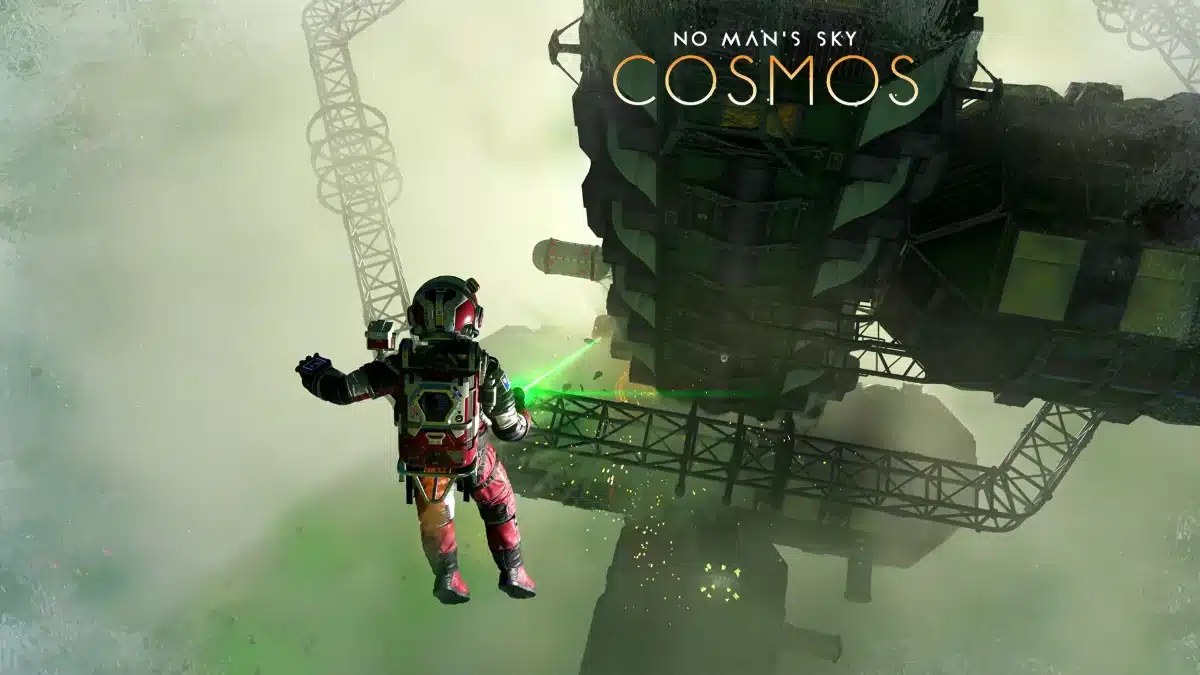
The new loop expands considerably on the wreck recovery introduced by the Breach update. Breach centred on spacewalking through Corvette graveyards, while Cosmos turns hulks into destructible locations governed by structural integrity and physical cargo.
The Gravitino Coil has been improved for this purpose, while Corvette-class ships can install a new Tractor Beam purchased through Corvette Workshops.
Salvaged objects can be pulled free with the Gravitino Coil and physically thrown towards the Tractor Beam, which collects or processes them into the Corvette hold. Oversized objects are automatically broken down into something the ship can store.
Recovered material can then be taken to one of the new deep-space outposts.
Alien quartermasters buy and process materials, sell maps and provide information, while Salvage and Delivery Terminals offer contracts that reward players with standing and other resources. Valuable salvage can instead be sold through the Galactic Trade Network or used to customise a player’s own station.
Some outposts have been consumed by biological growth.
These Infested Outposts contain hostile organic matter that must be physically cleared using the Gravitino Coil. Doing so can expose pathogen sacs, gelatinous fibres and other rare materials.
Every pilot can now spacewalk
Cosmos substantially expands spacewalking beyond the Corvette system.
Players flying conventional starships can now use an eject command from the Quick Menu and leave their ship anywhere in open space. Previously, much of the walkable-space functionality was centred around Corvette-class vessels.
Movement has also been upgraded to true six degrees of freedom, including roll, giving players significantly more control while floating outside a ship.
There is a survival cost. Spacewalking drains cold-protection technology in the Exosuit unless another nearby hazard takes priority, such as extreme heat from a star. Explosions can also physically knock players backwards.
Landing and taking off from objects that generate gravity has been improved as part of the same system.
Expedition 23 celebrates the entire ten-year journey
Cosmos accompanies Expedition 23: Our Journey Continues, although Hello Games’ patch notes say the expedition will begin shortly rather than confirming that it went live simultaneously with Update 7.0.
It is expected to run for approximately six weeks.
Instead of focusing on a single new mechanic, Expedition 23 functions as a journey through the history of No Man’s Sky.
Each milestone corresponds to an update or major moment from the game’s first ten years, with gameplay based around features introduced during that particular era.
Sean Murray has recorded developer commentary for every milestone. Once unlocked, those recordings remain permanently accessible through the Collected Knowledge section of the Catalogue.
Rewards deliberately reference No Man’s Sky’s past.
Players can earn:
- a golden version of the original Rasamama S36 starship
- the Starbound v0.27 Multi-Tool, based on early concept artwork
- a vintage Sentinel Interceptor recreated from pre-release footage
- a rebuilt and reanimated Diplodocus companion based on the creature shown before launch
- an astronaut cockpit bobblehead
- framed artwork based on earlier update covers
- commemorative decals and titles
A new Twitch Drops campaign accompanies Cosmos from September 10 to September 14.
Watching eligible No Man’s Sky streams can earn starships, Multi-Tools, base parts, alien companions, fireworks and other rewards. Hello Games says players can earn those Drops even without currently owning No Man’s Sky, with the items waiting once the game is connected later.
Cosmos also contains a major visual and performance update
The space overhaul sits on top of a sizeable rendering rewrite.
Planetary terrain tessellation has been improved, clouds viewed from orbit now use enhanced textures, shapes and lighting, asteroid generation has been reworked, and particles such as stardust, smoke, electrical fields and biological slime now interact more naturally with lighting.
Volumetric fog has been introduced around hulks, while particles and transparent surfaces can respond to local lights such as the Multi-Tool torch.
Hello Games has also rewritten its runtime texture compression system to reduce colour banding and compression artefacts on procedurally generated models.
On PC, Cosmos adds Intel XeSS 3 and NVIDIA DLSS 4.5, including Frame Generation at 5x and 6x. HDR can now be combined with Frame Generation as well.
PC VR gains eye-tracked foveated rendering, concentrating rendering resources around the area the player is looking at.
Broader optimisation work includes multiplayer latency reductions, asynchronous base updating, improved procedural-object loading and numerous CPU, memory and animation optimisations.
Console loading times have been improved by an estimated 6-9% through new file-handling optimisation, while mesh data has been reduced by around 13%. Xbox also gains bindless texture, sampler and buffer support intended to reduce rendering-related CPU usage.
Nintendo Switch receives specific object-fading improvements designed to reduce visible environmental pop-in.
Among the smaller systemic changes, the Dream Aerial is now reusable for locating individual Living Frigates, while the Living Ship encountered during Starbirth can appear around Infested Outposts during that mission chain.
Cosmos is also testing technology for Light No Fire
The Cosmos Deep Dive contains one of the most interesting details outside No Man’s Sky itself.
Murray says the systems Hello Games is building and refining through Cosmos are technologies the studio hopes players will also experience in Light No Fire.
He specifically talks about large player alliances, communities working together and station ownership while explaining how much development work has gone into Cosmos.
That does not mean Light No Fire has been confirmed to contain No Man’s Sky-style space stations or identical alliance mechanics. The important confirmed state is that Hello Games is using No Man’s Sky to test and refine technology intended to inform its next game.
Cosmos therefore feels less like a tenth-anniversary victory lap and more like another foundation update. No Man’s Sky now has persistent deep-space exploration, orbital construction, destructible salvage sites, player-controlled stations and enormous community alliances, while Hello Games is simultaneously using those systems to develop technology for what comes next.