
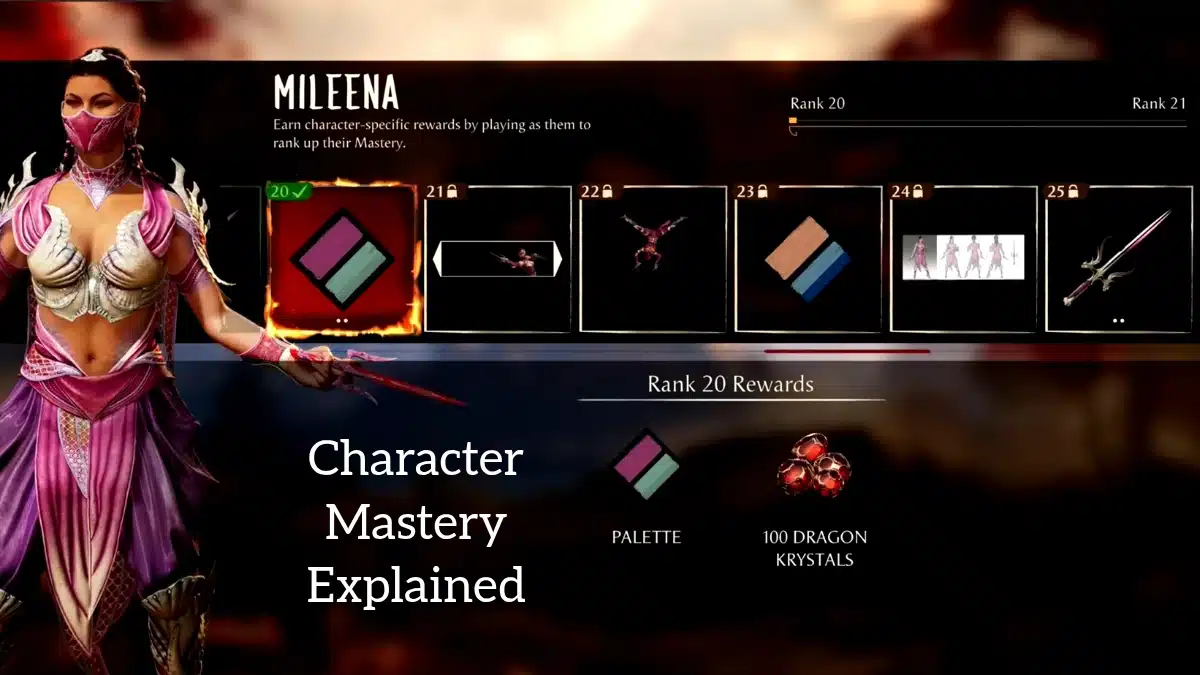
Character Mastery in Mortal Kombat 1 is a fighter-specific progression system that rewards players for using individual characters in eligible game modes. Each playable fighter has a separate Mastery track, allowing players to unlock character-specific rewards as they earn Mastery XP and increase that fighter’s Mastery Rank.
The system rewards long-term use of the roster rather than general account progression. Playing as Scorpion increases Scorpion’s Character Mastery, for example, while switching to Sub-Zero progresses Sub-Zero’s separate Mastery track.
Quick Links:
How Does Character Mastery Work in Mortal Kombat 1?
Character Mastery progresses by earning Mastery XP while playing as a specific fighter. Each new Mastery Rank unlocks a predetermined reward associated with that character.
Progress is tied to the fighter being used rather than shared across the entire roster. Players who regularly switch characters therefore progress several Mastery tracks independently, while players who focus on a main fighter will advance that character’s track more quickly.
Character Mastery can also be purchased with Dragon Krystals. Introduced in the April 2025 update, this option becomes available once a player has reached Mastery Rank 35 with at least one original-roster fighter. Players can then purchase Mastery progression for other playable Fighters and Kameos instead of earning every rank through matches.
Character Mastery is also permanent. Unlike the seasonal progression used in Invasion Mode, a fighter’s Mastery Rank does not reset when a new Invasions season begins.
What Rewards Does Character Mastery Unlock?
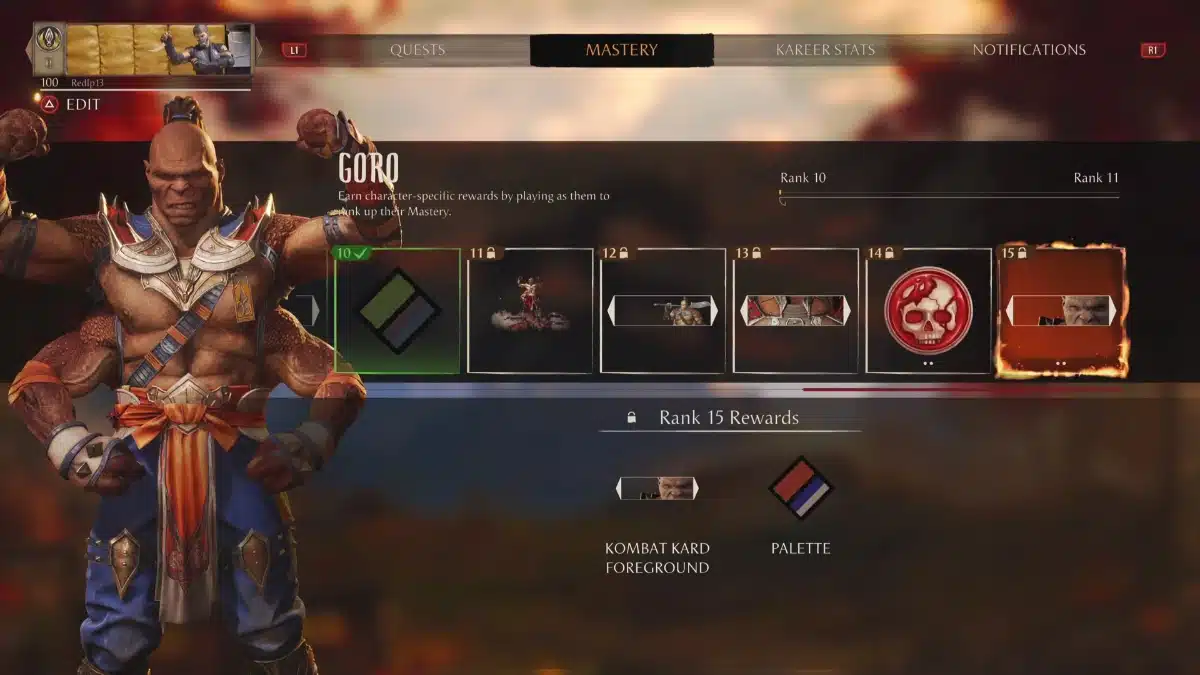
Character Mastery rewards include Brutalities, Fatality inputs, taunts, gear, skins, palettes, Kombat Kard customisation items, and in-game currency. The exact reward available depends on the fighter and the Mastery Rank reached.
Brutalities are among the most important gameplay-related Mastery rewards. For many playable fighters, additional Brutalities become available as the character progresses through specific Mastery Ranks.
At Mastery Rank 14, a Fighter’s second Fatality input becomes visible in the Move List. However, the Fatality itself can be performed before reaching that rank if the player already knows the correct button combination. Character Mastery reveals the input rather than unlocking the finishing move itself.
Cosmetic rewards make up much of the remaining progression. These rewards allow players to customise fighters with different palettes, skins, and gear while providing a visual record of time spent using a particular character.
Does Every Fighter Have the Same Mastery Track?
Character Mastery follows the same basic progression concept across the playable roster, but the length and reward structure can vary between fighters.
The original playable roster has Character Mastery tracks extending to Rank 35, while post-launch DLC Fighters have shorter tracks that end at Rank 20. This means the number of ranks required to complete Character Mastery depends on the Fighter, even though the underlying progression system works the same way.
The rewards themselves are also character-specific. Two fighters may unlock the same type of reward at a particular stage of progression, but the actual palette, gear item, Brutality, or cosmetic belongs to the character whose Mastery track unlocked it.
What Is the Difference Between Character Mastery and Kameo Mastery?
Character Mastery and Kameo Mastery are separate progression systems. A playable fighter earns progress on a Character Mastery track, while a Kameo Fighter earns progress on its own Kameo Mastery track.
Both characters can gain Mastery progress while being used together, but their ranks and rewards remain independent. Changing the playable fighter or Kameo changes which Mastery tracks receive progression from subsequent play.
Kameo Mastery tracks are generally shorter than the Mastery tracks used by the original playable roster. Their rewards are also tailored to Kameo Fighters and include items such as palettes, Kombat Kard customisation, and Kameo-specific Brutalities.
This distinction reflects the different roles of the two character types. Playable fighters form the core of combat, while Kameo Fighters provide assists through the Kameo System.
Does Character Mastery Reset Each Season?
Character Mastery does not reset when a new Invasions season begins. Mastery Rank and previously unlocked Character Mastery rewards remain attached to the fighter permanently.
This separates Character Mastery from seasonal Invasion progression. Invasion Mode resets certain progression and seasonal systems as its content changes, while Character Mastery provides a persistent record of progression with each fighter.
The distinction allows players to make permanent progress even when earning Mastery XP through content connected to a temporary season.
Why Is Character Mastery Important?
Character Mastery gives players a progression path for learning and repeatedly using individual fighters. Instead of rewarding every match through a single universal progression track, the system connects many unlocks directly to time spent with specific members of the roster.
I’ve found Character Mastery particularly useful as an incentive to experiment with fighters outside a regular main. Starting a new Mastery track provides an immediate progression goal, while unlocking additional Brutalities gives players more finishing options as they become familiar with the character.
In Mortal Kombat 1, Character Mastery functions as the persistent progression system for individual playable fighters. It connects character usage with gameplay unlocks and cosmetic rewards, giving each fighter a separate progression path that continues across Invasions seasons.