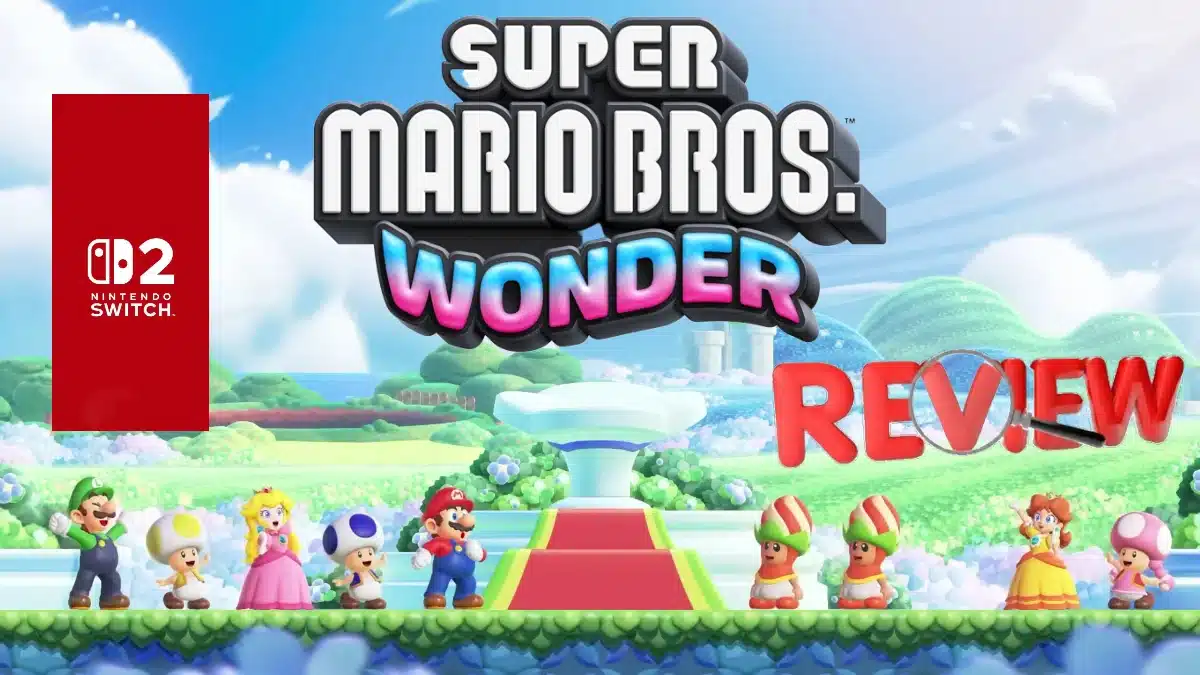
When Super Mario Bros. Wonder launched in 2023, it gave Nintendo’s 2D Mario series the creative spark it desperately needed. After years of increasingly safe entries, Wonder reminded everyone just how inventive side-scrolling Mario could be. It delivered imaginative level design, brilliant Wonder Effects, gorgeous visuals and a constant stream of fresh ideas that rarely overstayed their welcome.
The Nintendo Switch 2 Edition arrives with the difficult task of improving a game that was already one of the finest platformers Nintendo has ever made. Rather than simply boosting the resolution, Nintendo has bundled in Bellabel Park, an expansion that introduces new single-player challenges, multiplayer content and, perhaps most importantly, a complete set of Koopaling boss battles.

The result is a package that’s simultaneously satisfying and frustrating. It makes Super Mario Bros. Wonder a better game than ever, yet it also raises questions about why so much of this content wasn’t included from the beginning.
From a presentation standpoint, however, there is very little to criticise.
Super Mario Bros. Wonder already featured one of Nintendo’s strongest visual styles, and the Switch 2 edition elevates it further. Running at a much higher resolution, every animation, character model and colourful environment looks remarkably crisp. The expressive facial animations stand out even more, background details are noticeably sharper, and the clean art direction benefits enormously from the additional clarity.
I found the higher resolution arguably has a bigger impact here than it does in many technically demanding games. Wonder’s simple yet expressive art style allows every detail to shine without overwhelming the screen. It feels less like a visual overhaul and more like viewing an already beautiful painting through perfectly clean glass.
Performance is equally polished. Gameplay remains smooth throughout, loading is virtually instant, and the responsive controls that made the original so enjoyable remain untouched. Nintendo’s excellent animation work still gives every jump, bounce and transformation a satisfying sense of weight and personality.
On Nintendo Switch 2, Super Mario Bros. Wonder runs at a sharp 4K resolution with flawless performance. Here is how the Switch 2 Edition compares to the original:
| Feature | Switch 2 Edition | Original (Switch) |
|---|---|---|
| Resolution | 4K | 1080p (docked) |
| Frame Rate | 60 fps (stable) | 60 fps (stable) |
| Loading | Virtually instant | Fast |
| 120Hz Mode | Not available | N/A |
The higher resolution has a bigger impact here than it does in more technically demanding games. Wonder’s clean, expressive art style benefits enormously from the additional clarity — character animations, background details, and the already gorgeous environments all look remarkably crisp. It feels less like a visual overhaul and more like viewing an already beautiful painting through perfectly clean glass.
That said, the technical improvements are less dramatic than they might initially appear. Nintendo’s Switch 2 boost mode already gives many original Switch titles improved performance, making the dedicated Switch 2 edition feel less essential if visual upgrades are your primary reason for upgrading. It’s also slightly puzzling that Wonder was previously used to showcase the console’s 120Hz capabilities before release, yet no 120Hz mode is available in the final product.
Fortunately, the real additions lie within Bellabel Park.
The biggest improvement comes from the new Koopaling boss encounters.
One of the few genuine criticisms of the original Super Mario Bros. Wonder was its underwhelming bosses. Outside of Bowser Jr., most encounters felt simplistic and lacked the creativity found throughout the rest of the adventure. Nintendo has effectively addressed that criticism by introducing seven entirely new Koopaling battles, with one appearing across each world.
Their implementation is admittedly awkward.
Rather than naturally integrating into the existing campaign, each encounter is accessed through dedicated tents scattered across the world map. Enter one, complete a short level and fight the Koopaling waiting at the end. The structure makes it obvious these battles were added after the original game’s completion rather than designed alongside it.
Once the fights begin, however, those concerns quickly disappear.
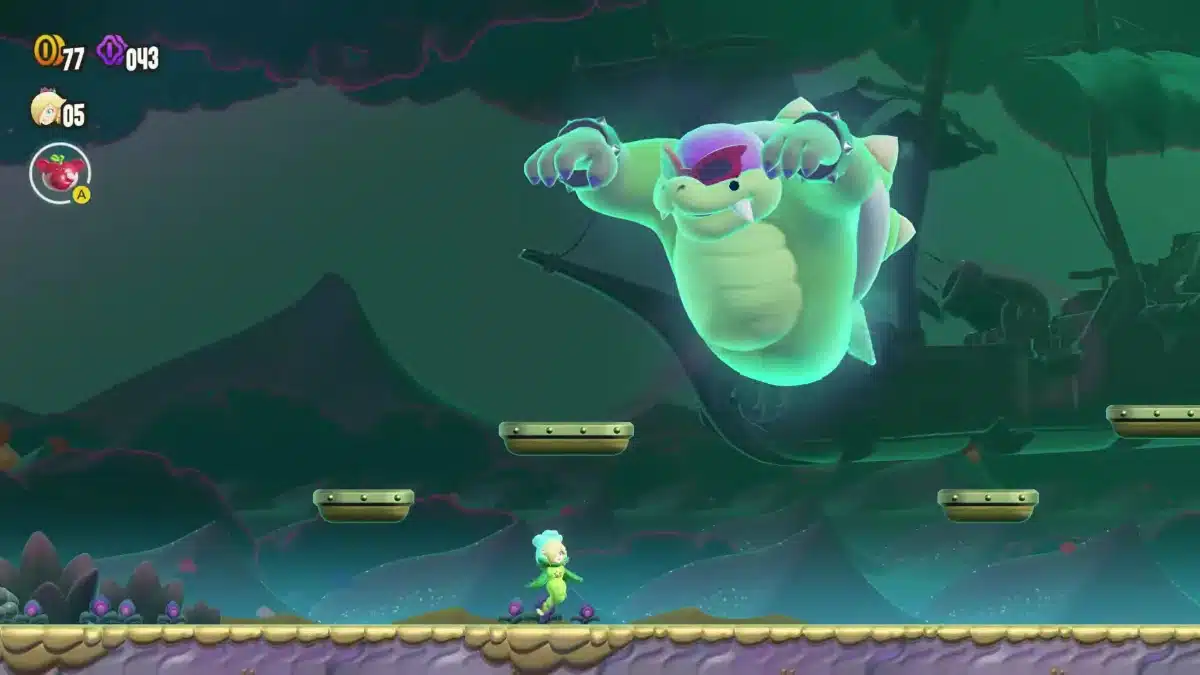
Each Koopaling receives their own personality, unique Wonder transformation and creative mechanics that build upon Wonder’s playful design philosophy. Instead of relying on familiar “jump on their head three times” routines, the battles constantly introduce new twists that feel imaginative, varied and surprisingly memorable.
I believe these are easily among the strongest boss encounters ever created for a 2D Mario game.
While they aren’t especially difficult during their initial appearances, Nintendo cleverly extends their lifespan by unlocking significantly tougher rematches later on. These harder versions introduce new attack patterns and demand much better execution, making them feel almost like entirely new encounters rather than simple repeats.
More importantly, they finally give Wonder the memorable boss roster it always deserved.
The second major single-player addition comes through Toad Brigade Training Camp, a collection of more than 70 bite-sized platforming challenges that gradually unlock as you progress through Bellabel Park.
These stages successfully build upon Wonder’s strongest feature: its endless supply of inventive gameplay ideas.
Many challenges remix mechanics from the main campaign while introducing fresh objectives, obstacle layouts and badge-focused puzzles. Several also borrow concepts from the new multiplayer modes, allowing solo players to experience mechanics they might otherwise never encounter.

Like the original game, some challenges can feel easier than experienced players might hope, particularly when certain badges trivialise specific objectives. Nevertheless, many later stages provide exactly the extra difficulty fans requested after finishing the original adventure.
Rather than creating an entirely separate hard mode, Nintendo has effectively delivered dozens of compact skill challenges that reward precision without becoming unfair. It may not be the most elegant solution, but it succeeds because the level design remains consistently inventive.
Bellabel Park also introduces a new progression system centred around collecting water through various activities. This resource allows players to grow flowers, unlock cosmetic decorations, collect emotes, obtain musical instruments and earn Badge Combination abilities.
The Badge Combination system adds welcome flexibility by allowing predefined badge pairings instead of unrestricted custom combinations. While I initially hoped for more experimental possibilities, Nintendo’s curated approach avoids awkward balance issues while still offering meaningful new options during gameplay.
Unfortunately, the flower decoration system doesn’t reach the same standard.
While collecting decorative items provides another reason to continue exploring Bellabel Park, customisation feels surprisingly limited. Decorations are largely confined to preset locations, and many must be purchased repeatedly across different areas despite being identical items. Combined with the relatively uninspired rewards themselves, this ends up feeling like busywork rather than a compelling progression system.
It isn’t enough to diminish the overall experience, but it is easily the weakest addition within the expansion.
The biggest addition overall is Bellabel Park’s multiplayer suite, although whether you’ll get much from it depends entirely on how you play Mario.
Unlike the main adventure, Bellabel Park is built around cooperative and competitive minigames that support local and online play with friends. There is a healthy amount of variety, with multiple game types, rule sets and stage variations that prevent the collection from feeling repetitive too quickly. Some challenges require players to cooperate in genuinely clever ways, such as creating platforms for one another or splitting movement mechanics between two characters, while others lean into the frantic chaos that multiplayer Mario has become known for.
Nintendo clearly invested considerable effort here. These aren’t throwaway bonus games included simply to pad out the package. Many are inventive, well-designed and make excellent use of Wonder’s movement mechanics.
I particularly enjoyed Think Fast Boo’s Coin Spree, which quickly became one of my favourite cooperative challenges. Its fast pace and constant communication kept every round engaging, with King Boo and his unpredictable appearances creating exactly the kind of frantic teamwork that Bellabel Park’s multiplayer is at its best delivering.
The biggest disappointment is how restrictive the online implementation feels.
Perhaps the most baffling decision is the complete lack of matchmaking with random players. Bellabel Park only supports local multiplayer or online sessions with friends, meaning anyone without a regular group may never experience a significant portion of the expansion. Given how polished and content-rich these multiplayer modes are, locking them behind pre-arranged groups feels like an unnecessary limitation.

For players who regularly enjoy couch co-op or organise online sessions with friends, Bellabel Park offers several hours of enjoyable content. I wouldn’t rank it alongside Nintendo’s dedicated party games, but as an extension of Wonder’s joyful platforming, it succeeds remarkably well.
For solo players, however, its value naturally becomes much harder to justify.
Another frustration surrounds existing save data.
Players upgrading from the original Switch release appear to be required to begin a completely fresh save file rather than continuing their previous progress. Considering much of Bellabel Park is designed to complement the existing campaign, forcing returning players to replay substantial portions of the game feels like an unnecessary inconvenience.
It’s a strange decision that slightly undermines what should have been a seamless upgrade path.
This ultimately highlights the biggest issue facing the Switch 2 Edition.
Viewed purely as a complete package, Super Mario Bros. Wonder is now arguably the definitive 2D Mario game. The new bosses address one of the original game’s only meaningful weaknesses, the challenge content offers experienced players more to master, Bellabel Park expands the overall experience, and the visual presentation reaches an exceptional standard.
The problem is timing.
Many of these additions feel like content that naturally belonged in the original release. The Koopaling battles, in particular, integrate so naturally with Wonder’s design philosophy that it’s difficult not to wonder how much stronger the original launch would have been had they been included from day one.
Instead, they arrive later as part of a paid upgrade, making the expansion feel slightly less impactful than it otherwise could have been. The content itself is excellent. The circumstances surrounding its release are what create hesitation.
Value therefore depends entirely on your situation.
If you’ve never played Super Mario Bros. Wonder before, this is unquestionably the version to buy. Every improvement, every additional challenge and every new boss becomes part of one complete adventure, creating what I believe is the finest version of one of Nintendo’s greatest platformers.
Returning players face a more complicated decision.
The additional content is consistently enjoyable, but no single feature alone fully justifies the upgrade cost. Instead, it’s the combined effect of dozens of smaller improvements that elevates the experience. If you loved the original and simply want more Wonder, Bellabel Park delivers exactly that. If you’re expecting a substantial second campaign or a transformative expansion similar to what Nintendo delivered with some of its other Switch 2 Editions, you may come away wanting more.
In my humble opinion, players who finished SMB Wonder once and rarely revisit platformers are unlikely to find enough here to justify upgrading.
Even so, I found myself repeatedly smiling throughout Bellabel Park. The new boss battles are genuinely outstanding, Toad Brigade Training Camp adds meaningful replay value, and the visual improvements make an already gorgeous game look even better.
Super Mario Bros. Wonder didn’t necessarily need a Switch 2 Edition, but after spending time with it, it’s difficult to imagine the game without these additions.
Nintendo may have taken an unusual route to get here, but the destination is hard to argue with.
Is Super Mario Bros. Wonder on Nintendo Switch Online?
No. Super Mario Bros. Wonder is not included with any Nintendo Switch Online membership tier. It is a standalone purchase. The Switch 2 Edition is priced at approximately £49.99 for new buyers, with a lower-cost upgrade pack available for anyone who already owns the original Switch version.
Super Mario Bros. Wonder — Quick Facts
Developer: Nintendo
Publisher: Nintendo
Platforms: Nintendo Switch 2 (also available on Nintendo Switch — original edition)
Release date: 26 March 2026 (Switch 2 Edition) | Original 20 October 2023
Price: ~£49.99 (full game) | Upgrade pack available for existing Switch owners
Genre: 2D Platformer
Playtime: ~10-15 hours (main story), 20+ hours with Bellabel Park
PEGI: 3
File size: 8.9 GB
Performance: 4K, 60fps, instant loading
Multiplayer: 1-4 players (local and online, friends only — no matchmaking)
Expansion included: Meetup in Bellabel Park (Koopaling bosses, 70+ challenges, multiplayer minigames)
Super Mario Bros. Wonder Nintendo Switch 2 Review
Super Mario Bros. Wonder – Nintendo Switch 2 Edition + Meetup in Bellbell Park adds new Koopaling bosses, over 70 challenge stages and a suite of multiplayer Attractions to one of Nintendo’s best platformers, with a sharp visual upgrade and polished performance.
Product Brand: Nintendo
9.5
Pros
- Outstanding new Koopaling boss battles that rank among the best in 2D Mario history.
- Beautiful visual upgrade with exceptionally sharp image quality.
- Toad Brigade Training Camp adds enjoyable challenge content for experienced players.
- Bellbell Park contains a surprisingly substantial amount of extra content.
- Multiplayer minigames feature creative ideas and excellent level design.
- Performance remains flawless throughout.
- Makes an already exceptional platformer even better.
Cons
- Existing save files cannot easily carry across for returning players.
- No online matchmaking with random players significantly limits multiplayer.
- Flower decoration system feels underdeveloped and repetitive.
- Some additions feel awkwardly integrated into the original campaign.
- Upgrade value is much stronger for newcomers than existing owners.