Key Highlights:
- Rainbow Six Siege Operation Split Fire launches on 1 September with Egyptian Defender Noor and his five-shot Horus Lance Launcher.
- A limited-time 3v3 Bomb mode introduces shorter preparation phases and Operator attrition from 8–21 September.
- Champion players will gain access to the new solo-queue Legend Division mid-season, with stricter rank, reputation and account-security requirements.
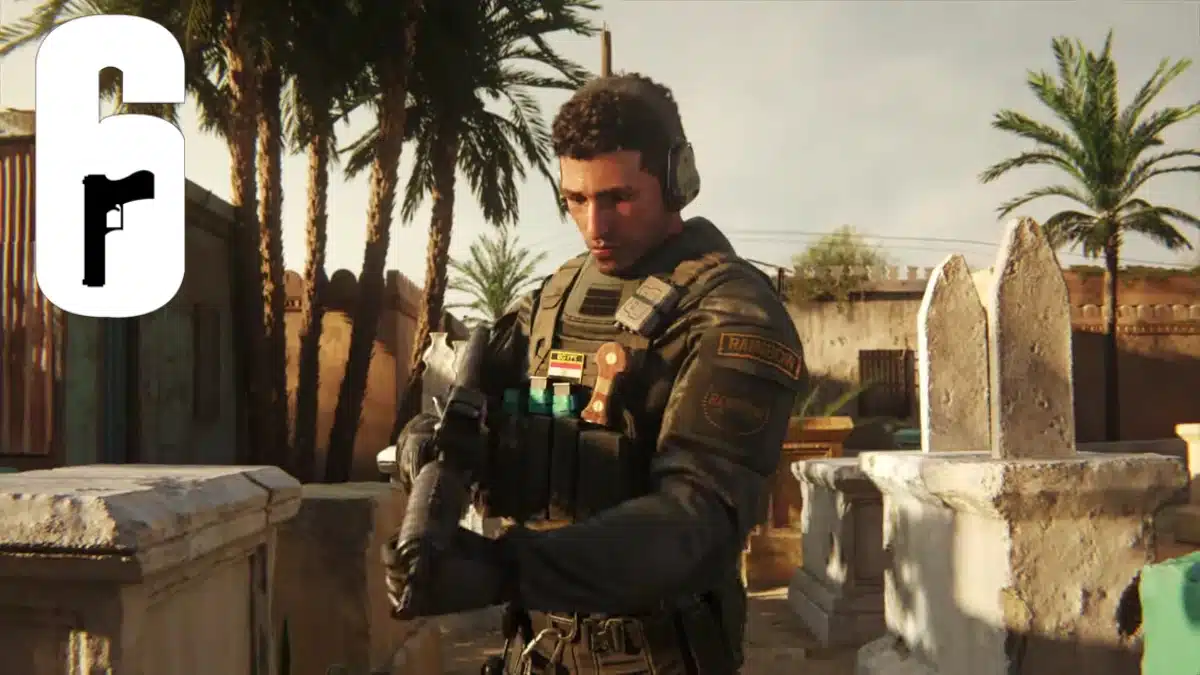
The next major season for Rainbow Six Siege is Operation Split Fire, launching on 1 September with new Defender Noor, a limited-time 3v3 mode, Villa changes, a drone-racing event and the new Legend Division.
Noor headlines Year 11 Season 3 with the Horus Lance Launcher, a five-projectile gadget designed primarily to counter shield Operators. Each projectile can attach to a ballistic shield before igniting and directing flames towards the player behind it.

The affected Attacker must move the shield aside and remove the Horus Lance before the flames inflict lethal damage. Doing so temporarily gives up the protection that made the shield push dangerous in the first place.
The gadget is not restricted to Operators such as Montagne or Blitz. Horus Lances can penetrate soft and reinforced walls, hatches and floors, while also attaching to deployable shields and Operator gadgets including Osa’s Talon-8 Shields, Castle’s Armor Panels and Azami’s Kiba Barriers.
A projectile that penetrates a surface produces flames on both sides. If the surface cannot be penetrated, such as a door or window frame, the flames remain on one side.
That gives Noor an area-denial role beyond simply stopping shield pushes. Ubisoft says Horus Lances can even destroy hard-breach gadgets when their activation is timed correctly.
I think that wider surface interaction will ultimately matter more than Noor being labelled a shield counter, because five projectiles capable of threatening breaches, doorways, floors and planted utility give coordinated teams far more possibilities than a single anti-Montagne interaction.
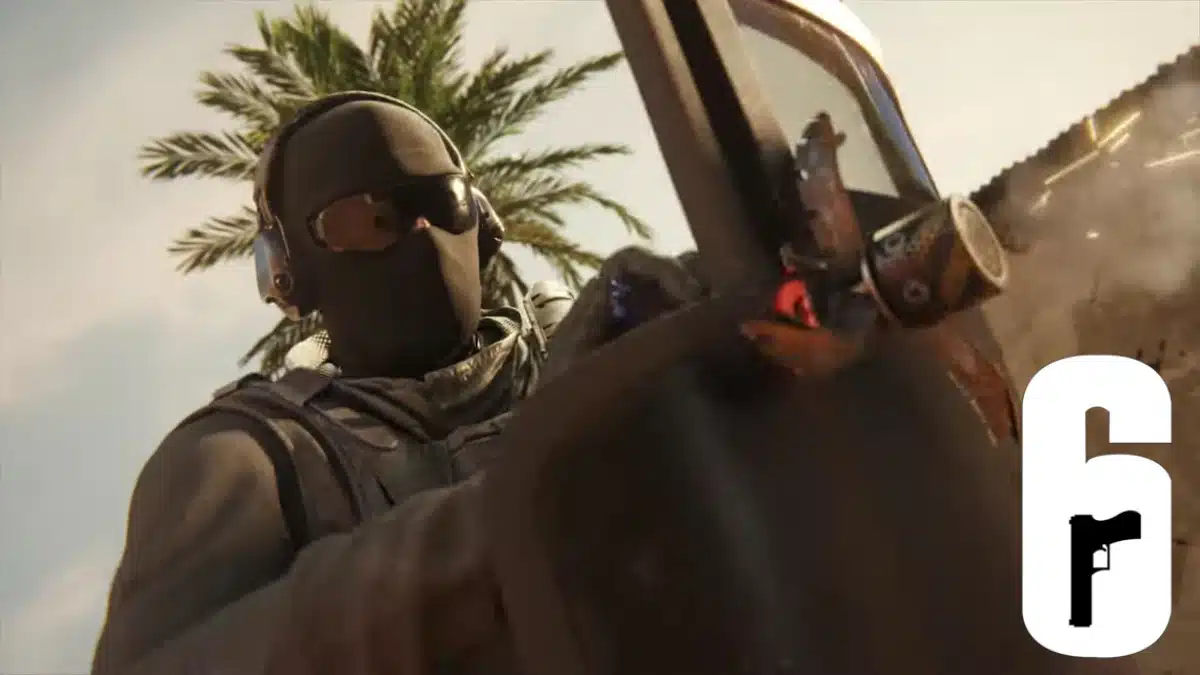
Noor also has several strong defensive partnerships. Castle and Azami can create surfaces for his projectiles, while Pulse can use the Cardiac Sensor to identify players on the other side of walls or floors.
Tubarão provides another useful combination. His Zoto Canister slows affected enemies, potentially keeping Attackers exposed to Horus Lance flames for longer. The Portuguese Defender originally joined Siege through Operation Deep Freeze with a gadget built around slowing players and temporarily disabling equipment.
Noor is a two-speed, two-health Defender. His primary choices are the Commando 9 assault rifle and Alda 5.56 light machine gun. Secondary choices consist of the 1911 TACOPS and Bailiff 410, while his secondary gadgets are barbed wire and a deployable shield.
Operation Split Fire also introduces a new limited-time 3v3 Arcade version of Bomb from 8–21 September.
Matches use a maximum of seven rounds, with teams racing to four round victories. The Preparation Phase lasts only 30 seconds, all Attackers and Defenders remain available, and Operator bans are removed.
The important restriction is Operator attrition. Once a team wins a round with an Operator, that Operator cannot be selected again by that team during the match.
That means a successful three-player composition cannot simply be repeated throughout the game. Winning early with particularly strong Operators gradually removes those choices and forces both teams deeper into the roster.
Villa is receiving a more permanent tactical change later in the season.
The poorly used Living Room/Library bomb site is moving from the first floor into the basement, accompanied by a redesign of the surrounding basement and garage.
The garage also changes from an exterior space into an interior area. Ubisoft says the redesigned layout introduces new rotations and droning lanes while changing how Attackers can approach the building from its eastern side.
Stadium Alpha, Stadium Bravo and House are also receiving visual and destructibility modernisation during the season. The Shooting Range and Tutorials receive graphical improvements as part of the same initiative.
September also brings Siege’s first drone-racing event.
Wasteland Circuit begins on 23 September and replaces normal gunfights with multi-race competition between reconnaissance drones. Players race around purpose-built tracks while collecting item balloons and boost balloons that can interfere with opponents or increase their own speed.
Points are awarded after each race according to finishing position, with the highest cumulative score deciding the overall circuit winner. A dieselpunk-themed Wasteland Circuit cosmetic collection accompanies the event.
Ubisoft currently gives conflicting end dates for Wasteland Circuit. Its Operation Split Fire announcement lists 12 October, while the live Year 11 roadmap lists 13 October. The event is therefore confirmed to begin on 23 September, but its exact final day remains inconsistent across Ubisoft’s own pages.
Operation Split Fire will also introduce the Legend Division midway through the season.
This is a solo-queue playlist restricted to elite Ranked players rather than another standard rank above Champion. Players must currently hold Champion rank, have achieved at least Platinum during the previous season, maintain a positive Reputation standing and complete Ubisoft’s required security checks.
Eligible players lock themselves to a region when Legend Division opens. Their position is then tracked on a regional leaderboard that anyone can view.
Legend players receive a dynamic banner showing their current position. Finishing inside the top 100 awards a charm during the following season displaying the player’s final ranking.
PC access comes with particularly strict anti-cheat requirements.
Ubisoft’s new R6 ShieldGuard Secure Platform requires Secure Boot, Windows Memory Integrity through HVCI and TPM 2.0 to be enabled. Legend Division players must also use authenticator-based two-step verification and temporarily grant administrative permission so Ubisoft can verify the required security settings.
Ubisoft describes ShieldGuard Secure Platform as its most significant Siege anti-cheat change since the game launched. Legend Division is its first deployment point, rather than the security requirements immediately applying to every Siege playlist.
Several existing Operators are changing alongside Noor.
Kali’s CSRX 300 scopes move from 5x and 12x to 3.5x and 8x. Maximum ammunition increases from 36 to 51 rounds, while the time between shots falls from 1 second to 0.8 seconds. Her LV Explosive Lance can also be selected without cancelling her aiming or lean state.
Dokkaebi loses Impact EMP Grenades and receives Breach Charges. Her Jegeo Payload is no longer an immediate upload. Dokkaebi must maintain the connection until it completes, creating a window in which Defenders can interrupt it.
Mute’s Signal Disruptor can cancel the upload, Tubarão’s Zoto Canister can disable it, and eliminating Dokkaebi before completion also prevents the call. IQ will be able to identify the targeted Defender’s phone.
Lion’s scan warning falls from 1.5 to 1.4 seconds, Echo’s Sonic Burst recharge drops from 16 to 15 seconds, and Kapkan’s Entry Denial Device damage increases from 60 to 62.
The MK 14 EBR drops from 60 to 56 damage, while the AR-15.50 falls from 67 to 59 damage. Ubisoft is also increasing recoil on several weapons and making separate first-shot multiplier adjustments for mouse-and-keyboard and controller input.