Key Highlights:
- The Legend of Zelda: Ocarina of Time remake launches exclusively for Nintendo Switch 2 on November 5, 2026.
- Link can jump and run with dedicated controls, use a free-moving camera, hear fully voiced cutscenes and track objectives through the new Threads of Time system.
- Nintendo is also adding ZELDA NOTES integration, microphone-controlled ocarina songs, a limited first-print physical edition and new Young Link and Zelda amiibo.
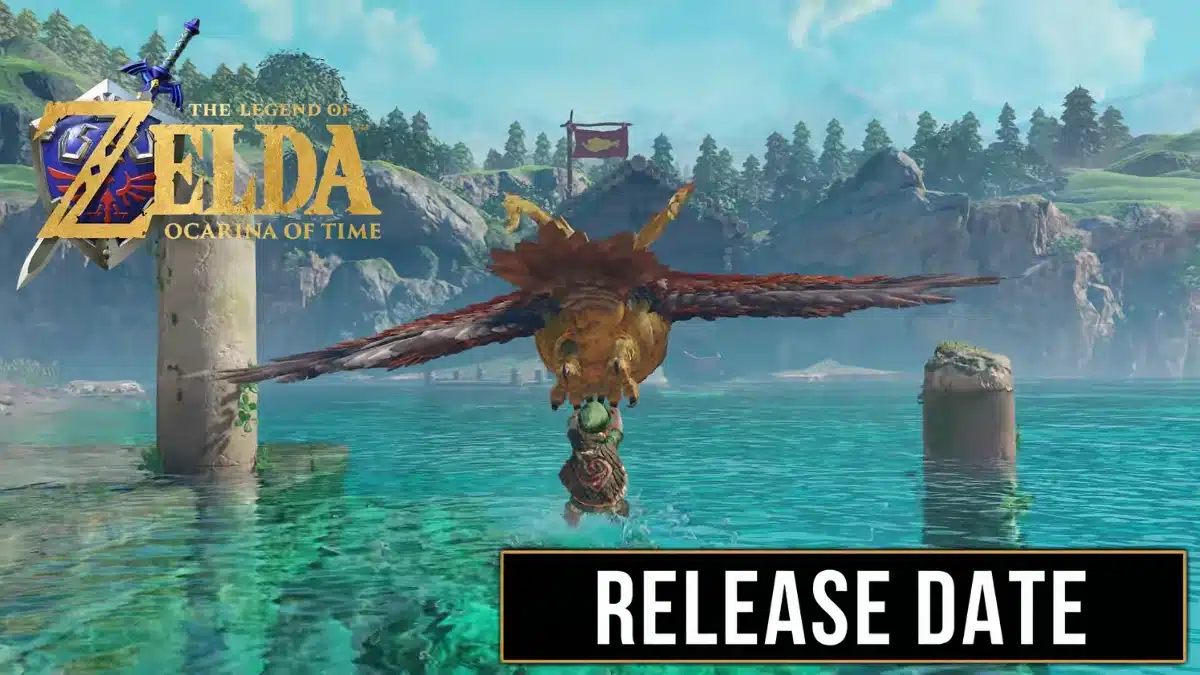
After months of waiting, The Legend of Zelda: Ocarina of Time remake now has a November 5, 2026 release date and its first substantial gameplay reveal for Nintendo Switch 2.
Nintendo used its 40th Anniversary Direct to show how the 1998 adventure is being modernised rather than simply receiving new graphics. Producer Eiji Aonuma described the remake as a faithful interpretation built with modern technology, with completely rebuilt visuals, quicker loading, refreshed sound and symphonic orchestral music.

When Nintendo first announced the Ocarina of Time remake in June, the teaser revealed almost nothing about how the game would actually play. The new footage answers several of those questions, and Nintendo is making more mechanical changes than the original announcement suggested.
Link can now jump manually using a dedicated button instead of relying on the contextual automatic jumping of the Nintendo 64 game. A separate command also lets him run freely, while the Right Stick controls the camera around the rebuilt environments. Nintendo says general actions have been made faster and more responsive.
The remake is not converting Ocarina of Time into an open-world Zelda. Transitions into major areas such as Hyrule Field and dungeons remain, preserving the underlying structure of the original adventure even as individual locations are extensively remodelled. Smaller transitions into some buildings appear considerably smoother in the new version.
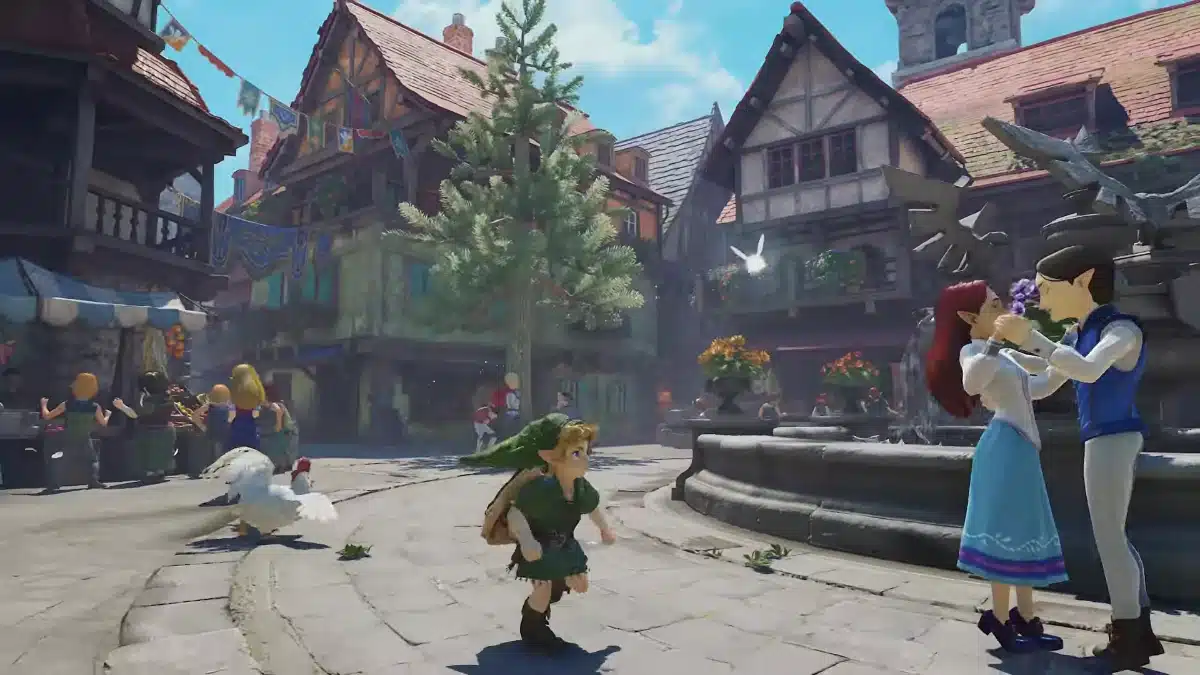
Hyrule itself now behaves differently in several places. The day and night cycle continues while Link is inside towns, rather than effectively pausing in locations where time previously stopped. Characters also have expanded dialogue, while cutscenes are fully voiced.
I think the dedicated jump button and free camera tell us more about Nintendo’s approach than the visual overhaul does. Those changes target controls that genuinely feel dated today while leaving Ocarina of Time’s underlying world structure intact.
Nintendo has also introduced Threads of Time, a new story-tracking system designed to reduce the chances of players losing their way. It records Link’s progress, identifies the next objective and gradually fills a large tapestry as the adventure advances.

The ocarina has received a particularly unusual Switch 2 feature.
Players can still perform learned songs conventionally, but the console’s built-in microphone can now recognise someone humming the melody and make Link play the corresponding song in-game. Nintendo says the system can also respond to actual instruments, including two Zelda-themed ocarinas planned for release later this year. One is a playable acoustic instrument, while HORI is producing an electronic version capable of playing notes and complete songs.
Ocarina of Time will also join ZELDA NOTES inside the Nintendo Switch App.
Today’s Record provides a chronological log of a player’s accomplishments and statistics, including enemies defeated. Gossip Quest sends players searching for locations using hint images displayed on their phone, with successful discoveries earning points towards additional ocarina music.
The app also includes a virtual touchscreen ocarina. Players can follow a guide, let songs play automatically or compose their own music before sharing scores through QR codes.
Perhaps stranger still is the Ocarina of Time Quiz. Nintendo has created more than 2,000 questions, with one quiz attempt available each day. Rupees earned inside the game can be spent to gain additional attempts.
Two new amiibo figures based on Young Link and Young Zelda will arrive in 2027. Scanning them unlocks special masks designed to recreate a retro graphical appearance inside the remake.
Physical collectors are getting something different at launch as well. Nintendo says the first print run will use special packaging with textured foil cover art, but only while supplies last. The game costs $59.99 digitally and $69.99 physically in the US, while Nintendo has yet to publish equivalent confirmed UK pricing.
The official Ocarina of Time listing currently estimates a 27GB file size and confirms the remake is exclusive to Nintendo Switch 2. Nintendo notes that the download size could still change before release.
Nintendo is also launching a Legend of Zelda 40th Anniversary Edition Switch 2 on October 29, one week before the remake. A matching Pro Controller and carrying case will arrive on the same date, all using Triforce-themed designs. The special console does not appear to include the game itself.
One question Nintendo still has not publicly settled is who is developing the remake. A Norwegian retailer briefly attributed the project to Monolith Soft earlier this month, but Nintendo’s announcement and new press material still do not name the studio, so that attribution remains unconfirmed.
Beyond revisiting Hyrule’s past, Nintendo has already begun hinting at what could follow it. Zelda producer Eiji Aonuma previously suggested ideas developed alongside Koei Tecmo could influence the next mainline Zelda game, although Nintendo has yet to formally reveal that project.
The Legend of Zelda: Ocarina of Time remake launches exclusively for Nintendo Switch 2 on November 5, turning the sparse June announcement into a much clearer proposition: the original adventure and world structure remain recognisable, but its movement, camera, presentation, dialogue and navigation systems have all been rebuilt for modern hardware.