
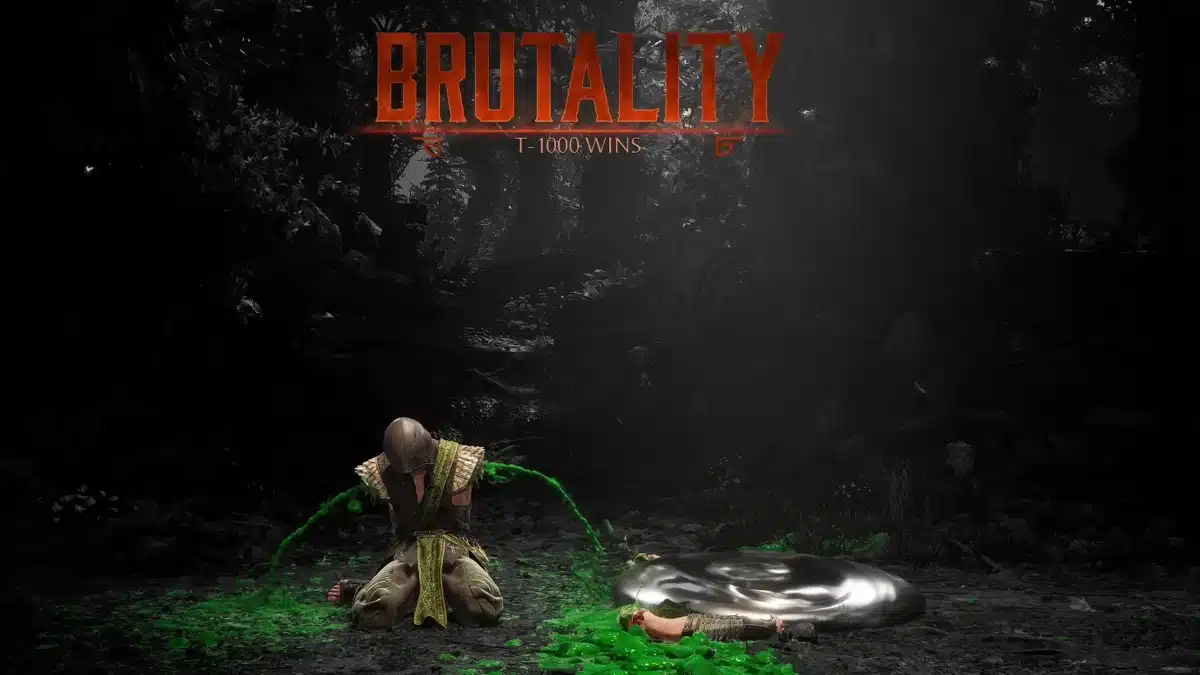
Brutalities in Mortal Kombat 1 are finishing moves that end a match immediately when a player meets a specific set of conditions during the final attack. Unlike Fatalities, which are performed after winning a match, Brutalities occur as part of the combat itself and replace the normal match-ending sequence with a unique finishing animation.
Each Brutality is connected to a particular attack, throw, special move, or Kombo. The player must use the required move to deliver the final hit while also satisfying any additional conditions attached to that Brutality.
Quick Links:
How Do Brutalities Work in Mortal Kombat 1?
A Brutality is triggered when its required attack defeats the opponent and all additional conditions are met. These requirements vary between Brutalities and can involve holding a directional input or attack button, pressing an input several times, maintaining a certain distance, or meeting another condition during the match.
The required move must normally deliver the final hit. Performing the correct input earlier in the match does not trigger the Brutality if a different attack ultimately defeats the opponent.
When the conditions are satisfied, the finishing animation begins immediately. The match does not proceed to the traditional “Finish Him” or “Finish Her” sequence used for Fatalities.
This makes Brutalities part of the active fight rather than a separate post-match finisher. Players must prepare for the Brutality before the opponent’s health reaches zero and ensure the correct attack ends the match.
What Is the Difference Between a Brutality and a Fatality?
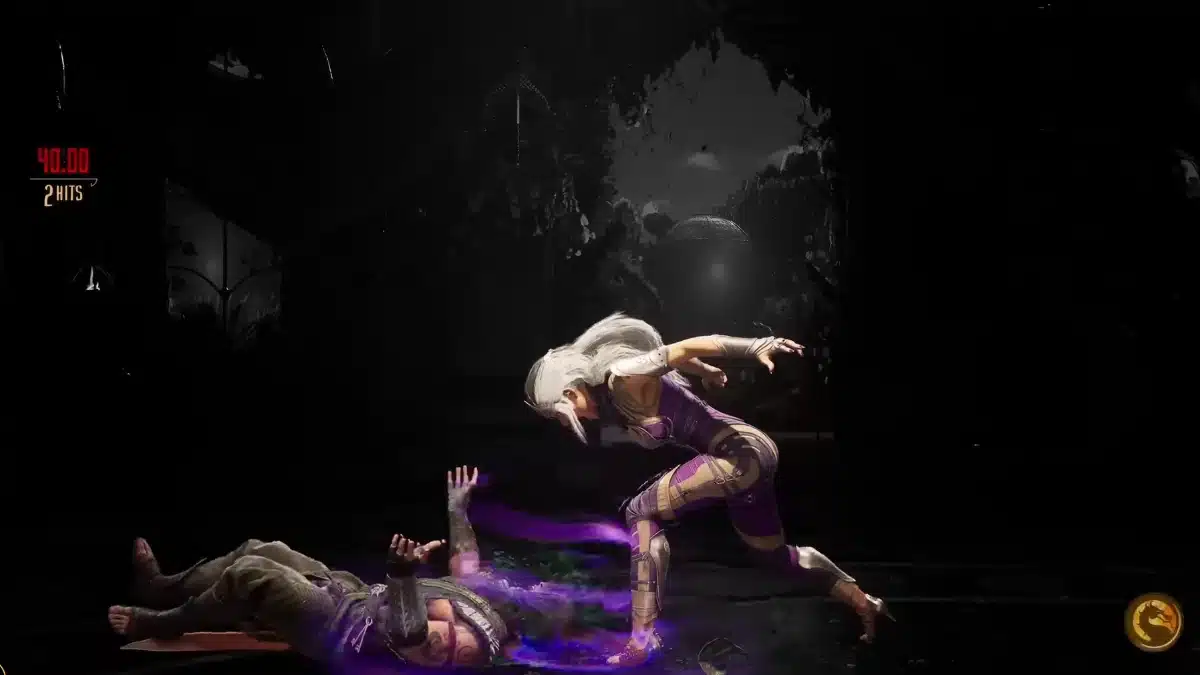
Brutalities and Fatalities are both finishing moves, but they occur at different stages of a Mortal Kombat 1 match.
A Fatality is performed after the opponent has been defeated and the game enters the finishing sequence. The player then enters a specific input from the required distance to trigger the Fatality animation.
A Brutality must be triggered by the attack that ends the fight. The required conditions are checked as the opponent is defeated, causing the normal final hit to transition directly into the Brutality.
The difference changes how players approach each finisher. Fatalities give the winner a short opportunity to perform an input after the fight is effectively over, while Brutalities require the player to plan the final moments of the match around a specific finishing condition.
Do Brutalities Have Special Requirements?
Most Brutalities have requirements beyond simply using the associated move. These conditions determine whether the attack produces its normal result or triggers the Brutality animation.
A requirement might ask the player to hold a particular button during the final hit, press a direction multiple times, maintain a specific distance, or complete another action connected to the move.
The exact requirement depends on the individual Brutality. Two Brutalities belonging to the same fighter can therefore use different activation conditions even though both are performed during the final moments of a match.
Mortal Kombat 1 displays unlocked Brutality requirements in the Move List. Checking these conditions is important because using the correct finishing attack without satisfying its additional requirement will normally end the match without triggering the Brutality.
How Do You Unlock Brutalities in Mortal Kombat 1?
Many character-specific Brutalities are connected to Character Mastery. Playable fighters unlock additional Brutalities as they reach the required Mastery Ranks, expanding the number of finishing options available to that character.
The Klassic is a universal Brutality available to playable fighters and uses an uppercut as the finishing attack. Additional character-specific Brutalities are tied to individual moves and their own activation requirements.
Mortal Kombat 1 has also introduced additional Brutalities through content outside the standard Character Mastery progression. This means not every Brutality in the game necessarily follows the same unlock path.
Players looking for specific unlock requirements and instructions can find that information in our Mortal Kombat 1 Brutalities Guide.
What Are Kameo Brutalities?
Kameo Brutalities are finishing moves performed through attacks involving Kameo Fighters. They use the same basic principle as playable-fighter Brutalities: the correct Kameo attack must end the match while its additional activation conditions are satisfied.
Kameo Brutalities belong to the Kameo Fighter rather than the main playable fighter. Changing the playable fighter does not remove an unlocked Kameo Brutality as long as the corresponding Kameo remains selected.
Kameo Fighters can unlock Brutalities through Kameo Mastery. These unlocks expand the finishing options available to a team by allowing the assist character to deliver the match-ending attack.
The distinction between character and Kameo Brutalities reflects Mortal Kombat 1’s two-character combat structure. The playable fighter has their own set of finishing options, while the selected Kameo can provide additional Brutality opportunities through specific assist attacks.
Why Are Brutalities Useful?
Brutalities give players an alternative way to finish matches without entering a separate Fatality sequence. Because the activation conditions must be satisfied during combat, successfully performing a Brutality can require more planning than simply entering a finishing input after the opponent has already been defeated.
I’ve found that Brutalities become more satisfying once their requirements are treated as part of the final exchange rather than something to remember after the fight. Setting up the correct final hit while maintaining control of the match makes the resulting finisher feel directly connected to the way the opponent was defeated.
In Mortal Kombat 1, Brutalities combine combat mechanics with the series’ traditional finishing system. Their final-hit requirements, additional activation conditions, character-specific unlocks, and Kameo variants distinguish them from Fatalities and give players another way to end a match.