
I’ve played every Mortal Kombat since the 90s, and over the years, the series has gone through more reinventions than almost any other fighting franchise. Mortal Kombat 1, despite the misleading title, is another reboot, both narratively and mechanically. And while the fighting core is the best it’s been in years, everything wrapped around it ranges from inspired to incomplete. It’s a game that punches hard in the moment, but the more time I’ve spent with it, the more I’ve seen the cracks.
Let’s start with the gameplay, because that’s where MK1 shines brightest. For the first time in a long time, characters feel complete again. One of the biggest frustrations with MK11 and MKX was the variation system. Picking a loadout often meant sacrificing core moves – sometimes iconic ones. I remember playing Scorpion and being forced to choose between Hellfire and Inferno. Now? Every character has their full moveset by default, and it makes an enormous difference. It finally feels like I’m playing the true version of each fighter, not some curated slice of them.
On the Xbox Series X version (which is what I played on and what I’m reviewing) I can confirm the fights ran at a constant 60 FPS, providing a seamless experience.
On Xbox Series X, Mortal Kombat 1 delivers a locked 60fps in matches, which is essential for a fighting game. Here is how the console handles it:
| Mode | Resolution | Frame Rate |
|---|---|---|
| Gameplay | Dynamic 4K | 60 fps (locked) |
| Cinematics | 4K | 30 fps |
Fights run at a constant 60fps with no noticeable drops, even during the most visually intense Fatalities and Kameo assists. Cinematics and Fatal Blows drop to 30fps for the more cinematic presentation, but combat responsiveness never suffers. The game also supports 4K Ultra HD, HDR10, and ray tracing on Series X.
The Kameo Fighter system replaces variations, and while I was initially unsure about it, I’ve grown to really like it, at least in concept.

Instead of splitting characters into rigid playstyles, you can now pair your main with a support character that changes how you approach matches. Want to zone? There’s a Kameo for that. Want extended combo routes, corner pressure, or safety on block? There’s a Kameo for that too. It keeps experimentation alive and adds meaningful depth. It almost feels like rediscovering your main every time you try a new partner.
Where it stumbles is in the roster choices. I don’t mind that some fan-favourite characters were relegated to Kameo-only roles, what bugs me is the amount of repetition. Sub-Zero, Scorpion, Kung Lao, Cyrax, Sektor – these show up as both main fighters and Kameos. That’s such a wasted opportunity when you consider how many underused or forgotten characters could have filled those slots.
Characters like Erron Black, Jade, Nightwolf or even movie exclusives like Cole Young could’ve brought something fresh. Instead, NetherRealm played it safe, possibly to cash in on the appeal of pairing Sub-Zero with… Sub-Zero. I get it, but it still feels lazy.
I found myself maining Quan Chi, as I have loved his character ever since Deadly Alliance and MK Deception. His fatalities Pentamagic Trick and Final Offering were extremely satisfying every time I performed them, they never get old.

Still, the core mechanics are a huge step up from MK11. Movement is tighter. Combo execution requires actual timing and precision again, instead of relying on dial-a-string autopilot. Throws can be extended with Kameo assists. Zoning, pressure, and defensive tools all feel more balanced. It just plays better. When I’m in a match, especially offline or in ranked, I’m having a great time. But that’s not the whole game.
Outside of combat, training mode was a huge letdown at launch. Frame data was missing. Entire move lists weren’t visible for some characters. It felt half-baked, and honestly, it’s shocking in a modern fighting game. The absence of public lobbies also hurts. There’s no place to casually spectate, hang out, or run sets with randoms. After how far Street Fighter 6 has pushed the genre forward with its Battle Hub, MK1 feels outdated in comparison.
Then there’s the story – and this is where things start to unravel. On a surface level, I liked the premise: Liu Kang has rewritten the timeline with the Hourglass and is trying to build a better universe. It opens the door for role reversals and fresh interpretations. Mileena is now the Empress, with Kitana as her loyal sister. That dynamic shift alone adds a new layer of intrigue. And the cinematics are top-tier, no question. It feels like a big-budget martial arts flick half the time.

But the more I thought about the lore, the more it started to fall apart. Suddenly, Liu Kang has the power to alter biology, making Mileena and Kitana actual sisters, or transforming Kuai Liang into Scorpion? Edenia is now just part of Outworld and Chaosrealm is nowhere to be seen. Obviously the Elder Gods have granted Liu Kang these powers, but the story does a bad job of getting that message across. And worst of all, the stakes vanish the moment the multiverse angle kicks in. If a character dies, you can just pull another version from a different timeline. It robs the story of any tension.
And yes, it’s very obvious that the multiverse was introduced to prop up Invasions Mode – the game’s semi-open seasonal content. Invasions replaces The Krypt from previous games and tries to merge RPG-lite mechanics with fighting. You move your character across a board, tackle fights with modifiers, unlock cosmetics, and collect gear. The idea sounds great on paper. In practice? It’s just not fun.
The biggest issue with Invasions is how restrictive and grindy it feels. You’re locked to a fixed path, the camera is pulled way too far back, and early bosses were tuned so aggressively that they felt like walls unless you relied on talismans and relics. There’s potential in the core concept, free-roaming, RPG-style character growth, exploration, but it’s squandered by how on-rails everything is.
The fact that Konquest is still spoken about all these years later, and the devs didn’t bring it back, blows my mind! That would have been a perfect fit instead of Invasions, but instead we just got more seasons of the same old.
Later seasons improved boss difficulty slightly, but the mode still never reached its full potential. I found myself doing it more out of obligation than enjoyment, just to grab a few cool skins or abilities.

And speaking of cosmetics, there’s a lot of content still locked away in the game. Costumes that appear in story mode aren’t usable. Certain Kameo attacks can’t be accessed unless you’re in specific scenarios. For instance, I found that there are two types of kameo moves: ambush and summon; ambushes can happen anytime as long as I’m not taking hits, while summons lock my character in place but can be incorporated into combos like special moves. Summons are much more powerful but are extremely limited.
Why are these things even off-limits in the first place? Mortal Kombat has always prided itself on fan service, so this kind of stinginess is frustrating.
As for online play, it’s solid mechanically. Rollback netcode keeps things smooth. Ranked and casual matches are easy to access. But again, the structure is barebones. No public rooms, no replays, no flair. It all feels… functional, but lifeless. After MK11 made some strides in presentation and infrastructure, MK1 feels like a step back.
What frustrates me the most is that NetherRealm promised longer support for this game – three to four years, according to Ed Boon. But it’s already winding down after roughly the same lifecycle as MK11.
“Love the fact that there is excitement for our next game,
“And I don’t want to be a stickler for words…
“But we haven’t been working on our next game for three years already. The actual quote was that we knew what our next game was going to be three years ago.
“NetherRealm is still fully committed to supporting Mortal Kombat 1 for a long time to come.”
Ed Boon via X/Twitter
That’s disappointing, especially given how strong the gameplay is. I wanted this game to last longer. I wanted to see more fan-favourites return. I wanted the mode variety to evolve. But now the Definitive Edition has been released, and the official X account of Mortal Kombat has stated that all DLC support has ended as of the timing of this review.
And that’s what defines Mortal Kombat 1 for me: great core mechanics buried under inconsistent design. When I’m fighting? It’s excellent. The combos, the Kameos, the pace – it’s the most satisfying MK has felt in a long time.
But then the story drags its heels with lazy lore changes. Invasions offers quantity over quality. The online structure feels ten years behind. And there’s just a general lack of follow-through on so many promising ideas.
It’s a fantastic fighter, no question. But it’s also a frustrating one, because it could have been so much more.
Is Mortal Kombat 1 on Game Pass?
Yes. Mortal Kombat 1 is included with Xbox Game Pass Premium and Ultimate, playable on console, PC, and cloud. The standard edition is also available as a standalone purchase at $49.99 / £44.99, and the Definitive Edition (which includes all DLC characters and the Khaos Reigns expansion) is $69.99. Online multiplayer requires at least Game Pass Essential on console.
Mortal Kombat 1 — Quick Facts
Developer: NetherRealm Studios
Publisher: Warner Bros. Games
Platforms: PS5, Xbox Series X|S, PC, Nintendo Switch
Release date: 19 September 2023
Price: $49.99 / £44.99 (standard) | Definitive Edition $69.99
Genre: Fighting
Playtime: ~5-6 hours (story), 30+ hours (completionist)
PEGI: 18 (Blood and Gore, Intense Violence)
File size: 140-200 GB (varies with DLC and updates)
Performance: 60fps, 4K, HDR10, Ray Tracing
Online: Rollback netcode, cross-platform multiplayer
Xbox Play Anywhere: Yes
Mortal Kombat 1 Xbox Series X Review
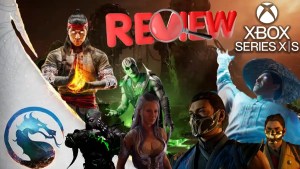
Read my Mortal Kombat 1 Xbox Series X Review. where excellent mechanics meet frustrating story choices and sparse online options, leaving room for improvement.
Product Brand: Warner Bros. Interactive Entertainment
8.7
Pros
- Excellent core gameplay with tight, satisfying mechanics
- Kameo system adds meaningful variety and strategic depth
- Every fighter has access to their full iconic moveset
- Gorgeous visuals and character designs
- Strong, cinematic story presentation
- Fatalities and brutal finishers are more creative than ever
- Stable online play and rollback netcode
Cons
- Story makes baffling changes to lore without enough payoff
- Invasions mode feels grindy, repetitive, and restrictive
- Too many repeated Kameo characters instead of fresh faces
- Locked content and boss-exclusive moves inaccessible to players
- No public lobbies or interactive social features
- Multiverse plotline removes stakes from the narrative
- Post-launch support feels weaker than promised