
Key Highlights:
- A deep dive into Resident Evil 4 Remake’s hidden details and Easter eggs.
- Covers story moments, gameplay secrets, legacy callbacks, and fan service.
- Best read after at least one full playthrough due to light spoilers.
The 2023 Resident Evil 4 Remake is packed with deliberate callbacks, quiet jokes, mechanical nods, and deep cuts that reward players who slow down and look closely. Capcom clearly understood that this game would be played, replayed, and picked apart, so much of its personality lives in the margins. Some of these details are obvious, others are easy to miss, and a few only land if you remember the original inside out.
Spoiler Alert: Before diving in, a quick heads-up. This feature discusses moments from across the full Resident Evil 4 Remake campaign, including late-game scenes and optional interactions. Nothing is explained step by step, but story context and discoveries are referenced throughout.
Very early on, the remake starts setting expectations during the village opening. Most players experience this as a desperate fight for survival until the church bell rings and the Ganados suddenly lose interest. What the game never tells you is that the bell does not need to ring on its own. With a precise shot, it is possible to hit the bell yourself from a distance and end the encounter early. Doing this on a fresh run is difficult due to distance and pressure, but it works. It is a small freedom that feels intentional, especially for returning players who remember how rigid the original encounter felt.
The village also hides some quieter interactions. One Ganado hides in a cupboard, waiting to ambush Leon the first time you enter a specific house. What is interesting is that he will wait forever if you never trigger the encounter. He does not despawn or relocate. He simply stays there, committed to a scare that may never come. It is a small detail, but it shows how much effort Capcom put into persistence, even for one-off moments.
If you really want chaos in that opening area, there is also the cow. Harm it, and it will rampage through the village, knocking enemies aside in a way that feels almost slapstick. It is impractical and risky, but it is exactly the sort of unscripted nonsense Resident Evil fans love discovering. You can shoot a lantern above the cow to set it on fire, and the sight of a crazy blazing cow is something to behold.

Not far from there, the remake quietly rewards environmental awareness. Strong enemies like the Brute can be dealt with without emptying your entire inventory. Luring him near a bridge and forcing him to fall saves ammo and still rewards the treasure drop. Later, in the valley, chains supporting another bridge can be destroyed with gunfire or explosives, sending enemies plummeting. It works both ways, though. Enemies throwing dynamite can destroy it while Leon is still standing there, which I learned the hard way.
The village chief’s manor hides one of the remake’s more juvenile jokes. A straining sound comes from the toilet, implying an unseen Ganado caught in a very human moment. It is silly, but it fits Resident Evil’s long tradition of horror undercut by awkward humour.
Outside the manor, a familiar choice returns, a wolf is caught in a trap, just as in the original game. Freeing it feels optional and sentimental until much later, when it dramatically appears during the El Gigante fight to help turn the tide. It is one of the remake’s clearest examples of player kindness being quietly rewarded.
The lake sequence also brings back a classic shock. Shooting into the water repeatedly still triggers a deadly response from a gigantic sea creature. The remake handles it with a slightly different presentation, and I have to say that I preferred the original, but the message is the same. Some things are better left alone.
Once the game moves forward, the RE4 Remake begins layering in dialogue and naming references.
After defeating Ramon Salazar, players unlock the trophy called “No Thanks, Bro!”. The line itself is missing from the remake’s dialogue, reflecting Leon’s more serious tone this time around, but the trophy name exists purely to honour one of the original game’s most quoted moments. It is a quiet wink that longtime fans immediately understand.
Weapon names carry similar weight. The Killer7 magnum is not just powerful, it is named after Capcom’s cult shooter developed alongside Grasshopper Manufacture. The Matilda handgun references the character played by Natalie Portman from Léon: The Professional, a film that clearly influenced Leon’s early design and persona. These names are not explained, but they are not accidental either.
The Merchant also gets his own understated callback. In the original game, shopping was accompanied by a memorable theme. That track no longer plays in the remake, but occasionally the Merchant hums it himself. He never gets very far before coughing and stopping, which somehow makes the absence feel intentional rather than disappointing.
Some references are woven directly into new dialogue. Near the end of the story, Leon tells Ada that this is where they go their separate ways. The line does not exist in the original script, but it clearly references Separate Ways, the Ada-focused DLC mode that was later added. It is subtle, but deliberate.
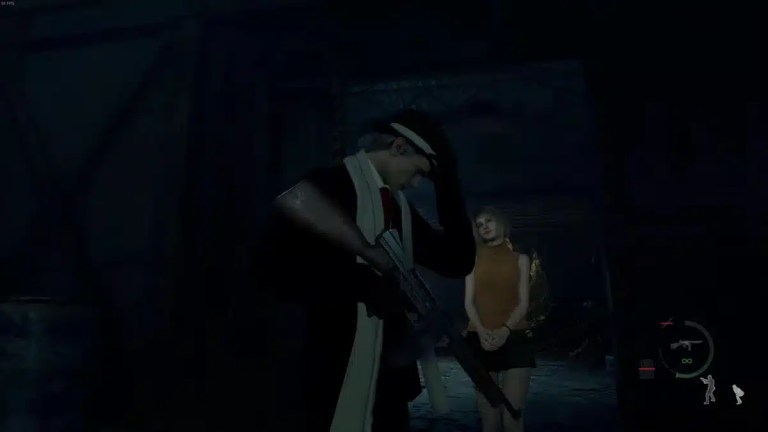
The remake also preserves Leon’s flair when given the chance. Equip the Chicago Sweeper while wearing his pinstripe outfit and reload, and he still performs the little dance, complete with a hat flourish. The outfit itself resembles classic gangster fashion, but the movements strongly echo Michael Jackson’s Smooth Criminal. Whether intentional or not, the similarity is hard to ignore once you see it.
Speedrunners also get a nod. The infamous Ditman glitch from the original game allowed players to move at increased speed by exploiting the Striker shotgun. That glitch is gone, but the Striker charm at the shooting range now grants a small movement speed boost. It is not game-breaking, but it feels like a respectful acknowledgement of the community that kept the original alive for years.
Not every Easter egg survived intact. The cabin sequence no longer allows players to antagonise Luis until he turns hostile, a darkly comic moment from the original. Its absence is noticeable, but understandable given the remake’s different characterisation.
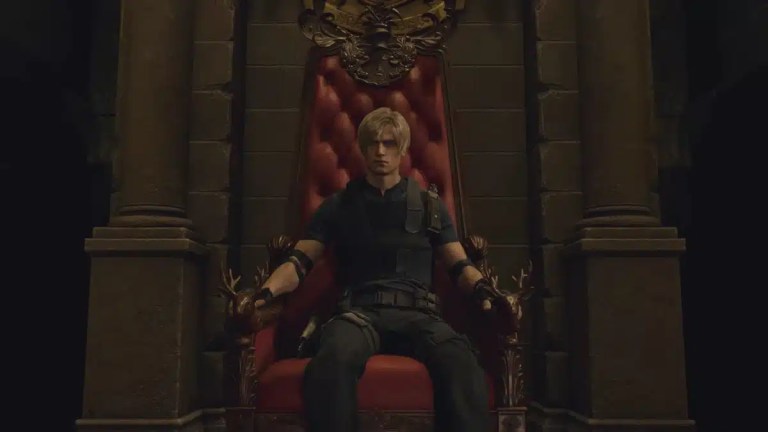
Some visual callbacks remain intact. During Chapter 12, Leon can sit on the throne, just as he could before. Adding sunglasses completes the image. It is pure fan service, and it works.
The oven man returns as well. Inspecting an oven leads to a sudden, familiar scare, even if the follow-up interaction from the original is gone. The surprise is what matters.
Dialogue callbacks continue with Ashley. When she refers to herself as the master of unlocking, it directly echoes Jill Valentine’s line from the original Resident Evil. It is one of the clearest examples of Capcom embracing the series’ cheesier legacy without leaning too hard into parody.
Even the jet ski escape has its own flourish. Pressing the interact button while airborne causes Leon to perform a trick mid-jump. The world may be ending, but Leon still finds time to show off.
Beyond story moments, the RE4 remake is full of mechanical details. Killing enemies in particularly violent ways can reveal Las Plagas still writhing inside the body, a disturbing reminder of what is really controlling them. It is creepy, but fascinating.
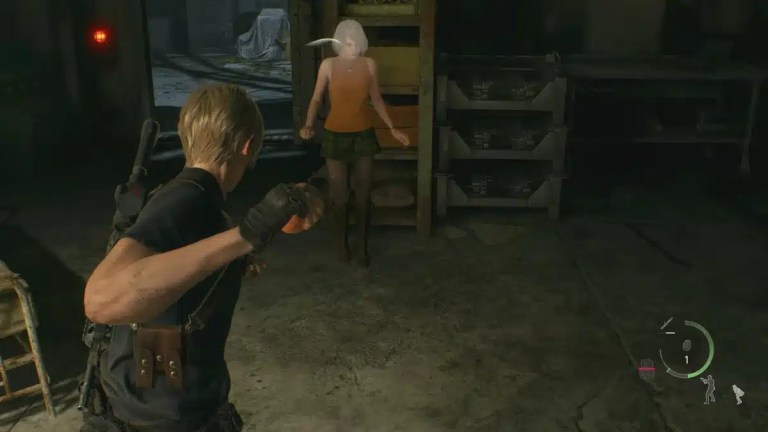
Ashley also reacts more dynamically than before. You can throw eggs at her, purely for comedy, or shine a torch in her face to make her shield her eyes. You can even egg the Merchant, though he is less amused.
Bear traps work both ways now. Luring enemies into them immobilises the target, and a melee follow-up can sever limbs entirely, it is brutal, but efficient.
Leon’s starting combat knife carries history too. Examining it reveals that he received it during his time at the Raccoon City Police Department. That ties it directly to Marvin Branagh, who gave Leon the knife in Resident Evil 2. His pistol also bears the name Kendo, referencing Joseph Kendo and his brother Robert from the same game. The Kendo gun shop is where Leon goes after getting the Parking Garage Key Card in RE2.
Even Leon’s shooting stance changes based on proximity. When enemies get close, he switches to a centre axis relock stance, a real-world close-quarters technique popularised in modern action films such as John Wick.
At the shooting range, Ashley’s seating pose mirrors promotional art from the original game. It is an easy detail to miss, but once seen, it is hard to unsee.
Finally, the title screen itself changes after completing the game. It is subtle and largely cosmetic, but it marks completion in a way that feels personal rather than loud.
Taken together, these moments show exactly what Resident Evil 4 Remake is trying to be. It is not content to simply modernise a classic. It wants to remember where it came from, respect the players who know it best, and still leave room for discovery. As someone who has played the original more times than I can count, finding these details felt less like ticking boxes and more like having quiet conversations with the developers. That is what makes this remake so special.