
Key Highlights:
- The Standing Planter costs 18 Sticks, while the Wall Planter costs 16 Sticks. Planting a crop consumes one seed.
- Sons of the Forest currently has 13 seed types, while all four mushroom types can also be grown in planters.
- Planter growth pauses during winter and resumes in spring. Berry bushes remain after harvesting, while herbs must be replanted.
Quick Links:
Farming in Sons of the Forest uses Standing Planters and Wall Planters to grow berries, herbs and mushrooms close to your base.
A garden is particularly useful for keeping crafting and cooking ingredients nearby. Medicinal herbs support Health and Energy Mixes, while several berries are used in Cooking Pot recipes.
I would build a garden around the ingredients you actually use rather than filling every planter with basic food. A few targeted medicinal crops usually provide more value than a large collection of berries you rarely consume.
How to Build and Use Planters
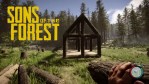
Sons of the Forest has two planter structures: the Standing Planter and Wall Planter.
| Planter | Build Cost | Placement |
|---|---|---|
| Standing Planter | 18 Sticks | Placed on suitable ground or flooring |
| Wall Planter | 16 Sticks | Attached to a suitable wall |
Both blueprints are available through the Survival Handbook.
After placing a planter blueprint, add the required Sticks to complete the structure. Kelvin can also finish placed structures if you want him to handle the construction.
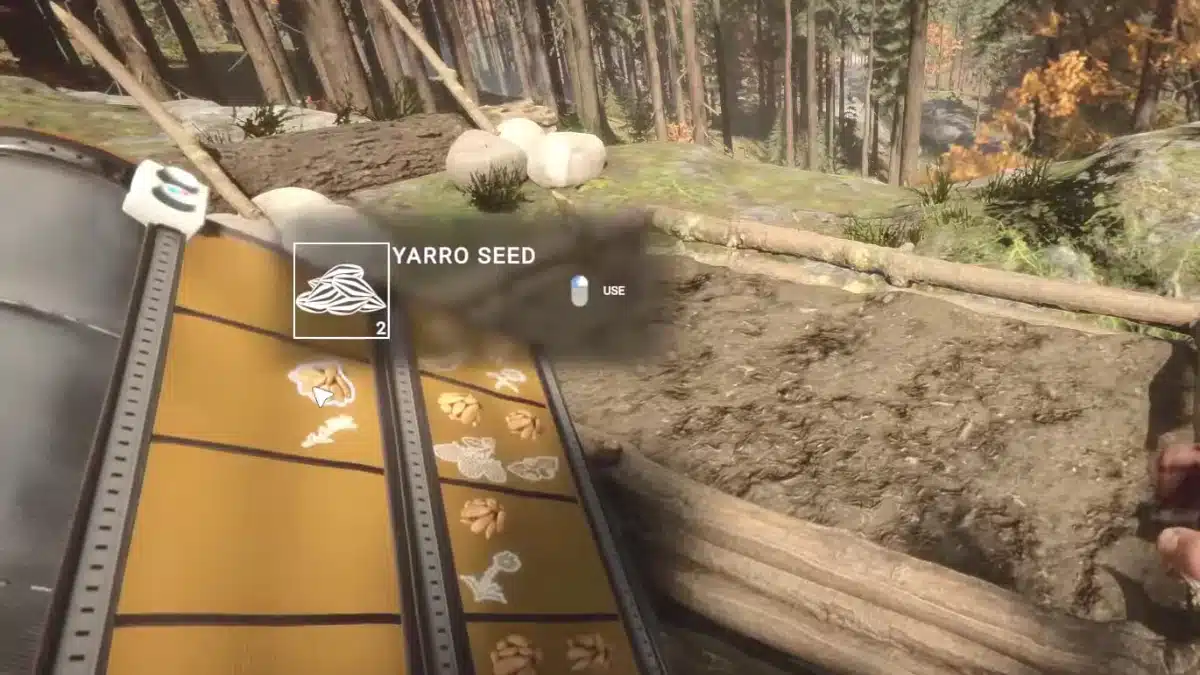
Approach a completed planter with seeds available. The planting interaction opens the crop-selection interface, where you can choose which seed to use.
Planting consumes one seed. An Early Access bug once consumed two seeds, but that behaviour was fixed in Patch 02.
Each seed type stacks to a maximum of 20 in your inventory.
Planters do not require a manual watering step. Once planted, the crop grows automatically while seasonal conditions allow it.
Which Seeds Can You Plant?
There are 13 current seed types in Sons of the Forest.
Seeds are occasionally obtained while harvesting the corresponding berry bush or herb in the wild.
| Seed | Grown Plant | Useful For |
|---|---|---|
| Aloe Vera Seed | Aloe Vera | Health Mix and Health Mix+ |
| Arrowleaf Seed | Arrowleaf | Energy Mix |
| Blackberry Seed | Blackberries | Food |
| Blueberry Seed | Blueberries | Food, Jam and Liquid Battery |
| Chicory Seed | Chicory | Energy Mixes and cooking |
| Devil’s Club Seed | Devil’s Club | Energy Mix+ |
| Fireweed Seed | Fireweed | Health Mix+ and Energy Mix+ |
| Guarana Seed | Guarana Berries | Food and Cooking Pot recipes |
| Horsetail Seed | Horsetail | Health Mix+ |
| Salmonberry Seed | Salmonberries | Food and Jam |
| Snowberry Seed | Snowberries | Poison crafting |
| Twinberry Seed | Twinberries | Jam |
| Yarrow Seed | Yarrow | Health Mix |
Twinberry and Snowberry Seeds were both added with the full release.
Not every cultivated plant should be eaten directly. Twinberries, Snowberries and Devil’s Club cause poisoning when consumed raw, but they still have useful crafting or cooking roles.
The full release also expanded farming beyond seeds by allowing mushrooms to be planted.
How Plant Growth and Winter Work
Planter crops grow automatically during the normal growing seasons and stop progressing during winter.
When spring begins, surviving crops resume their growth. You do not need to remove and replant a crop simply because winter interrupted it.
Moving a planter indoors does not create a working greenhouse in the vanilla game. Placing crops inside or near a heat source does not bypass the winter growth pause.
There is also no manual watering mechanic for planter crops. Rainfall is not something you need to manage as part of the farming system.
This makes season timing more important than planter placement. If winter is approaching, medicinal crops planted shortly beforehand may remain unfinished until spring.
Harvesting and Replanting
Berry bushes and herbs behave differently after harvesting.
Cultivated berry bushes remain in the planter after you collect their fruit. The bush can produce another berry harvest without requiring another seed.
Herbs such as Aloe Vera, Yarrow and Fireweed are removed when harvested. Growing another herb requires another corresponding seed.
That distinction matters when planning planter space. A berry planter can remain dedicated to the same crop for repeated harvests, while a medicinal garden needs a continuing seed supply.
If you want to replace an existing crop with another type, remove the current plant and use the planter again with the new seed.
What Should You Grow First?
The best crops depend on whether you want healing, energy, cooking ingredients or poison crafting.
For healing, I would prioritise Aloe Vera, Yarrow, Horsetail and Fireweed. Aloe Vera and Yarrow support the basic Health Mix, while Aloe Vera, Horsetail and Fireweed are used for Health Mix+.
For energy, Arrowleaf and Chicory cover the basic Energy Mix. Chicory, Fireweed and Devil’s Club are used for Energy Mix+.
Fireweed is therefore particularly efficient because it contributes to both advanced healing and energy crafting.
Berries become more valuable once you regularly use the Cooking Pot. Blueberries, Salmonberries and Twinberries are ingredients for Jam, while Blueberries and Guarana Berries are used for Liquid Battery.
These crops connect directly with the Health Mixes, Energy Mixes and Cooking Pot recipes used throughout the wider food system.
Snowberries have a more specialised role. They are poisonous when eaten raw, but Snowberries combine with Fly Amanita when crafting Poison Arrows.
Can You Grow Mushrooms?
All four mushroom types can be placed in planters:
- Shiitake
- King Oyster
- Hydnum Repandum
- Fly Amanita
Mushroom farming works differently from seed crops because you plant the mushroom itself rather than a separate seed.
In the current vanilla game, mushrooms are poor choices for multiplying your supply. Planting one mushroom generally returns one mushroom when harvested, so the process does not create a meaningful net gain.
That makes mushroom planters more useful for relocating a mushroom supply to your base than for producing large quantities.
The four mushroom types are still valuable together because they form the ingredient set for Cream of Mushroom. Fly Amanita also has additional uses despite being poisonous when eaten raw.
Can You Plant Trees?
Trees cannot be planted directly through the farming system.
Tree replacement is controlled separately by the Tree Regrowth world setting. The setting is enabled by default and gives cut trees a 10% chance to regrow when you sleep.
Tree Regrowth therefore operates independently of Standing Planters, Wall Planters and the seed system.
For more base systems, survival mechanics and progression help, continue through the Ultimate Sons of the Forest Walkthrough.