
| Developer Bandai Namco Studios | Publisher Bandai Namco | Platform PlayStation 5 | Release Date January 26, 2024 | Genre Fighting | File Size ~80 GB |
As someone who’s played Tekken since the PlayStation 1 era, I didn’t just come into Tekken 8 with excitement, I came in with decades of muscle memory. I’ve followed the series through its highs (Tekken 3, Tekken 5) and stumbles (Tekken 4, anyone?), and while Tekken 7 was a solid outing, it always felt like it held something back, especially in terms of content.
Tekken 8 feels like more than just the next game in the series – it feels like the culmination of everything the franchise has been building toward. It’s a game that manages to feel familiar and nostalgic while also making big swings in gameplay and presentation, and for the most part, it hits hard.
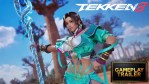
Right from the start, what floored me was just how good this game looks. Built entirely from the ground up in Unreal Engine 5, the character models, lighting, and detail are breathtaking. The sharpness of the visuals is instantly noticeable, and it’s one of the best-looking fighting game I’ve played on PS5.
Sure, not every stage is a stunner, some feel pretty flat compared to others, but the clarity and vibrancy of the characters more than make up for it. There were times I caught myself pausing mid-match just to take in the dynamic lighting or see how detailed the reflections were on the characters’ gear.
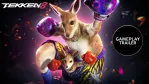
Even legacy characters like Marshall Law and King feel visually redefined without losing their iconic silhouettes. Some arenas are jaw-dropping (I’m looking at you, Celebration on the Seine at Night). Still, it’s hard to complain when the fighters themselves look this crisp, and the hits land with cinematic force.
The initial roster of 32 characters is pretty impressive and gives players a lot to work with. Still, I was a bit let down to find out that 7 additional characters are locked behind downloadable season passes, something I’ll get onto later!

Gameplay-wise, Tekken 8 feels tighter and more aggressive than any entry before. The new Heat System completely changes the rhythm of matches. It rewards aggressive play by offering buffs and even chip damage on blocked attacks. It’s a simple mechanic in concept, but using it strategically has genuinely reshaped how I approach fights. You get it once per round, and timing it well can absolutely swing momentum in your favour. Combined with the recoverable grey health mechanic, it creates back-and-forth matches that feel more alive than ever. I’ve had countless nail-biters where I’ve managed to claw back a win using a Heat Burst into a special attack.
Juggling – long a point of frustration for many – has been tuned. It’s still here, but less punishing. You’re not going to be trapped in the air until death quite as often. And when you are low on health, you’ve got a powerful super to throw out for a last-minute comeback. It adds drama and gives each match a cinematic climax.
The story mode, The Dark Awakens, is Tekken at its most bombastic and anime-inspired. It revolves around Jin Kazama confronting his father Kazuya and, by extension, his own inner Devil Gene. While predictable in places, the presentation is polished and energetic. It borrows the cinematic approach that Mortal Kombat helped popularise, and honestly, I found it more enjoyable than most fighting game storylines in recent memory. The finale stuck with me. However, I was let down by the character Reina. She’s hyped up throughout but ends up feeling underdeveloped, there was clearly more they could’ve done with her.

What really surprised me was the return and expansion of character episodes. In Tekken 7, these were one-note and forgettable. Here, each character gets five fights and a dedicated cutscene ending that’s in line with Tekken’s long-running tradition of being completely unhinged. Think Kuma proposing in space. Yes, seriously. It’s gloriously silly and exactly the kind of fan service that makes Tekken so enduring.
There’s a ton of single-player content, and Arcade Quest stands out as both a stealth tutorial and a chill side-mode where you travel from arcade to arcade with a custom avatar. It’s clearly geared towards onboarding newer players, which is something Tekken desperately needed. As someone who already knows how to play, I blitzed through it in about two and a half hours, and I can’t say the story grabbed me, but as a training tool? It works well. The real MVP here, though, is the training suite. It’s superb. It’s never been easier to learn how to punish properly, study frame data, or break down your own matches using replays that highlight your mistakes and even recreate moments so you can practice correcting them. That paired with the AI Ghost System, which learns your playstyle and creates a training partner that mirrors your habits, is frankly genius. You don’t just get better – you understand how you’re improving.
Online? Smooth as butter. Playing crossplay between PS5 and PC with my friends has been flawless for me so far. No lag, no dropped inputs, and matches load incredibly quickly. Compared to Tekken 7’s hit-or-miss online, this is a giant leap forward. There’s even a stat screen showing if there are any latency spikes, which is a nice touch. The matchmaking is pretty fast in terms of finding an opponent to fight, so there’s no waiting around. The icing on top of the cake? Even Tekken Ball mode makes a return for some nostalgic fun.
I must admit, my stance on microtransactions has impacted my perception of Tekken 8. The reliance on paid cosmetics and in-game currency feels like a step backward for a series I’ve loved, and it’s hard not to see it as a cash grab rather than a genuine enhancement. As a result, I’ve lowered my score slightly to reflect my disappointment with these monetisation strategies. I do get it somewhat from the devs, but paid customisation options and legacy outfits behind paywalls just doesn’t sit well with me personally.
The soundtrack is energetic, full of EDM, rock, and Japanese beats that fit Tekken’s chaotic energy perfectly. I wouldn’t say there’s a standout theme I’ll be humming in five years, but the consistency is there. Plus, the ability to load in music from every previous Tekken game is the kind of fan service I love.
Voice acting is exactly what you’d expect – cheesy, exaggerated, and brilliant. Characters yell in their native languages, somehow understanding one another perfectly, and it just works. That weird multilingual rhythm has always been part of Tekken’s charm.
While I love the fighting itself, I still think there’s room to improve in areas like Arcade Quest’s narrative or giving newer characters like Victor Chevalier more story focus. But when it comes to the core experience – fluid, satisfying, and deep fighting – it’s right up there with the very best.
I suppose this wouldn’t be a proper review without me comparing it to its biggest rival, that being Street Fighter 6. While SF6 was one of the best entries in the series for a long time, i would just edge out Tekken 8. It’s very close, and i wouldn’t begrudge anyone if they picked SF6 over the Iron Fist Tournament’s latest entry, but the frame rate drops in the World Tour Mode in Street Fighter 6, compared to smooth online play in T8 makes the difference.
Tekken 8 isn’t just a sequel, it’s a statement. It takes the best parts of Tekken 7, patches up the holes, and then adds new systems that breathe fresh life into every match. Whether you’re a newcomer, a returning fan, or a tournament regular, Tekken 8 gives you the tools, the challenge, and the fun to keep coming back.
This was my Tekken 8 PlayStation 5 Review, if you want to check out the game for yourself, visit the official website using the hyperlink. Please note, we do not include affiliate links and do not earn any commission.
Tekken 8 PS5 Review

Check out my Tekken 8 PS5 Review, where refined mechanics, breathtaking graphics, and extensive training tools create the ultimate fighting game experience.
Product Brand: Bandai Namco Entertainment
9.1
Pros
- Incredible visuals thanks to Unreal Engine 5
- Tight, aggressive, and satisfying combat
- Heat system adds smart strategy and pacing
- Robust training tools and tutorials
- Excellent story mode presentation with wild character episodes
- Smooth, responsive online play with full cross-platform support
- Loads of content for solo and competitive players alike
Cons
- Some arenas feel underwhelming visually
- Character Reina underused in the story
- Arcade Quest mode feels shallow compared to its Street Fighter 6 counterpart
- Microtransactions behind some of the best content