
Key Highlights:
- Logs in Sons of The Forest are the backbone of construction and progression.
- Axes and explosives offer different harvesting options.
- Kelvin can automate logging to reduce manual work.
Quick Links:
Building in Sons of the Forest isn’t just about survival, it’s a long-term commitment to fortification, security, and resource management.
Whether you’re aiming for a basic lean-to or a fully enclosed fortress, logs are the foundational element in nearly every major structure. But obtaining them, and knowing how to maximise their use, can separate the vulnerable from the prepared.
How to Get Logs
Logs are harvested primarily by cutting down trees, a time-consuming but essential process.
Fortunately, your character begins the game with an axe from the emergency pack, so you can start chopping almost immediately.
Simply target the base of a tree and continue swinging until it topples. Thicker trees require more effort but usually yield more logs, typically three or four per tree, depending on size.
Kelvin, your AI companion, can drastically reduce the workload. By issuing commands via the notepad interface, you can have him either gather loose logs or actively cut down trees for you.
He’s efficient but fragile, so be mindful of his positioning as dropped trees can injure him. If you’re playing solo, Kelvin becomes a crucial asset for sustained progress.
There’s also a more aggressive, faster method: dynamite. Found in camps, caves, or enemy sites, explosives can bring down several trees at once. Just place the charge near the base, light the fuse, and retreat. The detonation clears trees in bulk, though at the cost of attracting nearby enemies with the noise.
For players paying attention, logs can occasionally be found already on the ground – especially near old camps, rivers, or in areas where you or Kelvin have already worked. It’s worth keeping your eyes open while exploring.
Using Logs Effectively
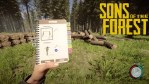
Logs aren’t just for show, they’re required in nearly every major structure. You’ll need them for shelters, traps, defensive barriers, stairs, and even utility items like drying racks. The Survival Guide Book, found in your inventory, lays out every structure you can build. It has two distinct modes:
| Mode | Function |
|---|---|
| Free Build | Step-by-step interactive building (e.g., place a log for walls, floors) |
| Blueprint Mode | Pre-designed templates (cabins, log storages, traps) with required materials list |
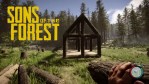
Once placed, logs can be shaped using your axe. Red dotted lines will appear when hovering over them, letting you split logs lengthwise, cut them into quarters, or sharpen them for defensive stakes. The more familiar you become with log shaping, the more versatile your structures will become.
Quick Tip: Picking up logs also builds up your character’s strength, which is an added bonus.
Storage, Transport, and Efficiency
Managing logs efficiently is just as important as gathering them.
You can carry two at a time by hand, but larger construction projects will demand better logistics. Use log holders to stockpile materials near your building zones, and set up strategically placed work sites to minimise long-distance hauling.
As of Patch 05, the game features a craftable log sled, and you can also make the most of loose terrain and gravity. Dropping logs down hills or passing them between teammates in multiplayer sessions can speed up the process.
If you’re playing with friends, assign roles: one person chopping, one transporting, and one building. In solo play, Kelvin can be sent to gather while you construct, creating a solid workflow loop.
Once you’ve gathered large amounts of logs, moving them efficiently becomes essential, especially over long distances or uneven terrain. Fortunately, Sons of the Forest offers a few creative solutions that go far beyond manual hauling.
The most efficient method is using zip lines, which allow logs to travel rapidly from one point to another. Simply shoot a zip line from a high structure, like a treehouse or cliff, down toward your base or collection area. If you place a log holder at the end of the zip line, incoming logs will automatically drop into it. This creates a streamlined system where you can send dozens of logs in succession without ever needing to follow them.
You can daisy-chain zip lines by building multiple waypoints between your base and logging zones. For example, you might shoot one zip line from a tree platform halfway across the island, then another that finishes the journey, forming a long-range delivery network.
If you don’t want to use holders, Kelvin can fill the gap. Simply let logs fall freely at the bottom of a zip line and then assign Kelvin to gather them and deposit them into a distant holder. While slower than automatic catchers, this semi-automated loop still reduces manual effort dramatically.
Logs also float in water and can be tossed into a river or stream to drift downstream. Though, log rafting via water is unreliable due to terrain collisions and inconsistencies in current speed. It’s an option, but best treated as a backup method rather than your primary transport strategy.
Common Log Uses
- Shelters – From simple tents to log cabins, nearly every resting place demands logs.
- Defensive Walls – Sharpened logs placed upright create barriers against mutant raids.
- Traps – Snares and defensive traps often need logs as a core framework.
- Furniture and Utility Items – Drying racks, storage units, and decorative items often need smaller log pieces.
- Weapons and Tools – While rare, some advanced builds incorporate logs into large traps or blunt weapons.
Quick Tips for Log Gathering
- Don’t drop trees on Kelvin – he takes damage and doesn’t dodge.
- Chop near your base – transporting logs over long distances is inefficient.
- Listen for enemy cues – tree-cutting attracts cannibal patrols.
FAQ
Can I move or reuse placed logs?
Yes. Walk up to a log and press the interaction key to pick it up.
Can logs be used in crafting tools or traps?
Yes. Some traps, tools like drying racks, Log Sled and defensive mechanisms use logs or log segments.
How many logs do I need for a log cabin?
Depending on size and design, expect to use 85–100+ logs for a full cabin.
Can trees regrow?
Yes, trees slowly regenerate over time, ensuring a renewable log supply.
Logs may seem mundane compared to flashy weapons or underground bunkers, but they’re the heartbeat of your survival. Master the harvesting loop, learn the build system, and the forest becomes less a threat, and more a resource to conquer.
Once you’ve become comfortable with log building, the Sons of the Forest Guide offers in-depth tips on complex mechanics, advanced building techniques, and trap strategies.