
Key Highlights:
- The Spin Trap and Spear Thrower are strong choices for established base defence, while the Fly Swatter gives you a much cheaper early option.
- Trap effectiveness depends heavily on placement, with gates, narrow approaches and other predictable enemy routes giving the best trigger opportunities.
- Most traps use predefined building outlines, while Spike Walls and other improvised defences use the game’s freeform construction system.
Quick Links:
Traps in Sons of the Forest serve three main purposes: killing or slowing attackers, warning you about incoming enemies, and gathering food.
The expensive traps are not automatically the best choice everywhere. A Spin Trap makes sense across a broad approach, while a Spear Thrower is better suited to a narrow route where enemies repeatedly cross its firing line. Early on, cheaper traps such as the Fly Swatter and Bone Maker are easier to build around a developing base.
I favour a layered setup rather than surrounding a base with copies of the same trap. Different approaches create different problems, particularly once enemies begin attacking from several directions.
Best Traps in Sons of the Forest
| Best use | Trap | Why it works |
|---|---|---|
| Early base defence | Fly Swatter | Cheap materials and a small footprint make it easy to place along common approaches |
| Bone collection | Bone Maker | Burns captured cannibals and can leave bones behind |
| Wide attack lanes | Spin Trap | Rotating arms cover a much broader area than narrow tripwire traps |
| Narrow approaches | Spear Thrower | Fires spears across a defined route and works well at gates or other choke points |
| Heavy late-game defence | Multi-Trap | Combines several damaging effects but requires significantly more resources |
| Inner perimeter | Grind Trap | Powerful close-range defence, although the Knight V requirement makes it expensive |
| Knockback | Hokey Pokey Trap | Uses a large swinging attack to hit enemies entering its range |
| Early warning | Silent Alarm | Alerts you when enemies reach the trigger area |
| Passive food | Small Animal Trap / Fish Trap | Provides food without using weapons or ammunition |
The Fly Swatter is the easiest defensive trap to recommend early because its materials are common and you can build several without committing valuable late-game resources.
Once you have the required blueprints and materials, the Spin Trap and Spear Thrower give you much more control over larger approaches. I prefer the Spin Trap where enemies can arrive across a wide area, while the Spear Thrower makes more sense when terrain or walls already force them into a narrow route.
The Multi-Trap and Grind Trap are harder to justify early because both require rarer materials. They make more sense once your base and resource supply are already established.
Trap Recipes and Uses
Most standard traps are selected from the survival guide and placed as predefined outlines. You then add the required resources until construction is complete.
| Trap | Materials | Main use |
|---|---|---|
| Small Animal Trap | 14 Sticks | Catching small animals |
| Fish Trap | 25 Sticks | Passive fishing outside winter |
| Bone Maker Trap | 2 Sticks, 3 Leaves, 3 Rocks, 1 Vodka Bottle, 1 Rope | Burning regular cannibals and collecting bones |
| Fly Swatter Trap | 10 Sticks, 3 Rocks, 1 Rope | Cheap perimeter defence |
| Spring Trap | 7 Sticks, 1 Turtle Shell, 1 Wire | Launching enemies into the air |
| Hokey Pokey Trap | 6 Logs, 15 Rocks, 10 Sticks, 3 Ropes | Heavy close-range attack |
| Silent Alarm | 13 Sticks, 8 Bones, 1 Rock, 1 Skull, 1 Radio, 1 Wire | Detecting approaching enemies |
| Leaf Trap | 20 Leaves | Burnable ground trap |
| Explosive Tripwire | 1 Stick, 1 Wire, 1 Grenade | Explosive damage across a trigger line |
| Molotov Tripwire | 1 Stick, 1 Rock, 4 Leaves, 1 Rope, 1 Vodka Bottle | Setting enemies on fire |
| Grind Trap | 65 Sticks, 3 Wires, 1 Skull, 2 Stones, 1 Golf Cart Battery, 1 Log, 1 Knight V | Heavy close-range defence |
| Spin Trap | 37 Sticks, 5 Wires, 1 Light Bulb, 1 Golf Cart Battery | Wide-area base defence |
| Spear Thrower Trap | 2 Logs, 3 Wires, 1 Golf Cart Battery, 2 Sticks, 8 Bones, 3 C4 Bricks | High-damage defence across a controlled route |
| Multi-Trap | 4 Wires, 2 Skulls, 2 Vodka Bottles, 14 Sticks, 3 Leaves, 6 Rocks, 1 Golf Cart Battery, 15 Bones, 2 Ropes | Expensive multi-effect defence |
The Grind Trap, Spin Trap, Spear Thrower and Multi-Trap require collectible blueprints before they become available. They still use blueprint building: place the predefined outline, then supply the listed resources until the structure is complete.
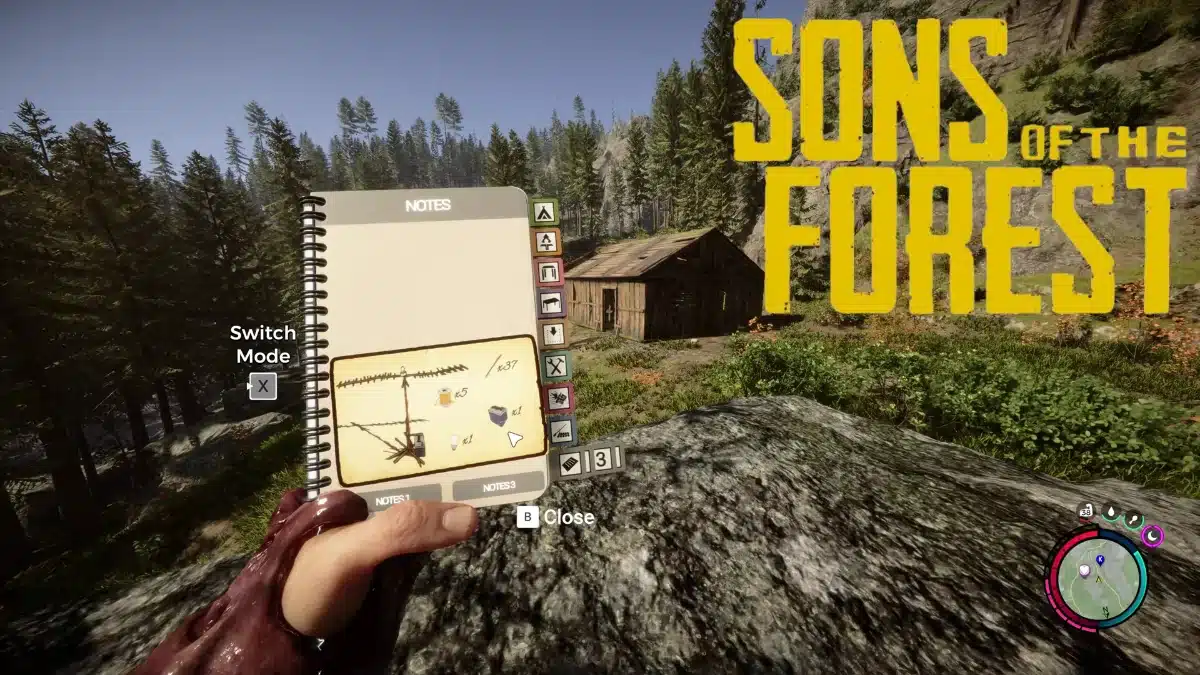
That differs from custom building, where individual materials can be positioned directly to create improvised structures and defences.
How to Place Traps Effectively
Trap placement should start with the route an enemy is likely to take.
Gates, gaps between defensive walls, narrow strips between terrain and your base, and slopes leading towards an entrance are useful positions because they reduce the number of directions an attacker can approach from.
Place narrow-trigger traps such as the Spear Thrower where enemies have little opportunity to move around them. Wider traps such as the Spin Trap make more sense where you cannot force attackers into a single line.
I also leave enough room behind important traps to reach them safely after they trigger. A defensive setup becomes much less useful if resetting it means repeatedly walking outside the perimeter during a raid.
Explosive and fire traps need more consideration than purely mechanical traps. Their value comes from hitting enemies at the right moment, so placing them randomly around open ground wastes both the trigger opportunity and the resources used to build them.

Are Fish Traps Worth Using?
Fish Traps cost 25 Sticks and can catch fish automatically when correctly placed in water.
They do have an important seasonal limitation. Fish Traps do not catch fish during winter. Patch 01 established a normal catch interval of roughly five to ten minutes when the trap is in water and the current season is not winter.
That makes them useful as supplementary food during the warmer seasons, but I would not rely on them as the only food source for a permanent base.
Small Animal Traps perform a similar passive role on land and are better treated as another supplementary source rather than part of your defensive perimeter.
Blueprint Traps vs Custom Defences
The survival guide contains predefined traps that use fixed material requirements and placement outlines. Additional designs such as the Grind Trap, Spin Trap, Spear Thrower and Multi-Trap become available after their collectible blueprints are found.
Custom defences work differently because you assemble the individual pieces yourself rather than filling a predefined outline.
Spike Walls are the clearest defensive example. They can be combined with conventional traps to damage enemies around a perimeter while leaving selected routes open for triggered traps.
For the actual stick placement, sharpening direction, rock reinforcement and multi-row layouts, see our Spiked Walls guide.
Used together, the two systems let you control both where enemies can move and what happens when they reach that route.
For more building, equipment and survival help, see the Ultimate Sons of the Forest Guide.